
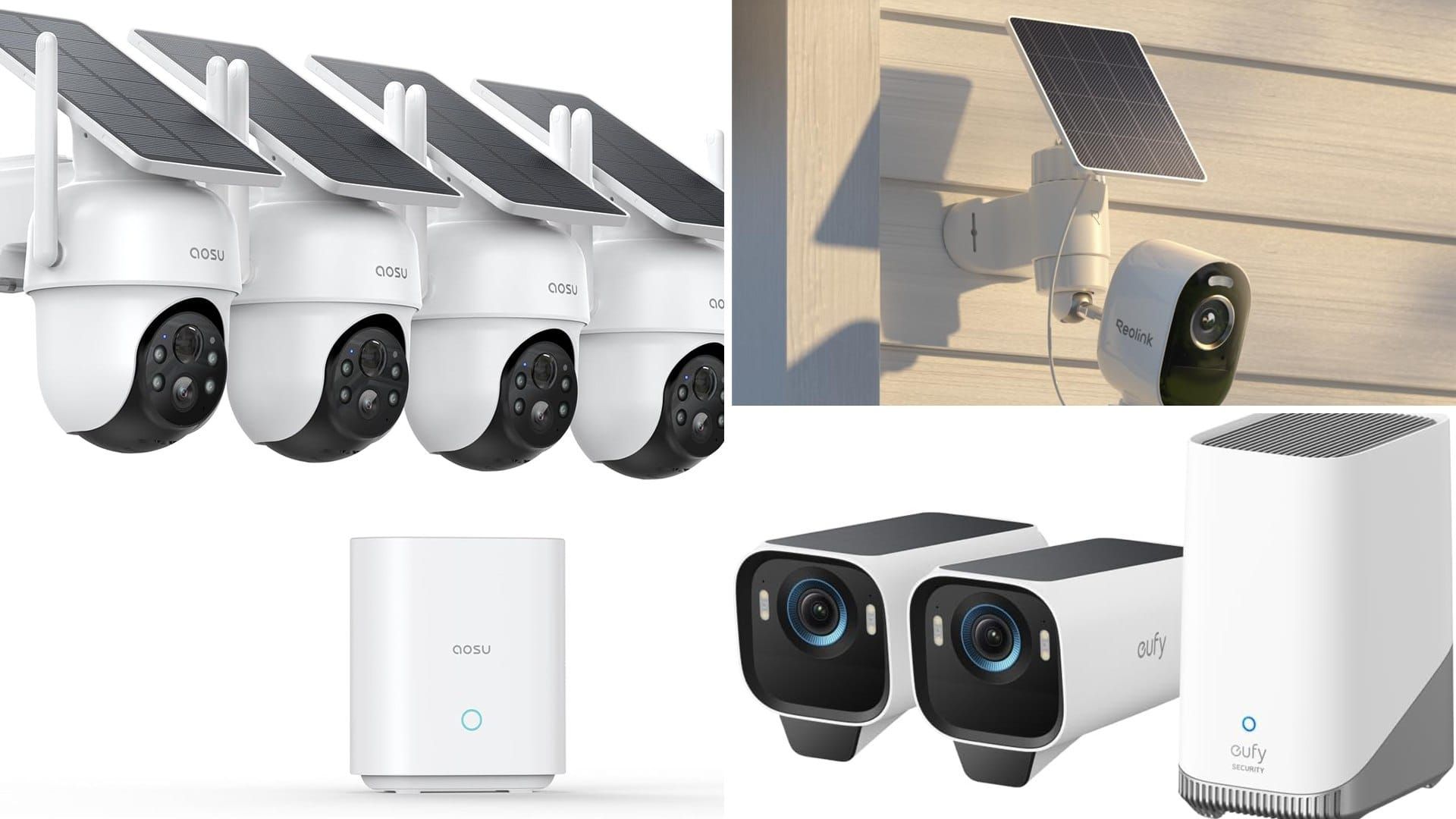


A solar powered security camera system solves the problem every battery camera owner hits by month two: the app pings you that the side-yard camera is at 5%, and now you're on a ladder in the cold pulling it down to charge. Put a panel on it and the sun does that job for you. The better kits also skip the monthly cloud fee by recording to a small base station inside the house. If you want three or four cameras around the house without running a single wire or paying a subscription, this is the setup to look at. Here are the 5 best solar powered security camera systems in 2026.
What to Look For in a Solar Powered Security Camera System
Where the footage goes. This is the big one. Every kit here records to a local base station (or a card in it), so you don't need a subscription to see your clips. Some brands still sell optional cloud plans. Read what's free before you buy.
How much sun it needs. Brands quote anywhere from 30 minutes to 3 hours of direct sunlight a day to stay charged. A north-facing wall under an overhang won't get that. Kits with a separate panel on a cable let you put the camera in the shade and the panel in the sun.
Fixed or pan and tilt. Fixed cameras cover one view and are smaller. Pan and tilt cameras can swing around (some follow a person automatically), so one camera can watch a whole driveway and yard. They're bulkier and use more battery when they move.
Resolution and night vision. 2K is fine for most yards. 4K helps if you want to read a plate or a face at a distance. Look for color night vision with a spotlight, or a sensor that's good in low light, if you care what things look like after dark.
Motion detection. Basic motion sensors fire on every tree branch. PIR plus AI person detection, or radar, cuts down on the junk alerts that make people turn notifications off.
The 5 Best Solar Powered Security Camera Systems in 2026
1. aosu D1 Classic 4-Cam Solar Kit
Best for: covering a whole property with four cameras that turn to follow motion.
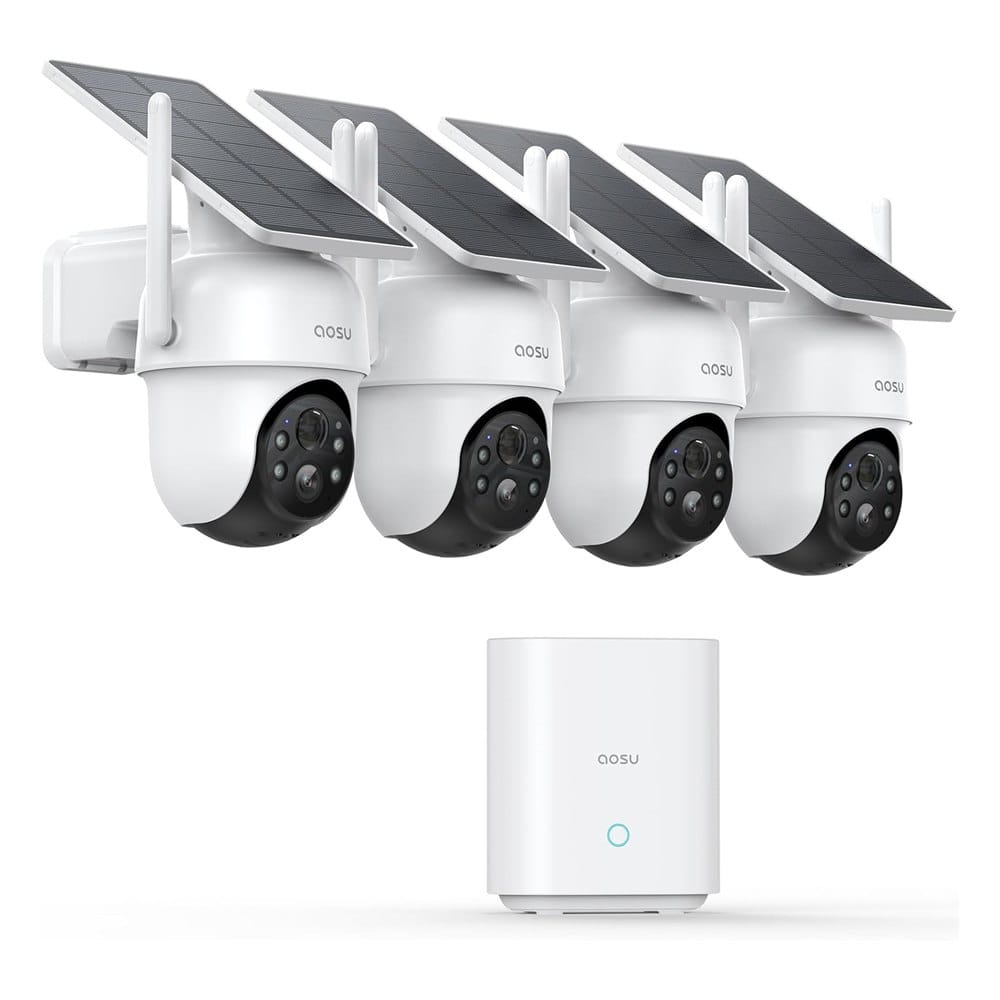
This is the most-reviewed kit on the list by a wide margin, and that's why it's #1. You get four pan and tilt cameras, each with a solar panel on top, plus the aosuBase that stores everything locally on 32GB. The cameras record in 2K (3MP), turn a full 360 degrees and track motion on their own. aosu says 3 hours of sunlight a day keeps them running, and mounting is three screw holes per camera.
What makes it stand out: four moving cameras for under what a lot of brands charge for two fixed ones. The app shows all four feeds on one screen, and cross-camera tracking groups clips of the same event so you're not scrolling through four separate alerts.
Good to know: 2K is fine for "who's at the gate," less fine for reading a license plate at the street. The panel is attached to the camera, so the camera has to go where the sun is. And 32GB on the base fills up and loops, so older clips get overwritten.
2. aosu 2K Solar 4-Cam Kit With Split Panels
Best for: shady walls and anyone who wants small, fixed cameras on a budget.
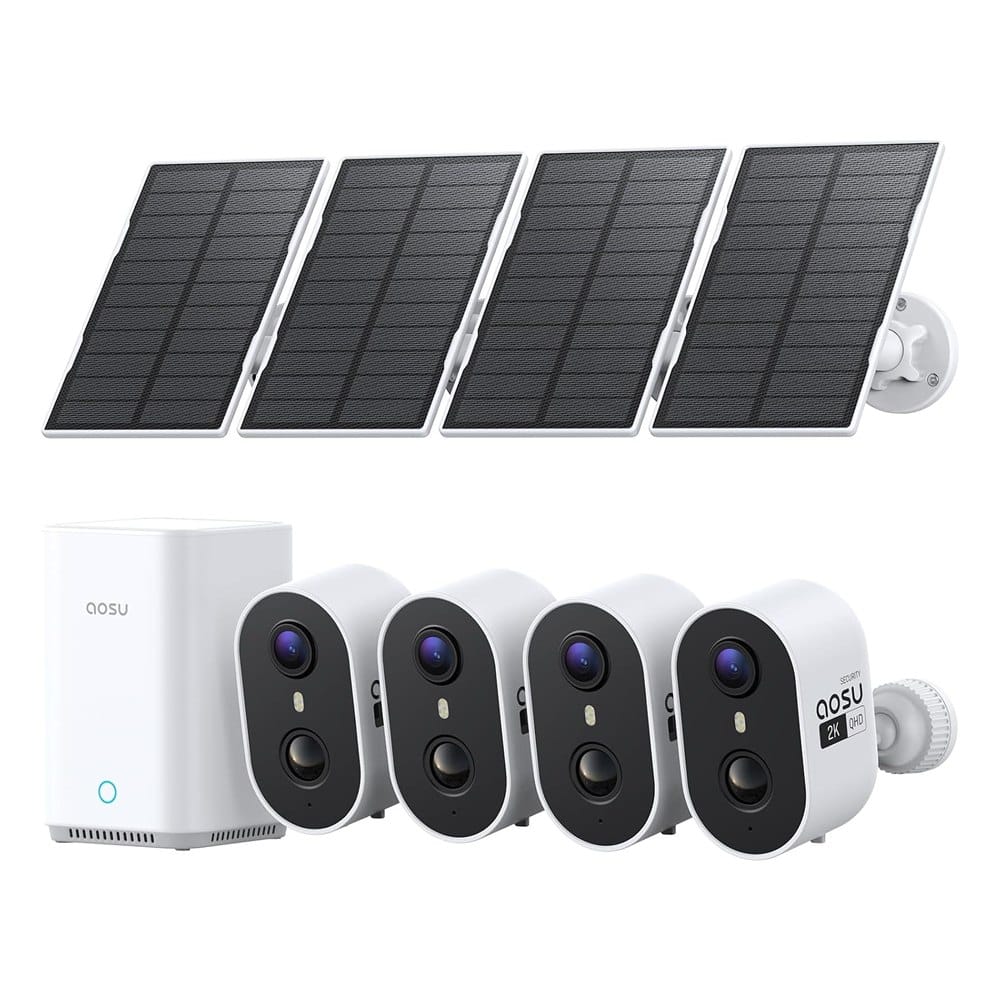
Same brand, different idea. These are compact fixed cameras, and each solar panel sits on its own mount with a cable, so you can hang the camera under the eave and stick the panel where it actually gets sun. The kit has four 2K cameras, four panels and the aosuBase with 32GB built in. You can add a microSD card (sold separately) to the base for up to 1TB.
What makes it stand out: PIR plus AI human detection, which is aimed at cutting alerts for cars, cats and leaves. It's rated IP65 for rain and snow, and each camera has a light and siren to scare people off.
Good to know: fixed cameras mean you aim once and that's the view. If you want to cover a wide yard, you'll need to plan your angles. aosu also notes the solar performance depends on season and placement, which is true of every kit here.
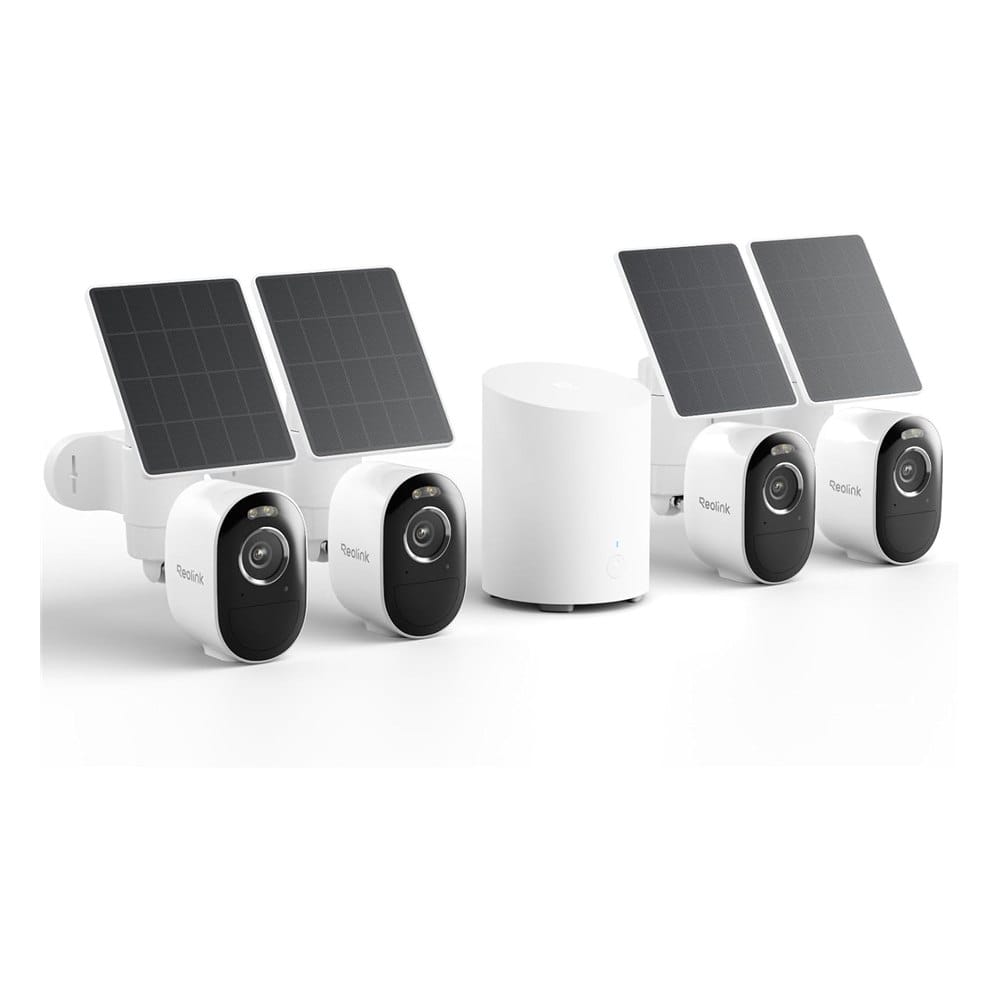
3. REOLINK 3K Solar Camera System, 4 Pack With Home Hub
Best for: people who want sharper video and smarter alerts from a known camera brand.
Reolink has been doing wire-free cameras for years, and this kit pairs four battery cameras and four small solar panels with the Reolink Home Hub. Video is 2560 x 1440 with spotlights for color night vision and IR for black-and-white. Reolink says 30 minutes of daily sun on the panel keeps a camera going. Footage is stored on the hub with AES-128 encryption, and the hub takes a microSD card up to 1TB.
What makes it stand out: the detection. It sorts people, vehicles and animals, and the app gives you an AI summary of what happened so you can browse by day, week or month instead of scrubbing video. The hub connects on dual-band Wi-Fi.
Good to know: the microSD card for the hub is not included, so budget for one. It has far fewer reviews than the aosu kits, and the 4.1-star average shows some people had app or connection gripes.
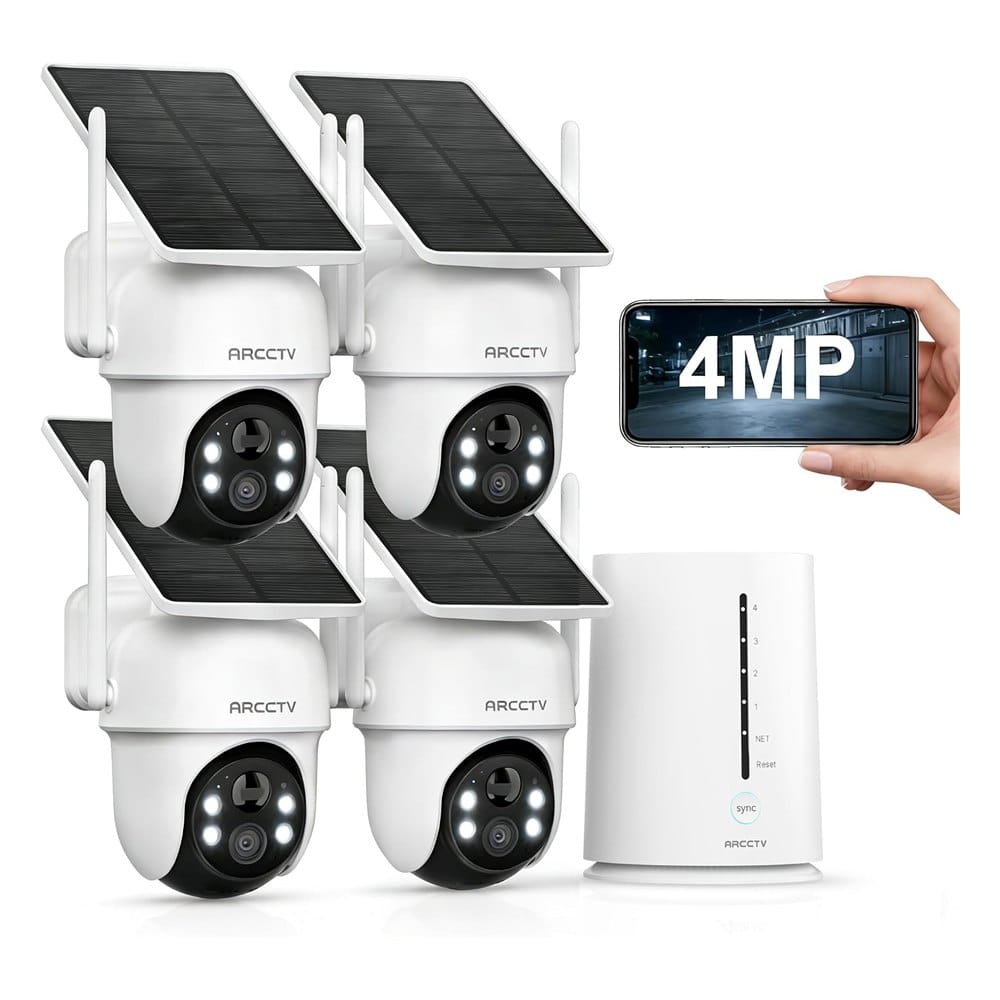
4. ARCCTV Solar 4-Cam Home Security System
Best for: the cheapest way into four pan and tilt solar cameras.
ARCCTV's kit gets you four 4MP (2560 x 1440) pan and tilt cameras with solar panels and a base station that records to an included 32GB card (upgradeable to 512GB). You can swing each camera 355 degrees side to side and 90 degrees up and down from the app. There's two-way audio, IR night vision out to about 33 feet, and an IP66 rating for -4°F to 122°F.
What makes it stand out: it's the lowest-priced four-camera kit we'd consider, the base runs on 2.4GHz or 5GHz Wi-Fi, and it works with Alexa if you want to pull up a camera on an Echo Show.
Good to know: the pan and tilt is manual only. The listing says plainly there's no auto-tracking, so you move the camera yourself. ARCCTV also sells paid cloud and AI plans, so check what's free in the app before you count on smart alerts.
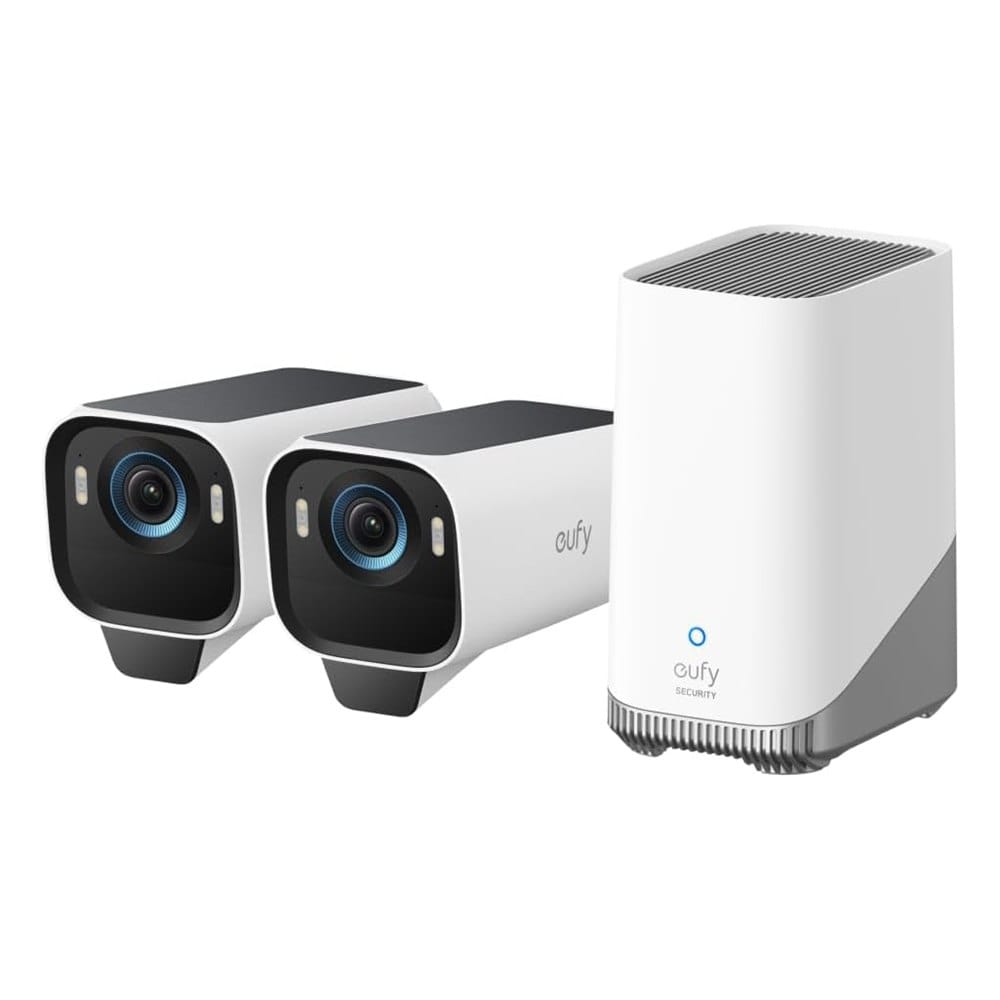
5. eufyCam S3 Pro 2-Cam Kit
Best for: buyers who want the best picture at night and room to grow, and can live with two cameras to start.
This is the premium pick. Two 4K cameras with eufy's MaxColor night vision, which is meant to give color video in very low light without turning on a spotlight. Each camera has a solar panel built into the top (SolarPlus 2.0), and the kit also includes a backup external panel for a shady spot. Each camera has 16GB onboard, and the HomeBase S380 can expand storage up to 16TB with no monthly fee.
What makes it stand out: radar plus PIR motion detection, which eufy says cuts false alerts. It also works with Apple HomeKit and Alexa, which most budget kits don't.
Good to know: two cameras for the highest price on this list. Adding more gets expensive fast. In HomeKit the video drops to 1080p, and the review count is the lowest of the five, so there's less of a track record to go on.
How to Set Up a Solar Camera System So It Actually Stays Charged
- Charge everything fully first. Solar panels top off a battery. They're slow at filling a dead one. Charge each camera with the cable before mounting.
- Check the sun for a full day. Look at the spot in the morning, at noon and late afternoon. You want direct light on the panel, not just daylight. South-facing is best in the U.S.
- Put the base station near the middle of the house. The cameras talk to the base, so a base in a back bedroom can leave the front cameras on a weak signal. Test live view at each spot before you drill.
- Mount 7 to 10 feet up, angled down. High enough that nobody can grab it, low enough to see faces instead of the tops of hats.
- Tune the motion zones the first week. Draw zones to skip the street and the neighbor's tree. Fewer junk alerts also means less battery used.
- Plan for winter. Short days and snow on the panel cut charging. Brush panels off after a storm, and turn down sensitivity if the battery keeps dropping.
If you also want eyes in places with no Wi-Fi at all, like a back field or hunting land, look at a cellular trail camera with a solar panel instead. For a quick add-on over a porch light, a light bulb security camera screws right into the existing socket.
Frequently Asked Questions
Do solar powered security cameras work without Wi-Fi?
Do solar security cameras need a subscription?
Do solar cameras work in winter or on cloudy days?
Can solar security cameras record 24/7?
Keep Reading
- Light bulb security cameras that screw into a porch light
- Cellular trail cameras with solar panels for land with no Wi-Fi
- Home security gear for doors, cameras and alarms
Final Thoughts
For most houses, we'd buy the aosu D1 Classic 4-Cam Kit. Four cameras that pan, tilt and follow motion, a base that stores clips with no monthly fee, and thousands of reviews behind it. That's a lot of coverage for the money.
Get the aosu 2K split-panel kit if your best camera spots are in the shade. Go with the Reolink if you want cleaner video and smarter person, car and animal alerts. Pick the ARCCTV if price is the main thing and you don't mind steering the cameras yourself. And if night picture quality matters most and you're fine starting with two cameras, the eufyCam S3 Pro is the one.
Disclosure: This post contains affiliate links. As an Amazon Associate I earn from qualifying purchases. Here's how we pick products.