
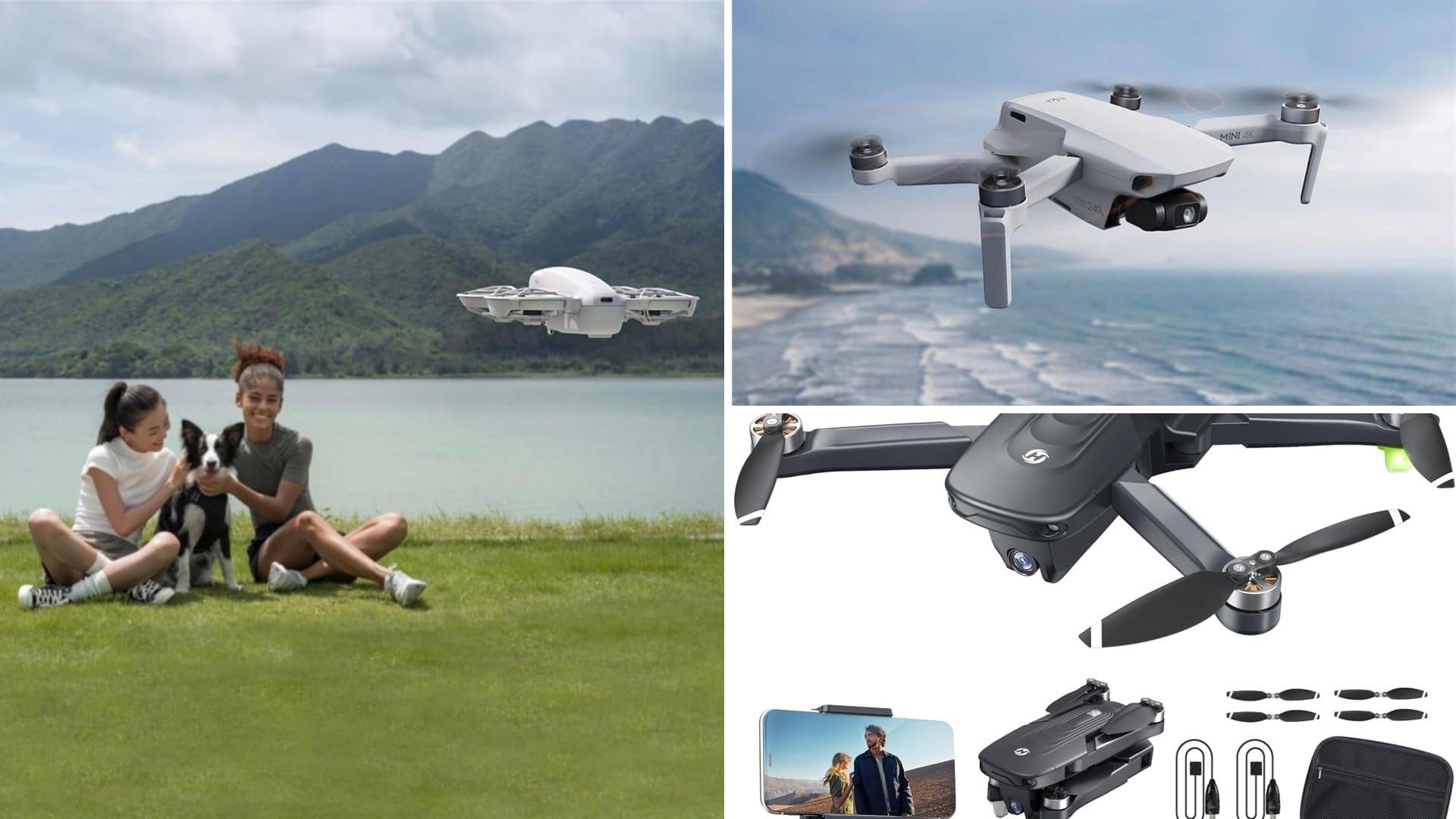



Somebody in your house is about to get a drone for Christmas, or you're about to buy one for yourself. Search Amazon and you'll see hundreds of "4K drones" with big flight-time numbers and no brand you've heard of. Most of them crash, lose signal or ship with a camera that looks like a webcam. If you want a drone for beginners that actually flies well, you only need to look at a handful of models.
Here's how we'd sort it out. These are the 5 best drones for beginners in 2026, ranked by rating and review count. We didn't fly them ourselves. We read the specs and the review patterns, and we'll tell you what we'd check before buying.
What to Look For in a Drone for Beginners
Weight under 249 grams. In the US, a drone under 249g doesn't need FAA registration for recreational flying. Every drone on this list falls under it. Still read the current FAA rules for your situation, because they change.
GPS and return-to-home. This is the feature that saves you when you fly too far or the battery runs low. If a drone has no GPS, it's a toy. Skip it.
Battery count. A single battery gives you roughly 30 minutes at best, and real flights run shorter. The listings with "90 minutes" are three batteries added together. Buy the combo with extra batteries if you can.
Gimbal vs electronic stabilization. A 3-axis gimbal is a physical mount that keeps video smooth. Electronic stabilization (EIS) is software. Gimbal footage looks better, and it usually costs more.
The app and controller. Some drones fly from your phone alone. Others come with a real remote. A remote with a phone clamp is easier to fly and has more range. And check the app situation before you buy. DJI's Fly app has been pulled from Google Play, so Android users download it from DJI's site.
The 5 Best Drones for Beginners in 2026
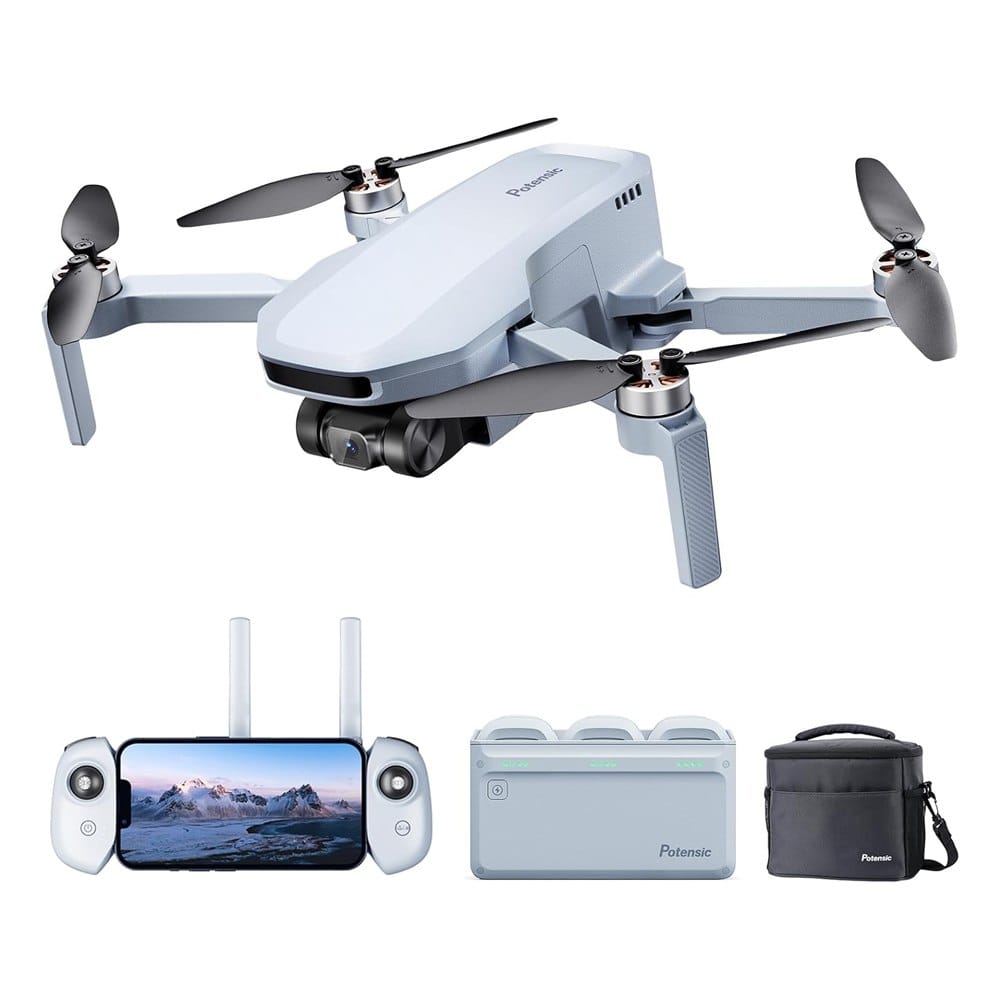
1. Potensic ATOM SE Fly More Combo
Best for: first-time buyers who want a real camera drone and more flight time per dollar.
This is the most-reviewed drone here, with over 6,700 ratings at 4.4 stars. It's a folding GPS drone under 249g with a 4K camera, a remote with a phone clamp and a small shoulder bag.
What makes it stand out: The camera uses a 1/3-inch Sony sensor, shoots 4K at 30fps and 12MP stills, and has electronic stabilization. The combo comes with three batteries and a 60W hub that charges all three at once. Potensic claims 93 minutes of total flight time across the batteries. It has a Beginner Mode, auto return, Follow Me and waypoint flight. Listed range is 4 km.
Good to know: The stabilization is electronic, not a gimbal, so fast turns can look less smooth. The SD card isn't included. Plan on buying one.
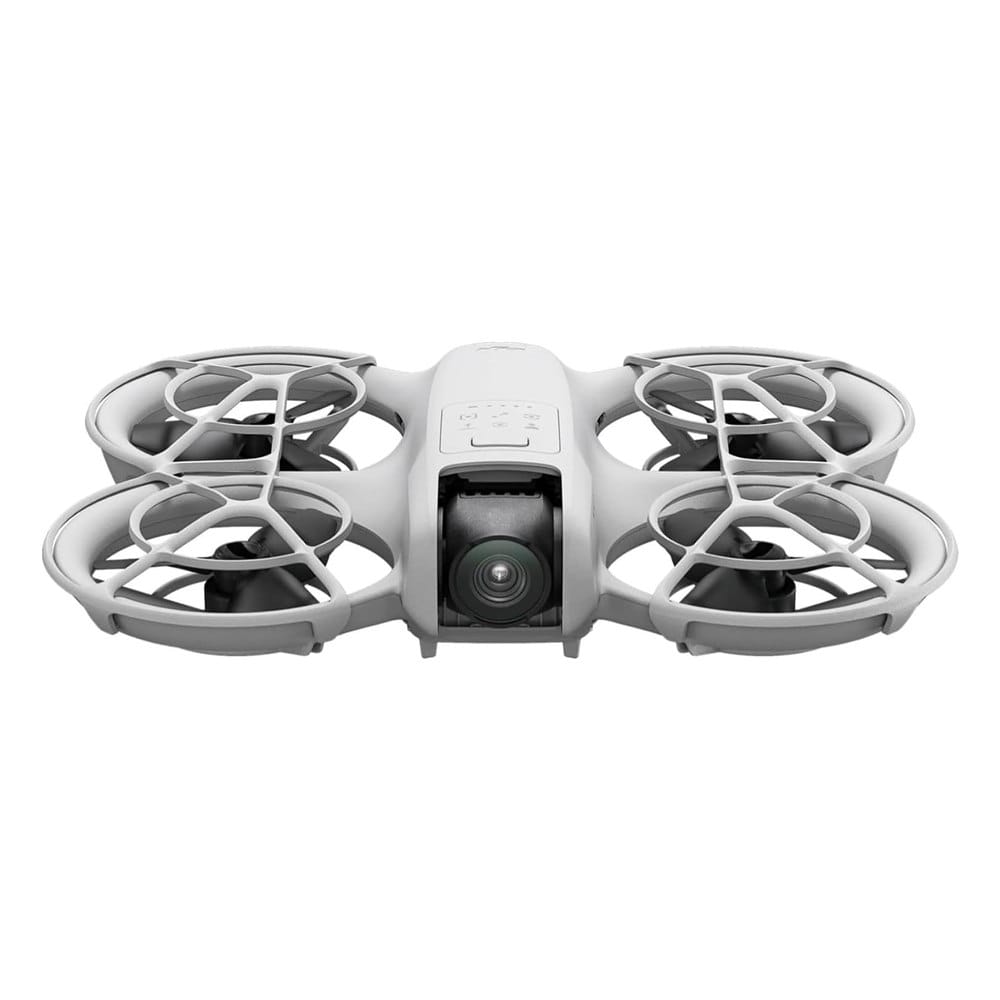
2. DJI Neo
Best for: vlogging, selfies and anyone who is nervous about flying.
The Neo is tiny, at 135g. It has built-in propeller guards and can take off from your palm without any controller. It's rated 4.4 stars from more than 4,400 reviews.
What makes it stand out: It follows you on its own using subject tracking and has eight QuickShots modes for preset camera moves. You can fly it with your voice, the phone app or a remote. It records stabilized 4K video and handles Level 4 wind. The guards make it the safest option for flying near people and trees.
Good to know: It's built for close-range shots of you, not for exploring far-off scenery. Several different bundles are sold under this listing, and what's in the box (remote, goggles, extra batteries) depends on which one you pick, so read it carefully. DJI also says to download its Fly app from DJI's own site.
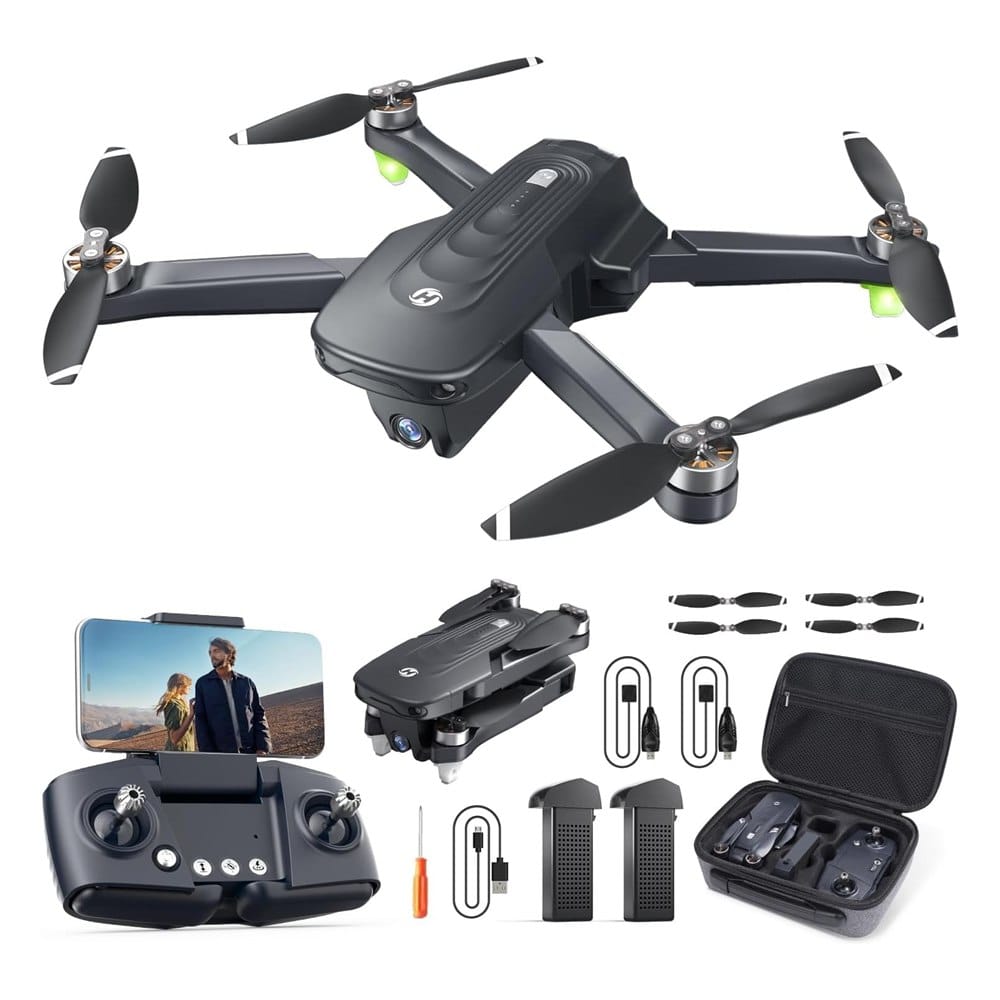
3. Holy Stone HS175D
Best for: a lower-cost GPS drone with two batteries and a carry case.
It has the most reviews of any drone on this list, nearly 7,700, but a lower 4.0 rating. It's a foldable GPS drone under 249g with a 4K camera, two batteries and a case in the box.
What makes it stand out: You get GPS return-to-home, optical flow positioning, altitude hold, a headless mode and a one-key takeoff and landing. The camera tilts through 90 degrees and has a 110-degree wide-angle lens. FPV runs on 5GHz for a steadier live view. Two batteries are listed at up to 46 minutes total.
Good to know: The 4.0 rating is the lowest here, so read the 1- and 2-star reviews before you buy. The camera is a step below the Potensic and DJI models, and there's no gimbal. It's a good learner drone, not the one for the best footage.
4. Potensic ATOM 2 Standard Kit
Best for: beginners who want the best camera and a gimbal and are willing to spend more.
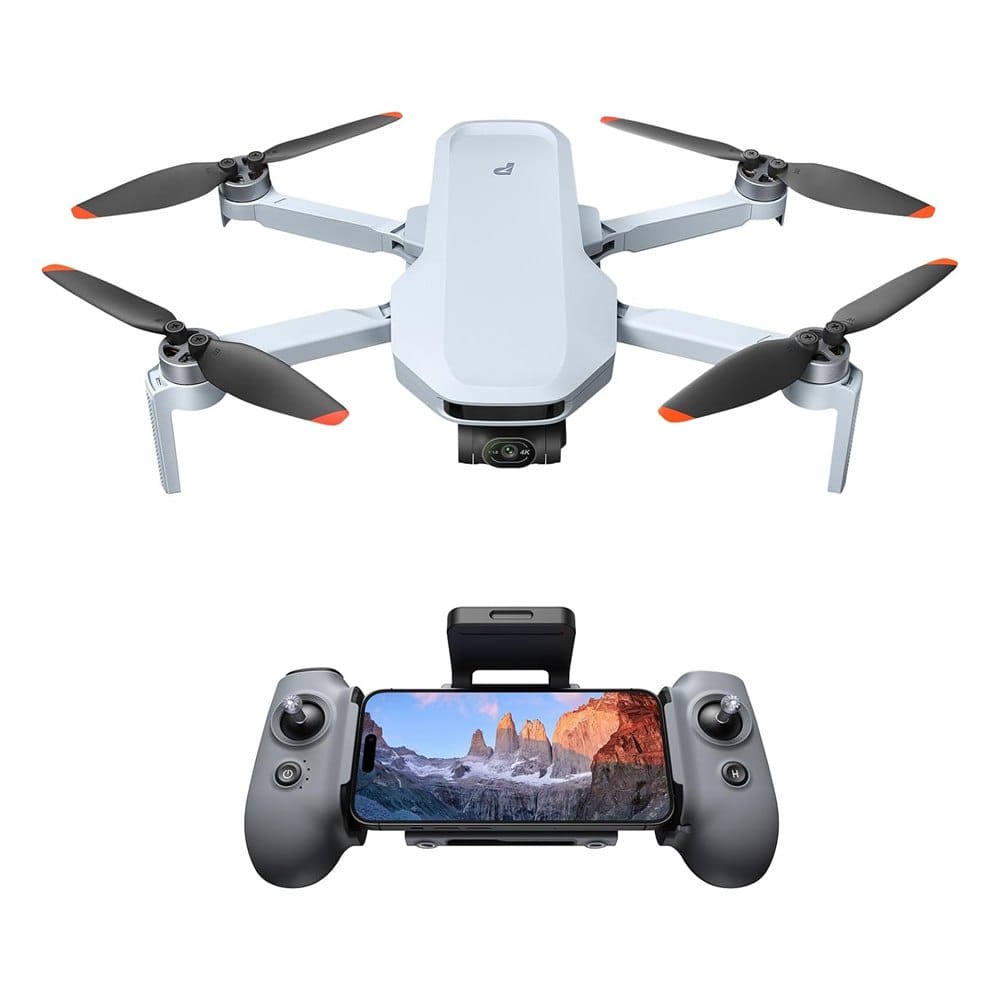
The ATOM 2 is the upgrade over the ATOM SE. It has a 4.5-star rating from almost 2,000 reviews, the highest rating on the list. It's under 249g, with a 3-axis gimbal.
What makes it stand out: It has a 1/2-inch Sony sensor with an F1.8 aperture, 4K HDR video and 48MP stills (Potensic's 8K photo claim). It has AI tracking, vertical shooting for social media and a remote with a directional antenna and a listed 10 km range. It also does auto takeoff and landing, and you can customize the return-to-home point.
Good to know: The standard kit comes with one battery, about 32 minutes of flight. That's tight for a beginner who is still learning, so look at the Fly More version. It's also the second most expensive on the list.
5. DJI Mini 4K Combo
Best for: anyone who wants the DJI name, a gimbal and long-range video.
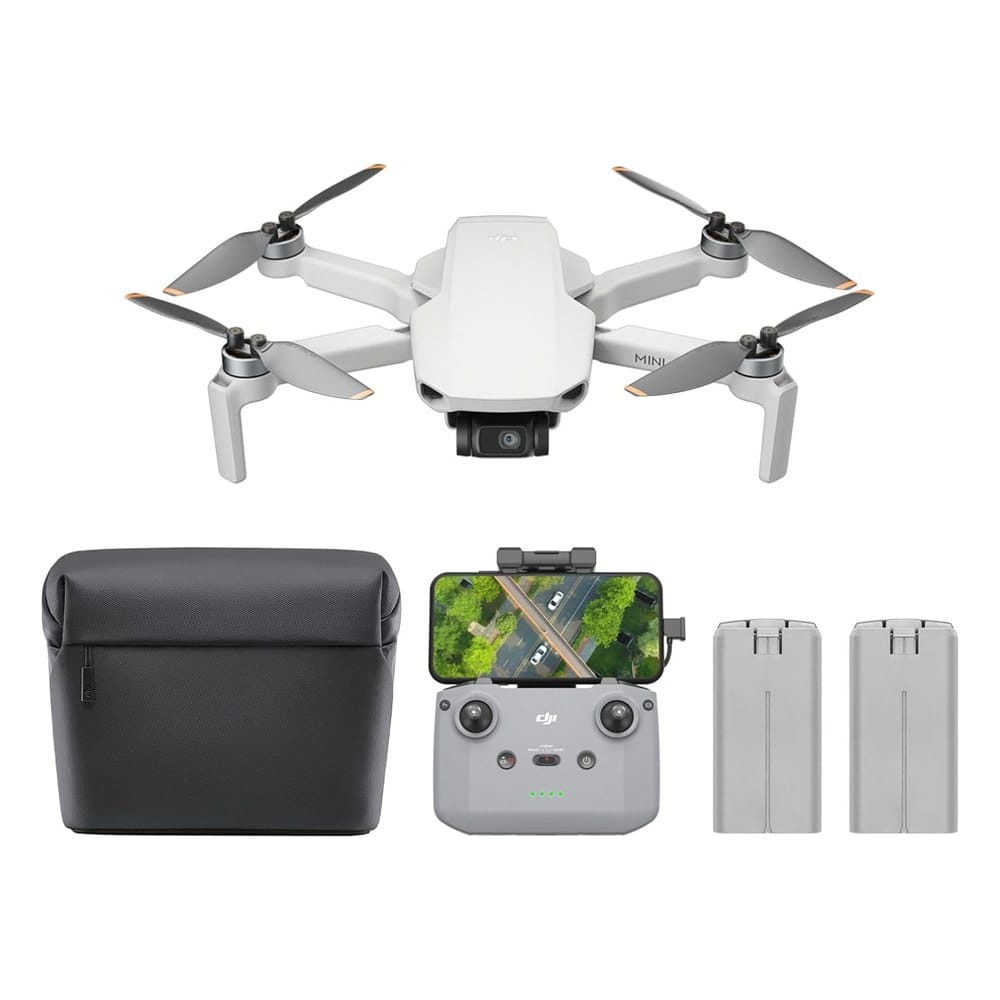
The Mini 4K has a 4.4-star rating from over 2,100 reviews. It's a basic, solid beginner drone with a gimbal and DJI's flight software.
What makes it stand out: It records 4K video with a 3-axis gimbal and has GPS return-to-home, one-tap takeoff and landing and stable hovering. Video transmission is listed at up to 10 km, and it handles Level 5 wind (38 kph). The combo here has two batteries (62 minutes total, 31 per battery) and the RC-N1C remote. In-app lessons help you learn.
Good to know: It has no obstacle avoidance, so the propellers are on their own near trees. The camera is simpler than the ATOM 2. Same as the Neo, you'll need to download the DJI Fly app from DJI's site on Android.
How to Fly a Drone Safely for the First Time
- Start in an open field. Stay away from trees, power lines, roads and people.
- Update the firmware and calibrate first. Do this at home, with the SD card in. Updates fix bugs.
- Check that GPS has locked. Wait for the app to confirm the home point before you take off.
- Fly at eye level for ten minutes. Practice moving forward, back and sideways before you go high.
- Land at 30%. Don't push the battery to empty.
If you want to see your footage on a bigger screen, our guide to a portable monitor for laptops helps with editing on the go. And if this is a gift for a young kid, see our list of drones for kids that survive crashes.
Frequently Asked Questions
Do I need to register a drone under 249 grams?
What is the easiest drone to fly for a beginner?
How long does a drone battery last?
Is a cheap drone with a camera worth it?
Keep Reading
- Beginner drones for kids that survive crashes
- GoPro cameras for kids
- Outdoor projectors for backyard movies
Final Thoughts
Our pick for most people is the Potensic ATOM SE. It has the most reviews, three batteries in the combo and a real remote, and it costs less than the gimbal models. If you'd rather have a gimbal and better video, step up to the ATOM 2 or the DJI Mini 4K.
Pick the DJI Neo if you want to film yourself and don't want to learn to fly. Pick the Holy Stone HS175D if budget matters most and you'll accept an average camera. Whatever you choose, buy the version with extra batteries.
Disclosure: This post contains affiliate links. As an Amazon Associate I earn from qualifying purchases. Here's how we pick products.