

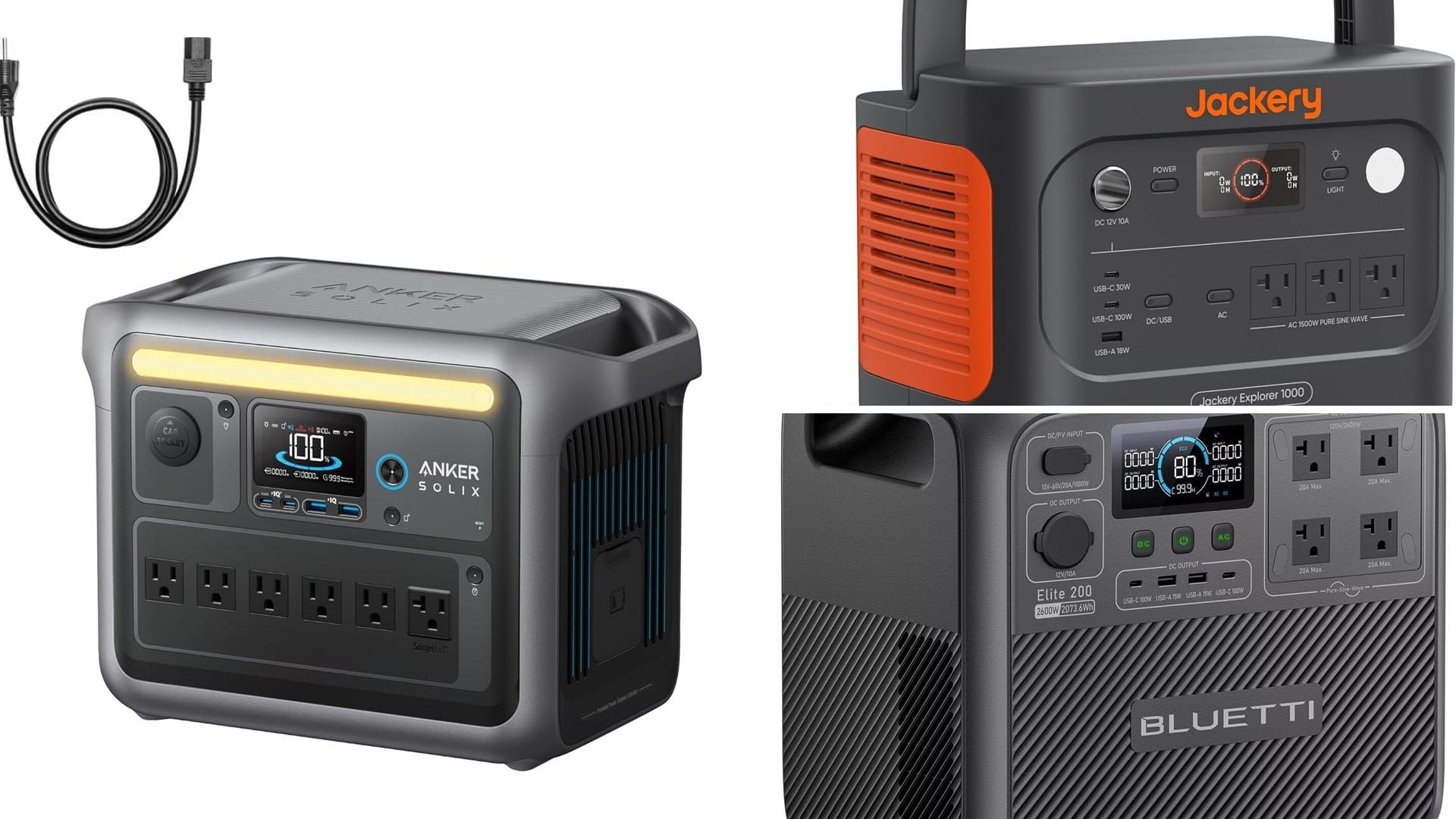


The storm knocks the power out at 9 PM. By morning you're doing the math on how long the milk and the freezer full of meat will last. If you're looking for the best portable power station for a refrigerator, you need more than a big battery number on the box. A fridge needs a burst of power to start the compressor, then sips power all day. This guide is for anyone who wants a backup that keeps the fridge cold during an outage and still works for camping or a road trip. Here are the best portable power stations for a refrigerator in 2026.
What to Look For in a Portable Power Station for a Refrigerator
Surge power. A regular full-size fridge draws roughly 100 to 150 watts while it runs, but the compressor can spike to 800 to 1,200 watts for a second or two when it kicks on. The power station's AC output and surge rating both need to clear that number. Every model here does.
Capacity (watt-hours). This is your runtime. Many full-size fridges use somewhere around 1 to 2 kWh a day, and the yellow EnergyGuide label on yours will give you a better number. A 1,000Wh unit gets you part of a day. A 2,000Wh unit gets you closer to a full day or more, and less if you plug in other things.
Battery type. Every pick here uses LiFePO4 (LFP) batteries. They handle thousands of charge cycles and are safer than older lithium types. That matters if this thing sits in a closet for years between outages.
Recharge options. In a multi-day outage, the wall won't help. Look for solar input, and check how fast it recharges once the power is back. Solar panels are almost always sold separately.
Weight and outlets. These range from about 24 to about 40 pounds. Check that it has at least two standard outlets and that the fridge cord reaches it.
The 5 Best Portable Power Stations for a Refrigerator in 2026
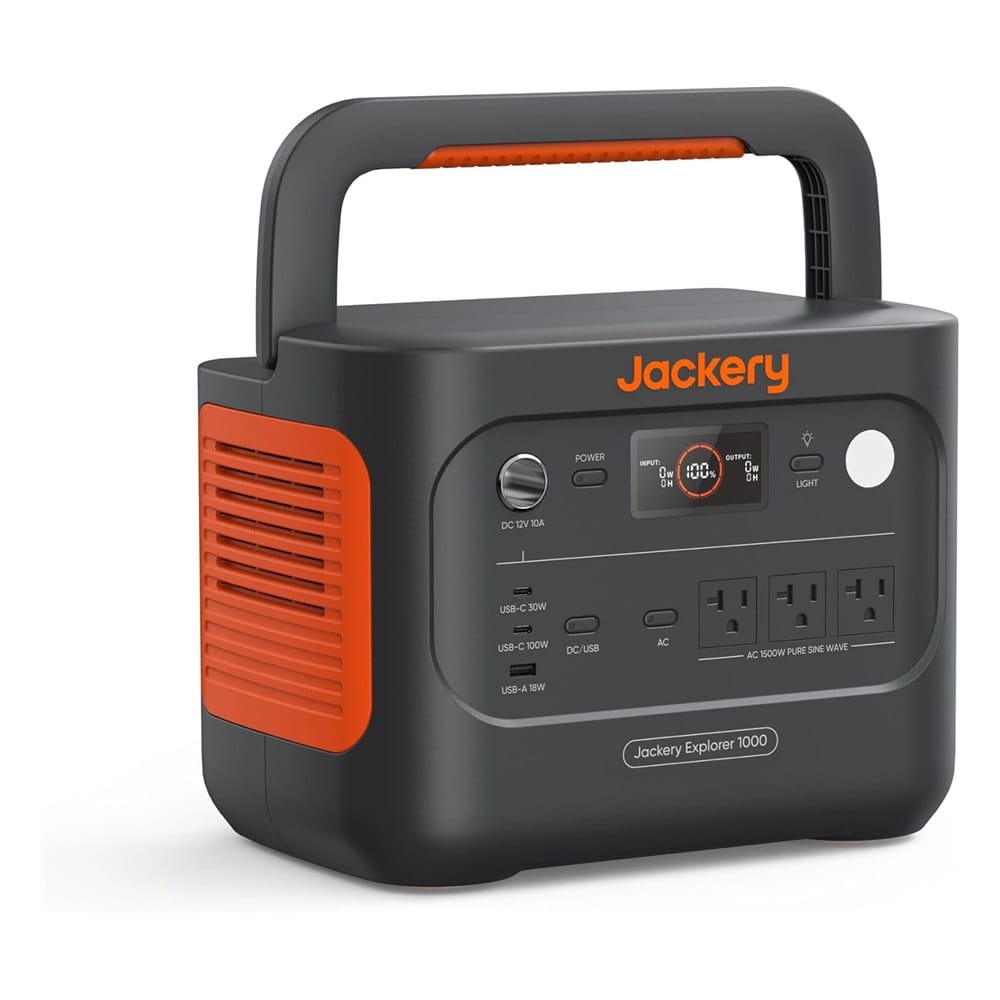
1. Jackery Explorer 1000 v2 (1070Wh, 1500W)
Best for: keeping one fridge going through an outage, and still carrying it to a campsite.
The Jackery Explorer 1000 v2 has a 1,070Wh LiFePO4 battery, 1,500W of AC output and a 3,000W surge peak. It weighs 23.8 pounds and has three AC outlets, two USB-C ports, a USB-A port and a car port. Jackery says the battery keeps over 70% of its capacity after 4,000 cycles. It has over 3,600 reviews at 4.7 stars, which is the best score in this group.
What makes it stand out: It's light for what it does, and the 3,000W surge peak is plenty for a fridge compressor. By default it takes about 1.7 hours to charge fully, and an emergency mode in the app cuts that to about an hour. That's handy when the power comes back for a short window.
Good to know: 1,070Wh is not a lot for a fridge. Expect part of a day, not a weekend, unless you add solar panels. Those cost extra.
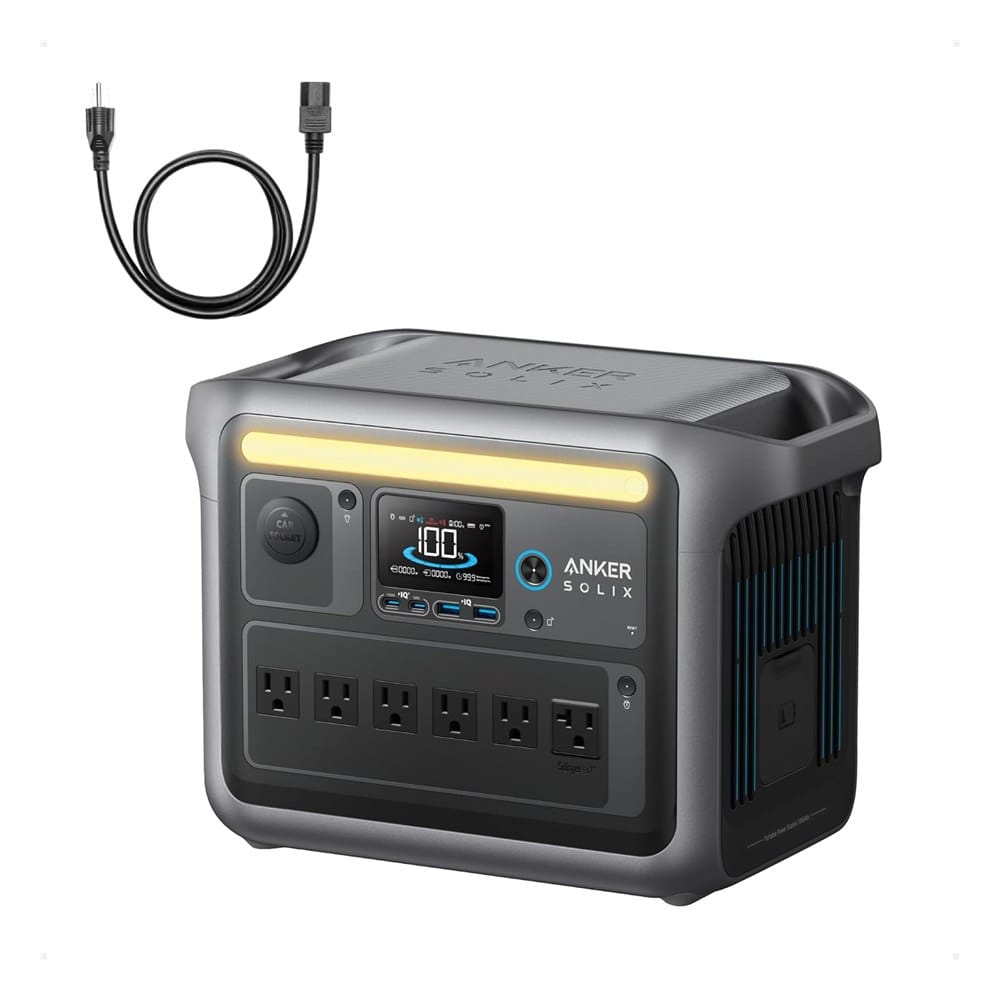
2. Anker SOLIX C1000 (1056Wh, 1800W)
Best for: people who want more outlets and a bit more output for the same size.
The Anker SOLIX C1000 packs 1,056Wh into a smaller body than many 1 kWh units. It puts out 1,800W (2,400W peak with Anker's SurgePad) and has six AC outlets and 11 ports in total. A full charge takes about 58 minutes in UltraFast mode. Anker rates it for over 3,000 cycles, and it has more than 2,100 reviews at 4.7 stars.
What makes it stand out: Six outlets means the fridge, a lamp, a router and a phone charger can all run at once. The higher output gives you more room if you add a small appliance.
Good to know: The capacity is the same as the Jackery, so the runtime is too. There's also a newer Gen 2 model, so make sure you're looking at the version you want before you buy.
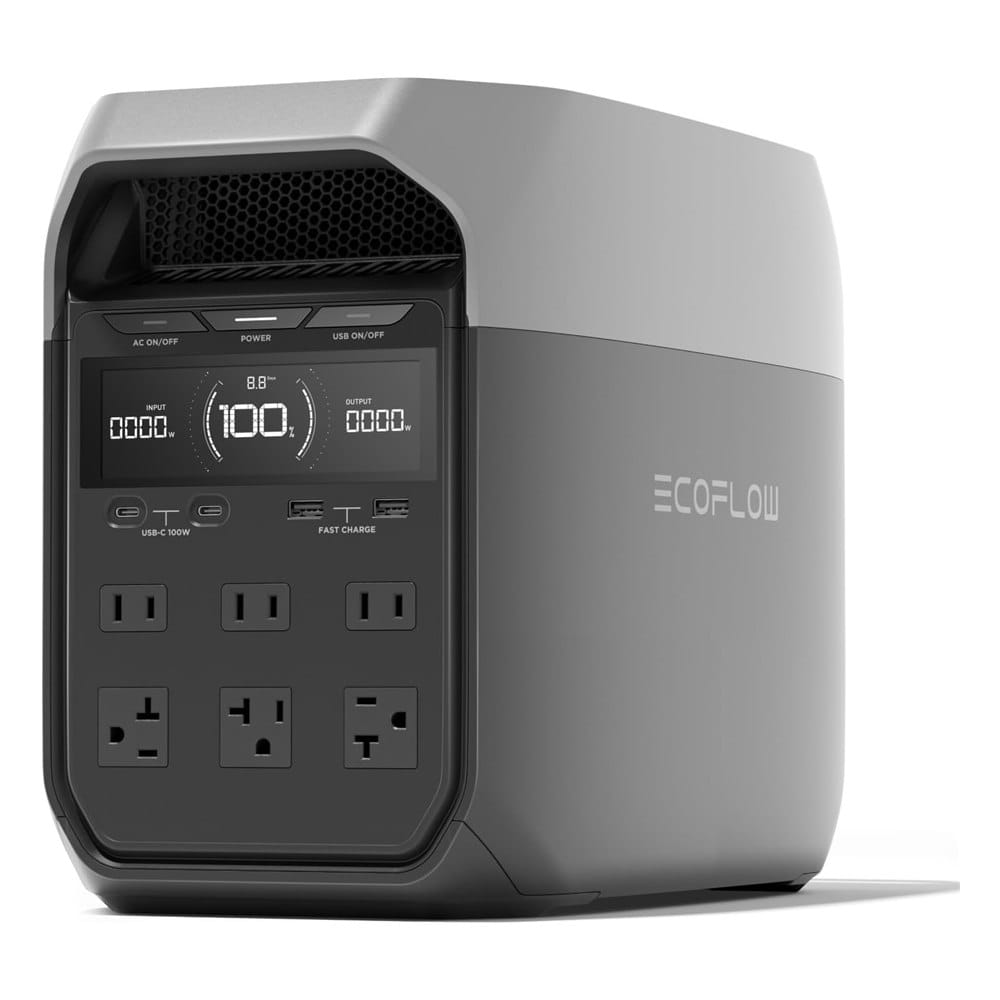
3. EcoFlow DELTA 3 (1024Wh, 1800W)
Best for: fast recharging and a system you can expand later.
The EcoFlow DELTA 3 has a 1,024Wh LiFePO4 battery and 1,800W of AC output. Its X-Boost mode lifts the output to 2,600W for devices that need more. The listing shows a 4,000-cycle, 10-year battery and a 5-year warranty. It charges from 0 to 80% in about an hour on AC power and takes solar input. It has around 1,350 reviews at 4.7 stars.
What makes it stand out: It charges fast and it grows with you. EcoFlow sells extra batteries for the DELTA line, so you can add capacity later if one unit isn't enough.
Good to know: The base unit costs more than the Jackery and Anker for the same 1 kWh. You're paying for the fast charging and the expansion options. If you never plan to expand, you're paying for something you won't use.
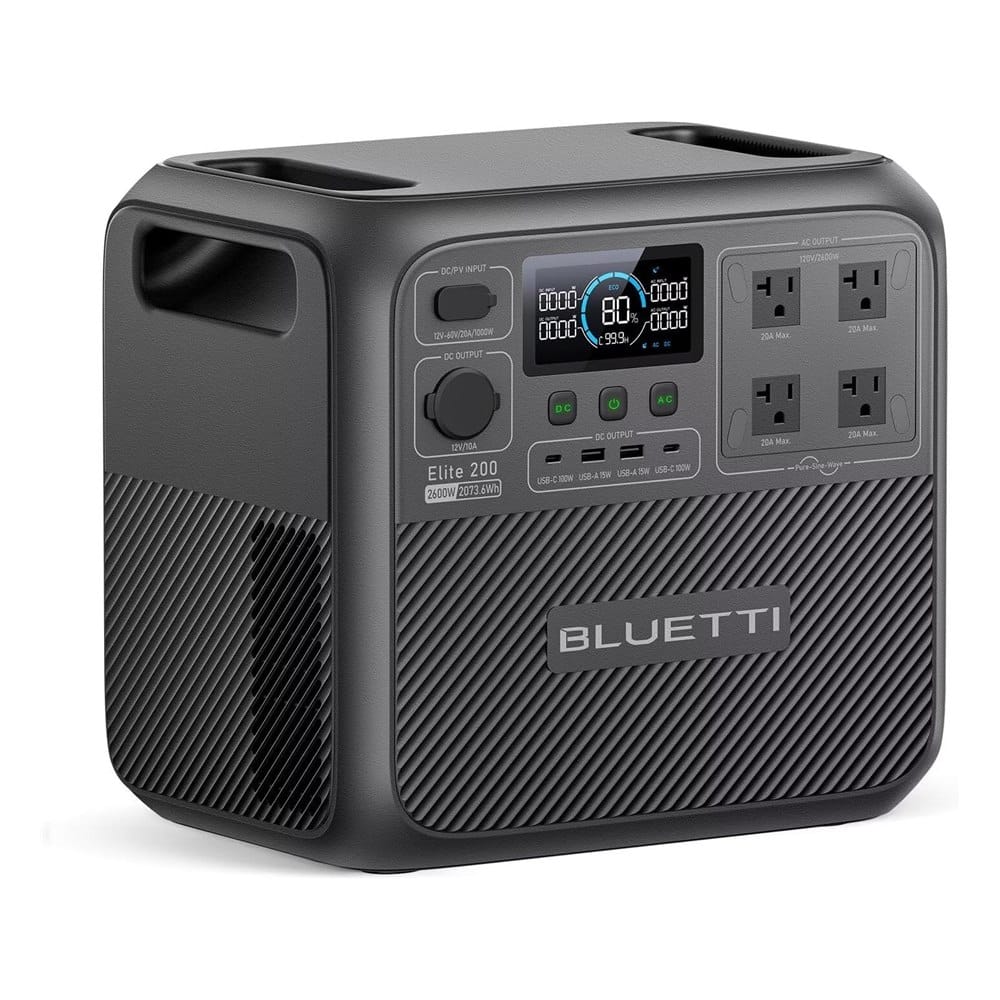
4. BLUETTI Elite 200 V2 (2073.6Wh, 2600W)
Best for: a fridge plus a few other things for a full day or more.
The BLUETTI Elite 200 V2 doubles the capacity: 2,073.6Wh with 2,600W of AC output and four AC outlets. An app setting called Power Lifting can run some heating devices up to 3,900W, though you won't need that for a fridge. It charges from 0 to 80% in about 50 minutes with AC and DC together. Bluetti advertises a 17-year battery lifespan. It has over 900 reviews at 4.7 stars.
What makes it stand out: The extra capacity is the point. A fridge plus a few lights, a router and a phone charger gets you a day, sometimes more. Bluetti also lists a low idle drain, which matters when the unit sits plugged in for days.
Good to know: It's heavier and bigger than the 1 kWh units, and it costs a good bit more. It also has fewer reviews than the Jackery 1000 and Anker.
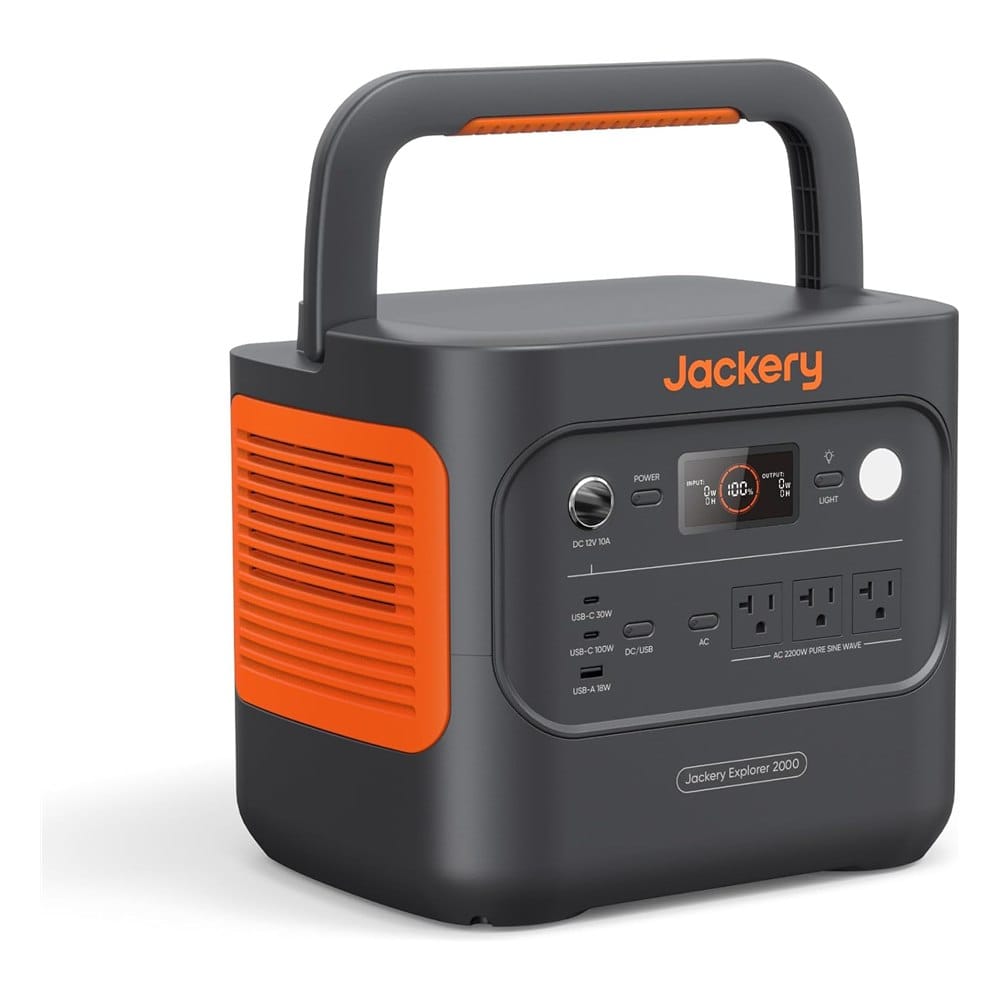
5. Jackery Explorer 2000 v2 (2042Wh, 2200W)
Best for: home backup for a fridge, a freezer and the essentials, with the least fuss.
The Jackery Explorer 2000 v2 has a 2,042Wh LiFePO4 battery and 2,200W of AC output. It weighs 39.5 pounds, which Jackery says is smaller and lighter than most 2 kWh units. It switches over in 20 milliseconds, so it works as a backup that kicks in fast, and it's UL1778 certified as a UPS. Full charge takes as little as 102 minutes with emergency charging. A silent mode charges below 30 dB in about 5 hours.
What makes it stand out: It's the simplest way to run a fridge and a few other essentials for a long stretch. If you have a chest freezer as well, this is the size to look at.
Good to know: It has the lowest rating of the five, at 4.4 stars from about 870 reviews, and it's one of the two priciest of the group. Read the recent reviews before buying.
How to Hook Up a Power Station to Your Fridge
- Check your fridge's label. Look for the running watts and the daily kWh figure so you know how big a unit to buy.
- Plug the fridge straight into the power station. Use a short, heavy-duty extension cord if you need one. Skip the cheap thin ones.
- Keep the doors shut. A closed fridge stays cold for about four hours, and a full freezer holds for about 48 hours if you don't open it.
- Don't run everything. Fridge first. Then lights and phones. Skip space heaters and hair dryers.
- Charge it before storm season. A power station left at 0% is a paperweight. Top it up every few months.
Want a wider look at what's out there? Our guide to the best portable power stations covers more sizes, and if you need small stuff charged too, see our power bank picks.
Frequently Asked Questions
What size portable power station do I need for a refrigerator?
How long will a power station run a fridge?
Can a portable power station run a refrigerator and a freezer?
Can I charge it with solar panels?
Keep Reading
- More portable power stations for home and camping
- Power banks for phones and small devices
- Hybrid inverters for solar setups
Final Thoughts
If you want one that does the job without overthinking, we'd go with the Jackery Explorer 1000 v2 (#1). It has the best ratings of the group, it's light, and it has plenty of surge for a fridge. The Anker SOLIX C1000 is the pick if you'd rather have more outlets. The EcoFlow DELTA 3 makes sense if fast charging and expansion matter to you.
If you want a full day or more, step up to the BLUETTI Elite 200 V2 or the Jackery Explorer 2000 v2. Just know that none of these will run a whole house, an air conditioner or a well pump. We didn't test them ourselves. This list comes from the specs and a lot of reading through reviews.
Disclosure: This post contains affiliate links. As an Amazon Associate I earn from qualifying purchases. Here's how we pick products.