



Introduction
Hotel WiFi is convenient, but it often comes with frustrating limitations. Many hotels limit the number of devices you can connect, and public WiFi networks can expose your data to security risks.
A travel router is a small portable device designed to solve those problems. It connects to an existing internet connection—like hotel WiFi or an Ethernet port—and creates your own private wireless network that all of your devices can use.
Instead of connecting your laptop, phone, tablet, and streaming device individually to public WiFi, you connect everything to the travel router. The router then manages the connection for you.
For frequent travelers, digital nomads, and remote workers, this simple device can make internet access more secure and much easier to manage.
What Is a Travel Router?
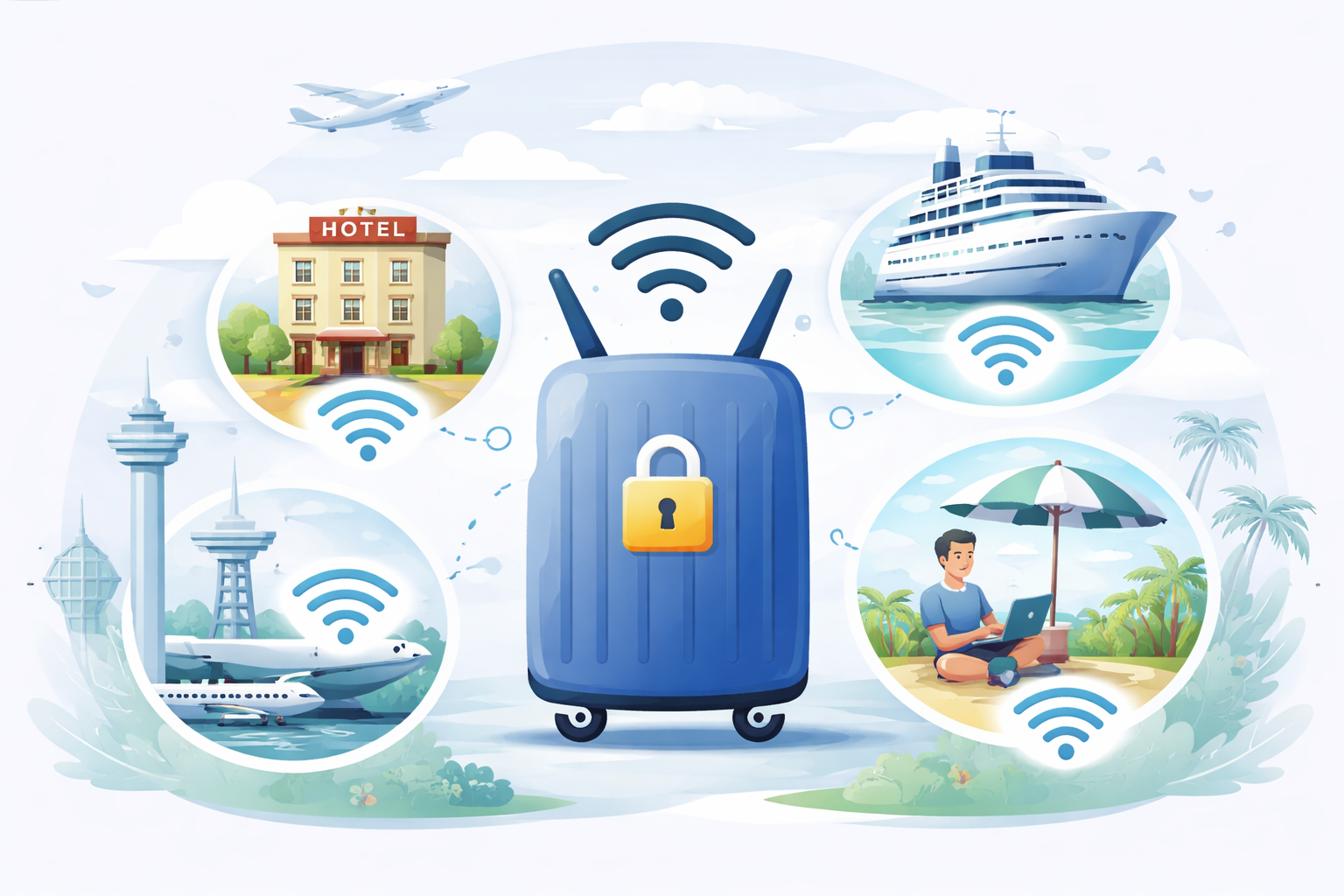
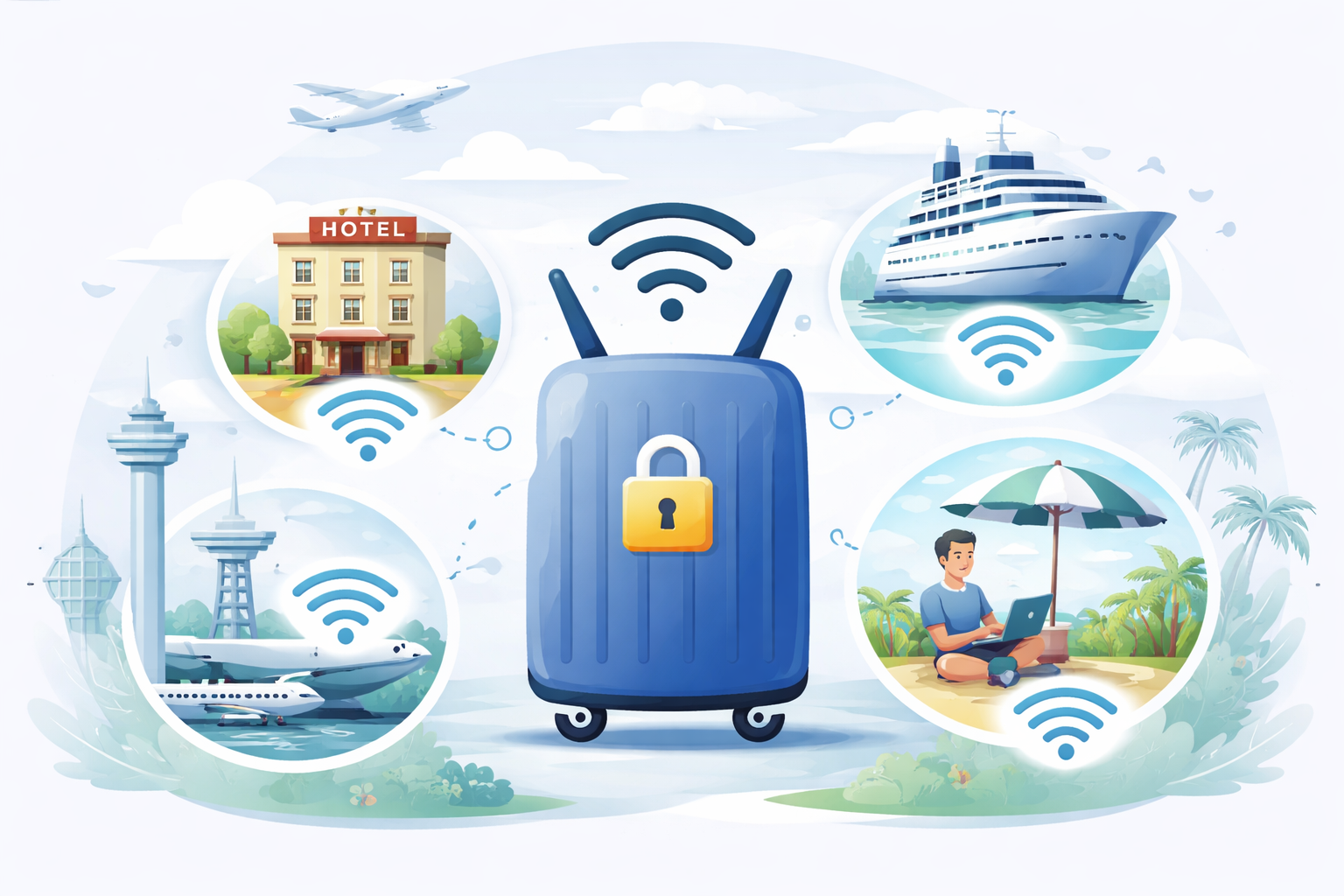
A travel router is a compact wireless router designed for use on the go. It connects to an internet source—such as hotel WiFi, airport internet, or a wired Ethernet connection—and creates a private WiFi network for your devices.
This means all of your devices connect to the router instead of connecting directly to the public network.
Because travel routers are small and portable, they are easy to carry in a backpack, laptop bag, or suitcase.
Travel routers are commonly used in places such as:
- Hotels
- Airbnbs
- Cruise ships
- Airports
- Coffee shops
- Co-working spaces
They allow travelers to create a more stable and secure internet setup while away from home.
How Travel Routers Work
Travel routers act as a bridge between public internet and your personal devices.
The connection flow looks like this:
Public WiFi → Travel Router → Your Devices
Instead of every device connecting directly to the public network, the router connects once and then distributes the connection to your phone, laptop, tablet, and other devices.
This setup provides several benefits:
• easier device management
• a private wireless network
• the ability to connect multiple devices through one login
In hotels that limit device connections, this can be especially useful because the network only sees one connected device—the router.
Example: How a Travel Router Works in a Hotel
To understand why travel routers are useful, imagine this situation.
You check into a hotel and want to connect several devices to the internet:
- your laptop
- your phone
- a tablet
- a streaming device like a Fire Stick
Many hotels limit the number of devices you can connect to their WiFi network. Some also require you to sign in through a browser each time a device connects.
With a travel router, you only connect one device to the hotel WiFi — the router itself.
Once the router is connected, it creates a private WiFi network in your room. All of your personal devices connect to that network instead of connecting directly to the hotel internet.
This means:
• you only log in to hotel WiFi once
• all your devices connect automatically
• your devices are isolated from the public network
For frequent travelers, this setup makes hotel internet much easier to manage.
Travel Router vs Mobile Hotspot
Travel routers and mobile hotspots are often confused, but they serve different purposes.
A mobile hotspot uses cellular data from a carrier such as Verizon, AT&T, or T-Mobile to create a WiFi network.
A travel router does not generate its own internet connection. Instead, it connects to an existing internet source and redistributes that connection to your devices.
In other words:
Mobile hotspot = cellular internet
Travel router = WiFi network manager
Many travelers actually use both together.
Why Travelers Use Travel Routers
Travel routers have become increasingly popular because they solve several common problems that travelers face.
Connecting Multiple Devices
Many hotels allow only one or two devices per room. A travel router allows you to connect multiple devices through a single login.
Public WiFi Security
Public networks can expose devices to potential security risks. A travel router adds a layer of separation between your devices and the public network.
Convenience
Instead of reconnecting each device individually every time you move locations, your devices automatically connect to your router.
Better Streaming Setup
Travel routers can make it easier to connect streaming devices like Fire TV sticks or game consoles while traveling.
When You Should Use a Travel Router
Travel routers are particularly useful for people who travel frequently or rely on internet access while away from home.
They are especially helpful for:
Digital nomads working remotely
Families traveling with multiple devices
Business travelers staying in hotels
Cruise travelers using onboard WiFi
Remote workers who need secure internet access
If you regularly rely on public or hotel internet, a travel router can simplify your setup significantly.
Best Travel Routers Right Now
If you’re thinking about getting one, not all travel routers are the same. Some focus on portability while others prioritize speed or VPN support.
I compared the most popular options in a separate guide that covers the best models for travel, security, and performance.
👉 See the full comparison here: Best Travel Routers for Secure WiFi (2026 Guide)
That guide breaks down the top travel routers available right now and helps you choose the best one for your needs.
Travel Router Frequently Asked Questions
Do travel routers work in hotels?
Yes. Travel routers connect to hotel WiFi and create a private wireless network that your devices can connect to.
Are travel routers secure?
Travel routers can improve security by separating your devices from the public network and, in some cases, allowing VPN connections.
Can you use a travel router on a cruise?
Yes, as long as the cruise ship provides WiFi or an Ethernet connection.
Do travel routers improve internet speed?
They usually do not increase the speed of the original internet connection, but they can improve stability and make it easier to manage multiple devices.