


The power goes out at 9 PM, it's 20 degrees, and the fridge is full. You need an inverter generator for home backup that starts on the first try, doesn't wake the whole street, and can run more than a lamp. This guide is for homeowners who want to keep the essentials going (fridge, furnace fan, lights, internet) without paying for a whole-house standby unit. Here are the 5 best inverter generators for home backup in 2026.
What to Look For in an Inverter Generator for Home Backup
Running watts, not the big number. Starting (peak) watts only last a few seconds. Add up what you want to run at once, using running watts. A fridge, a furnace blower and a few lights usually fit in 2,000 to 3,000 running watts. Add a sump pump or well pump and you want more.
Fuel type. Gas is easy to find until a storm hits and stations lose power. Dual fuel models also run on propane, which stores for years and burns cleaner. Propane output is lower, so check the propane watts on the listing.
Noise. Inverter generators adjust engine speed to the load, so they're much quieter than open-frame models. The decibel numbers are usually measured at a quarter load and some distance away. Expect more noise when you actually load them.
Weight and wheels. A 50-pound unit is easy to carry. A 100-pound unit needs wheels and a plan for getting it out of the garage in the dark. One reviewer on the Generac listing says lifting it was the hard part.
Safety features. A carbon monoxide shutoff is worth paying for. Never run any generator in a garage or near a window. Connecting one to your house wiring needs a transfer switch or interlock installed by an electrician.
The 5 Best Inverter Generators for Home Backup in 2026
We ranked these by star rating and number of reviews. We didn't personally test them. Prices move around a lot, so check the live listing.
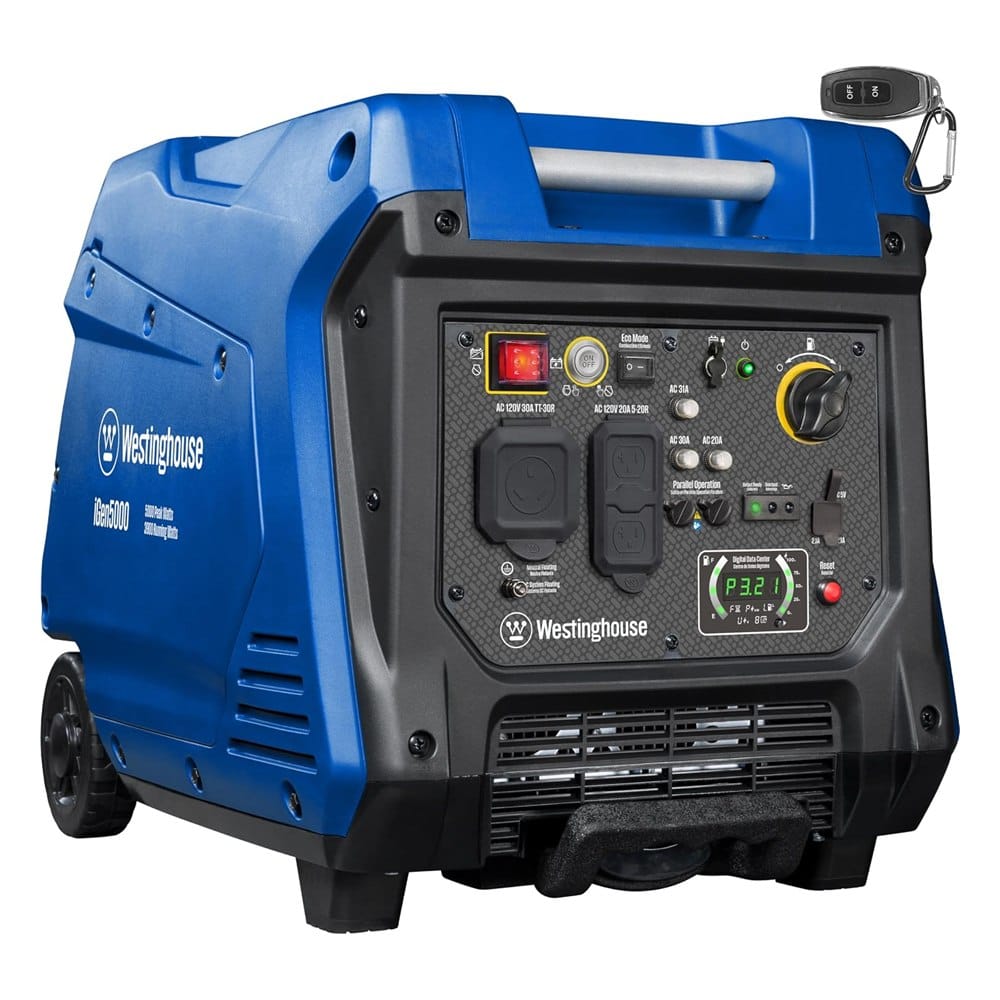
1. Westinghouse 5000 Peak Watt Inverter Generator
Best for: most homes that want the power for a fridge, furnace and more, with remote start.
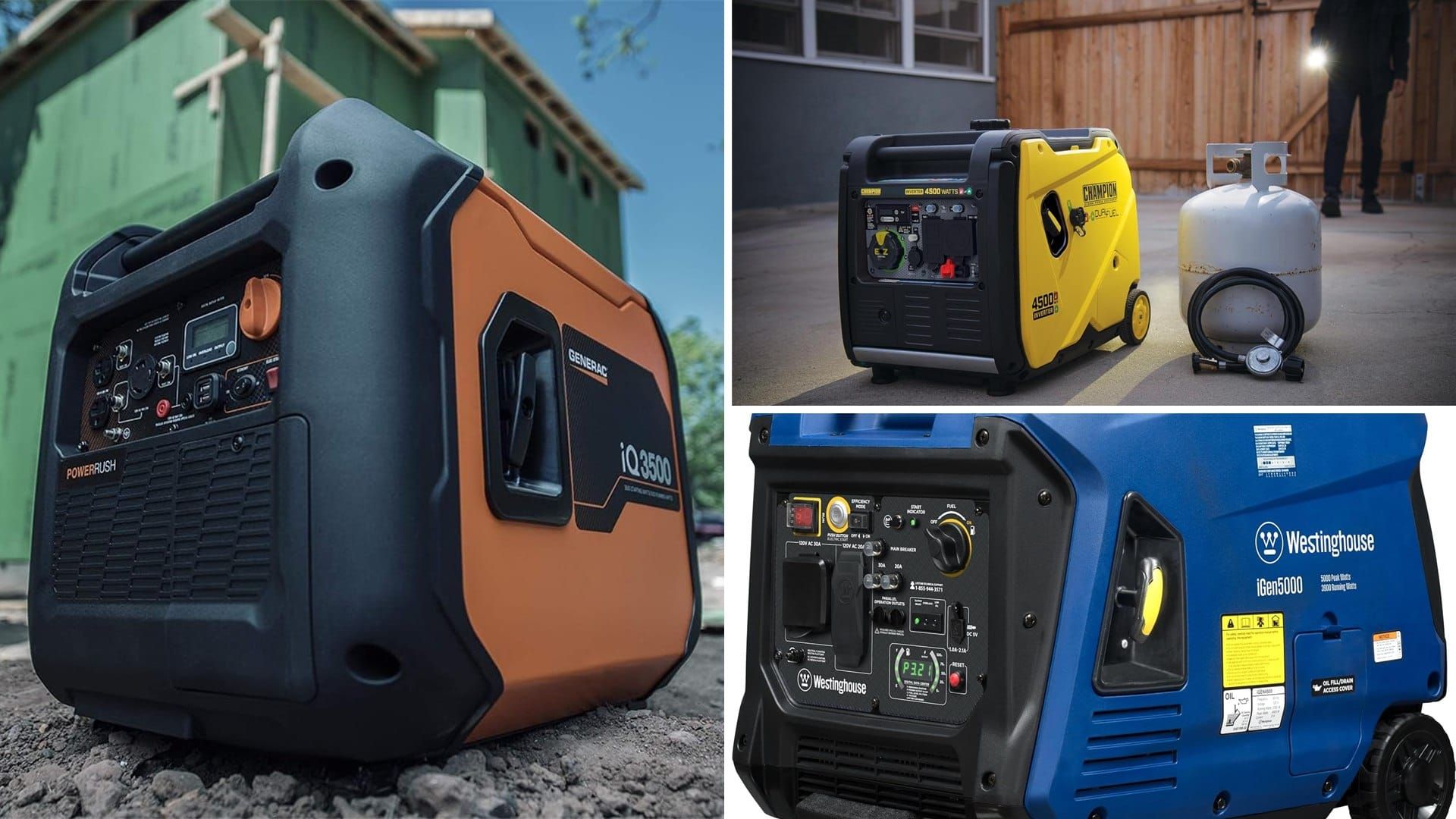
This is the most reviewed unit here, with about 5,500 ratings at 4.6 stars. It's rated at 5,000 peak and 3,900 running watts, runs on gas, and has electric start plus a key fob for remote starting.
What makes it stand out: Westinghouse lists up to 18 hours on a 3.4-gallon tank, noise as low as 52 dBA in economy mode, and a digital display with fuel level, output and remaining run time. It has wheels and a telescoping handle, and it's parallel capable if you want to add a second unit later.
Good to know: It weighs about 105 pounds. It's gas only, so no propane option. And it costs a lot more than a small unit, so it's overkill if you only need to keep a fridge cold.
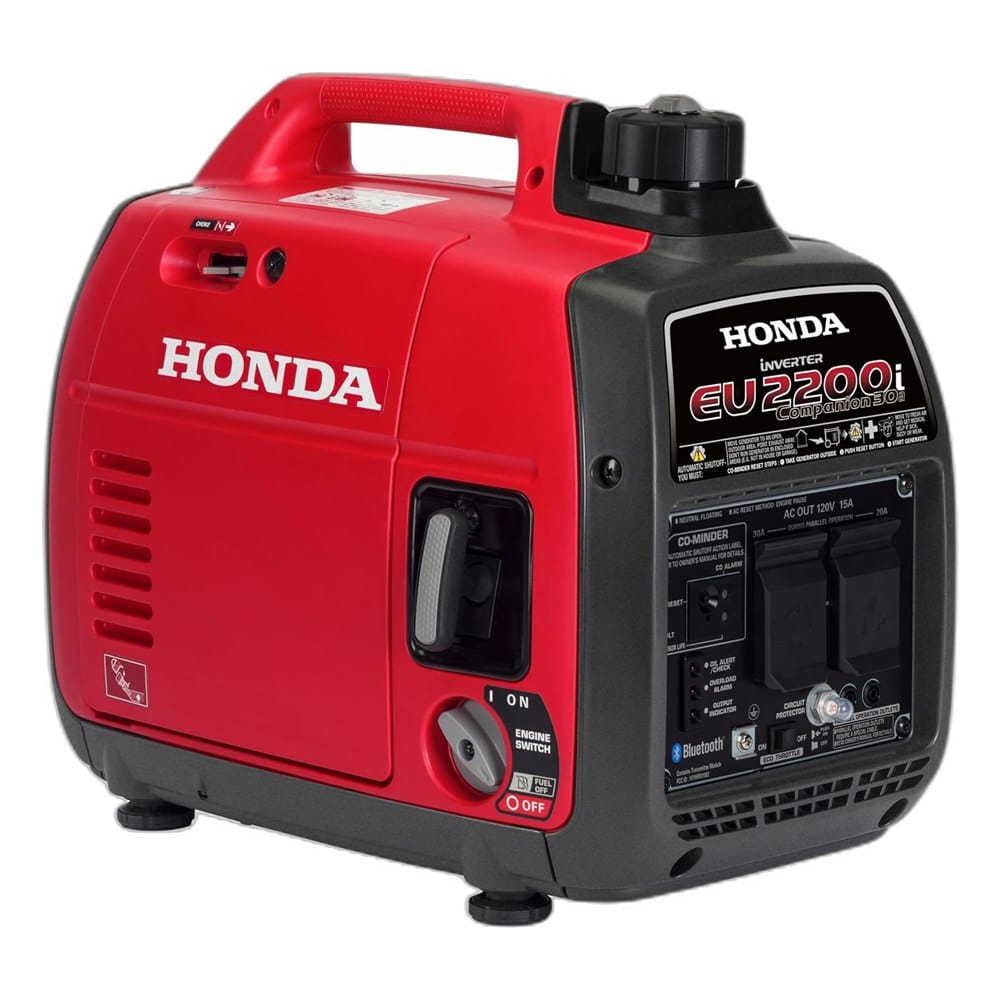
2. Honda EU2200i Companion Inverter Generator
Best for: short outages, essentials only, and anyone who wants the quietest, lightest option.
The Honda is the small one, and it has the best rating on the list: 4.8 stars from about 1,350 reviews. It makes 2,200 watts and runs on gas.
What makes it stand out: It weighs about 54 pounds, so you can carry it by yourself. Honda lists 48 to 57 dBA, up to 8.1 hours on a tank, a CO-Minder carbon monoxide sensor, Bluetooth monitoring, and a 3-year residential warranty. Reviewers keep calling it quiet and reliable.
Good to know: 2,200 watts runs a fridge, lights and phone chargers. It won't run a furnace blower, a space heater and a microwave together. It's also the most expensive per watt by a wide margin. You're paying for the name and the track record.
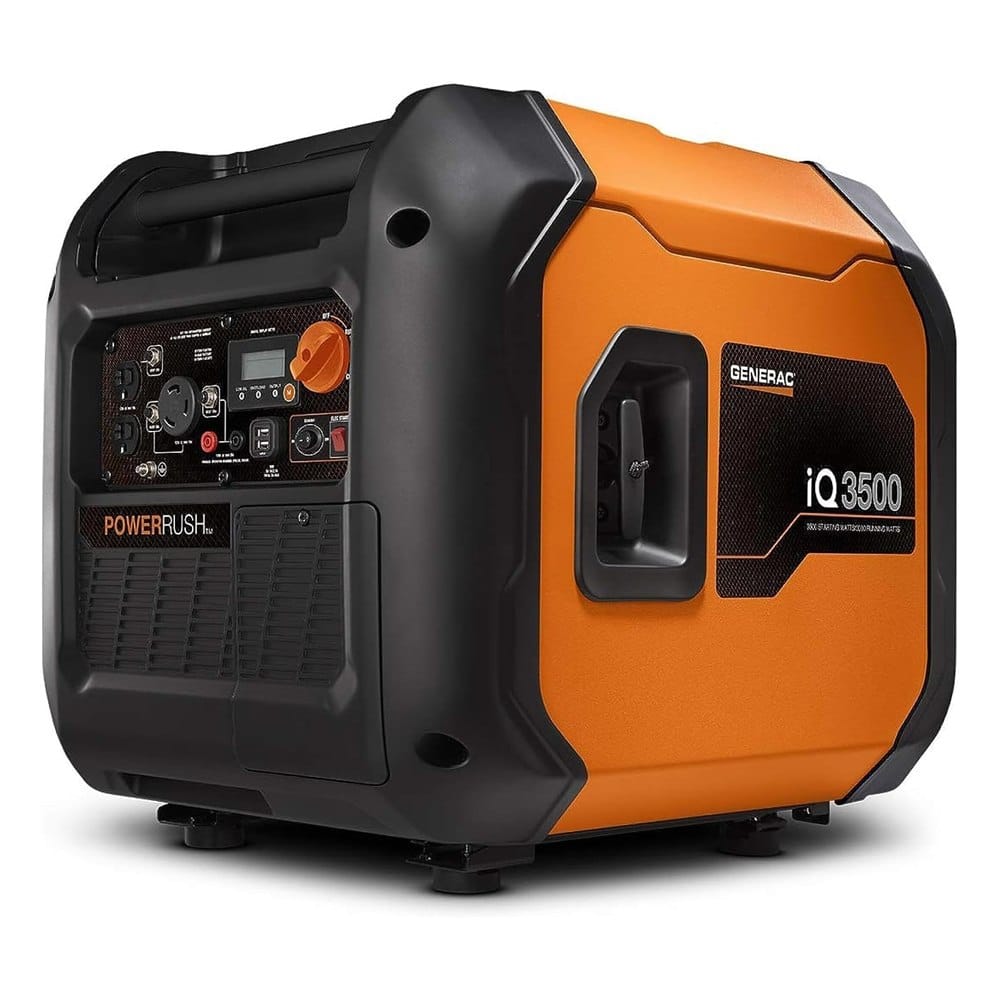
3. Generac iQ3500 Inverter Generator
Best for: a middle size that handles a fridge and a furnace and stays quiet.
A 3,500-watt gas inverter in a fully enclosed case, with electric start. It has 4.4 stars from about 1,200 reviews. Generac pushes its PowerRush feature, which gives extra starting power for motors.
What makes it stand out: Reviewers mention how quiet it is (it has a speed selection for quiet or full power) and say it's easy to start. It sits in the sweet spot between the Honda and the 4,500-watt models.
Good to know: Reliability feedback is mixed. Some owners say it runs great and a few report units that wouldn't run. It also weighs about 109 pounds and has no wheels in the photos, so plan how you'll move it. It runs on gas only.
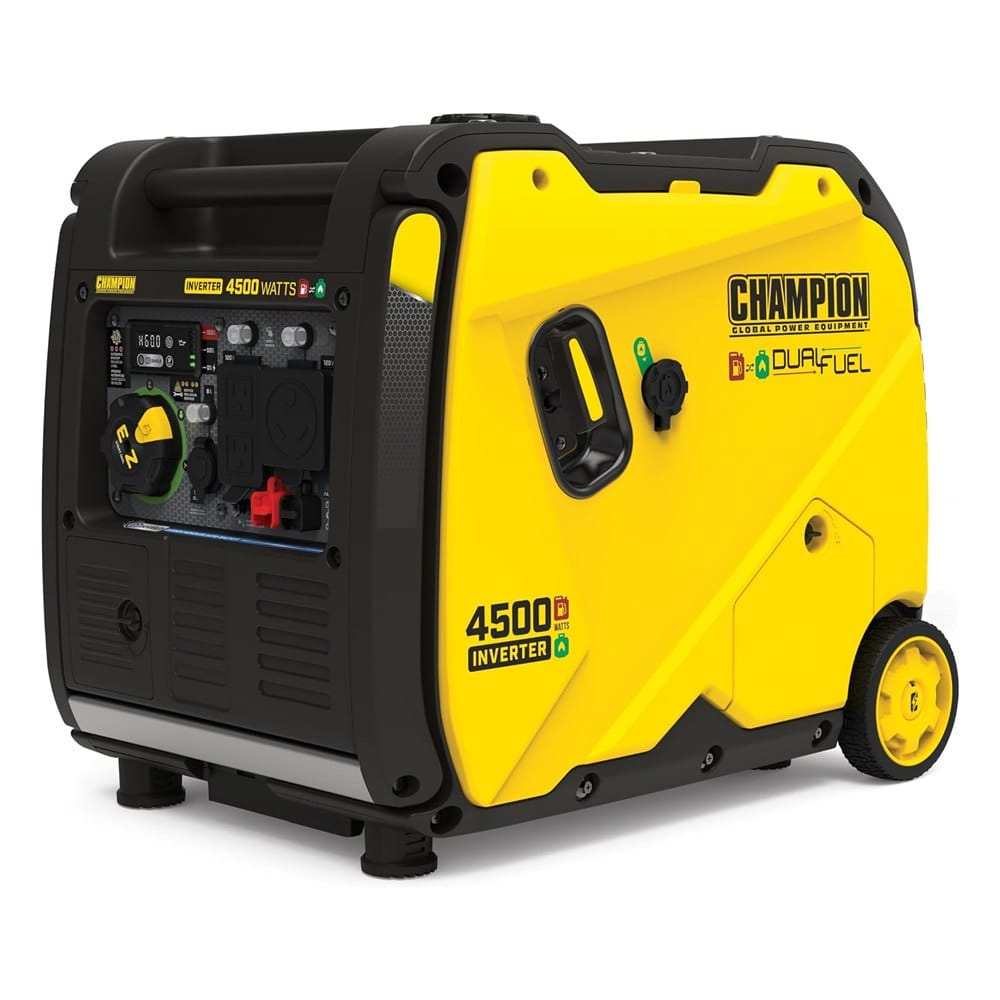
4. Champion 4500-Watt Dual Fuel Inverter Generator
Best for: longer outages where you want propane as a backup fuel.
Champion's dual fuel unit makes 4,500 starting and 3,500 running watts on gas, and 3,150 running watts on propane. It has 4.4 stars from about 400 reviews, electric start, a CO Shield auto shutoff and a 3-year warranty.
What makes it stand out: Champion lists up to 14 hours on gas and up to 21 hours on propane at 25% load. It's rated at 61 dBA, it weighs about 99 pounds with wheels, and it's RV ready with a 30-amp outlet. Reviewers say it starts easily and powers 30-amp campers.
Good to know: 61 dBA is louder than the Honda and the Westinghouse numbers, and the review count is lower than the top picks. It also costs noticeably more than the WEN, which has nearly the same specs.
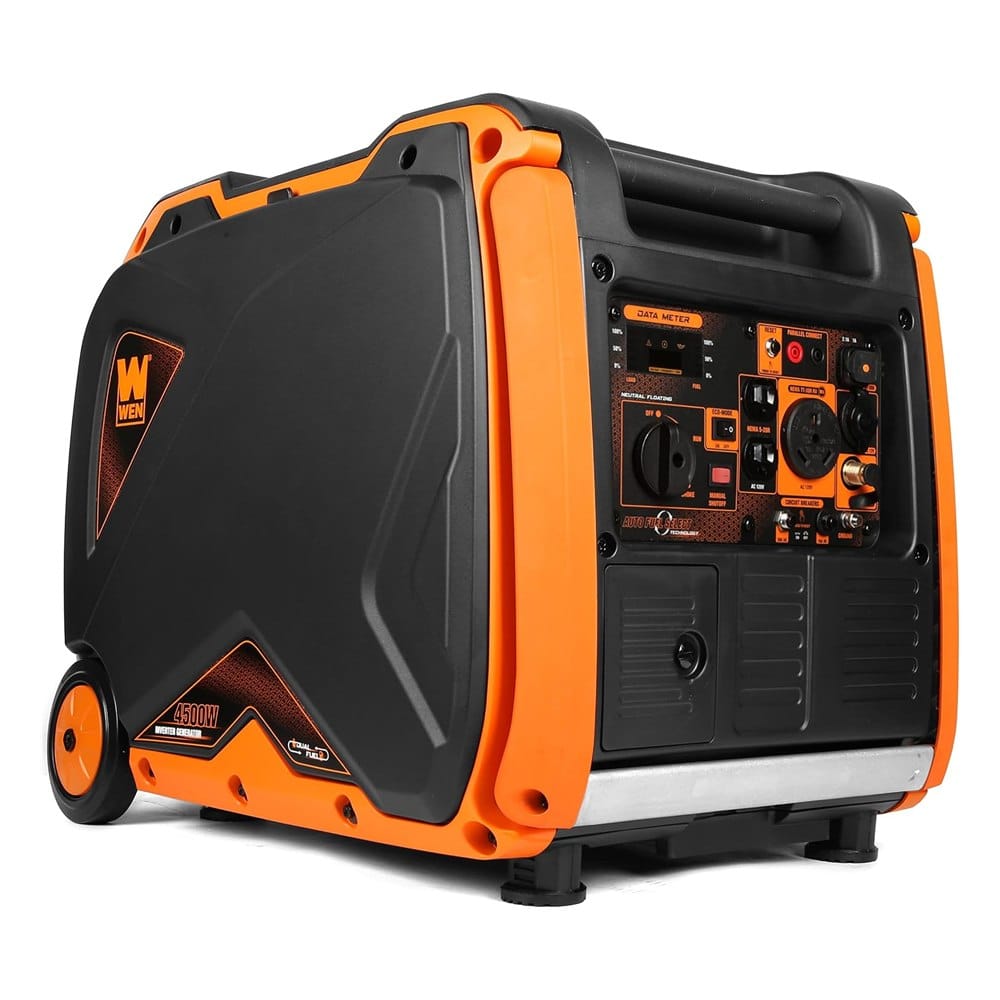
5. WEN DF450i Dual Fuel Inverter Generator
Best for: the best value for a 4,500-watt dual fuel unit.
The WEN does most of what the Champion does for less money. It's rated at 4,500 surge and 3,500 rated watts on gas, and 3,150 running watts on propane, with electric start, CO protection and a digital display. The rating is 4.7 stars, but it's from only about 115 reviews.
What makes it stand out: WEN lists 58 dBA at quarter load, and up to 18 hours of runtime. It's parallel ready and about 100 pounds with wheels. Reviewers call it super quiet and say it starts on the first pull most of the time.
Good to know: It has the fewest reviews, so there's less long-term feedback on how it holds up. WEN is a budget brand, and parts and service won't be as easy to find as Honda or Generac.
How to Size and Set Up a Home Backup Generator
- List what you must run: fridge, furnace blower, a few lights, router, phone chargers. Check the running watts on each label.
- Add them up, then leave about 20% headroom.
- Pick a spot outside, well away from doors, windows and vents. Put it on a flat surface under a cover that allows airflow.
- Use heavy-duty outdoor extension cords, or have an electrician install a transfer switch or interlock.
- Test it every few months, and use fuel stabilizer if you store gas.
If you only need to keep a few items running quietly, a battery unit might do the job. See our picks for a portable power station for a refrigerator, or the broader list of portable power stations.
Frequently Asked Questions
Can an inverter generator power a whole house?
Is an inverter generator better than a regular one for home backup?
How long will a generator run on one tank?
Can I run a generator in my garage?
Keep Reading
- Portable power stations for a refrigerator
- Portable power stations compared
- Space heaters for the garage
Final Thoughts
If we were buying one inverter generator for home backup, we'd start with the Westinghouse. It has the most reviews, a strong rating, enough running watts for the essentials and remote start. If you only need a fridge and lights, and you want something light and quiet, the Honda EU2200i is the safe pick.
Want propane as a backup fuel? The Champion and the WEN both offer it, and the WEN costs less. The Generac is a good middle size, if you can handle the weight. Whichever you pick, add up your running watts first and get a transfer switch installed before the storm.
Disclosure: This post contains affiliate links. As an Amazon Associate I earn from qualifying purchases. Here's how we pick products.