
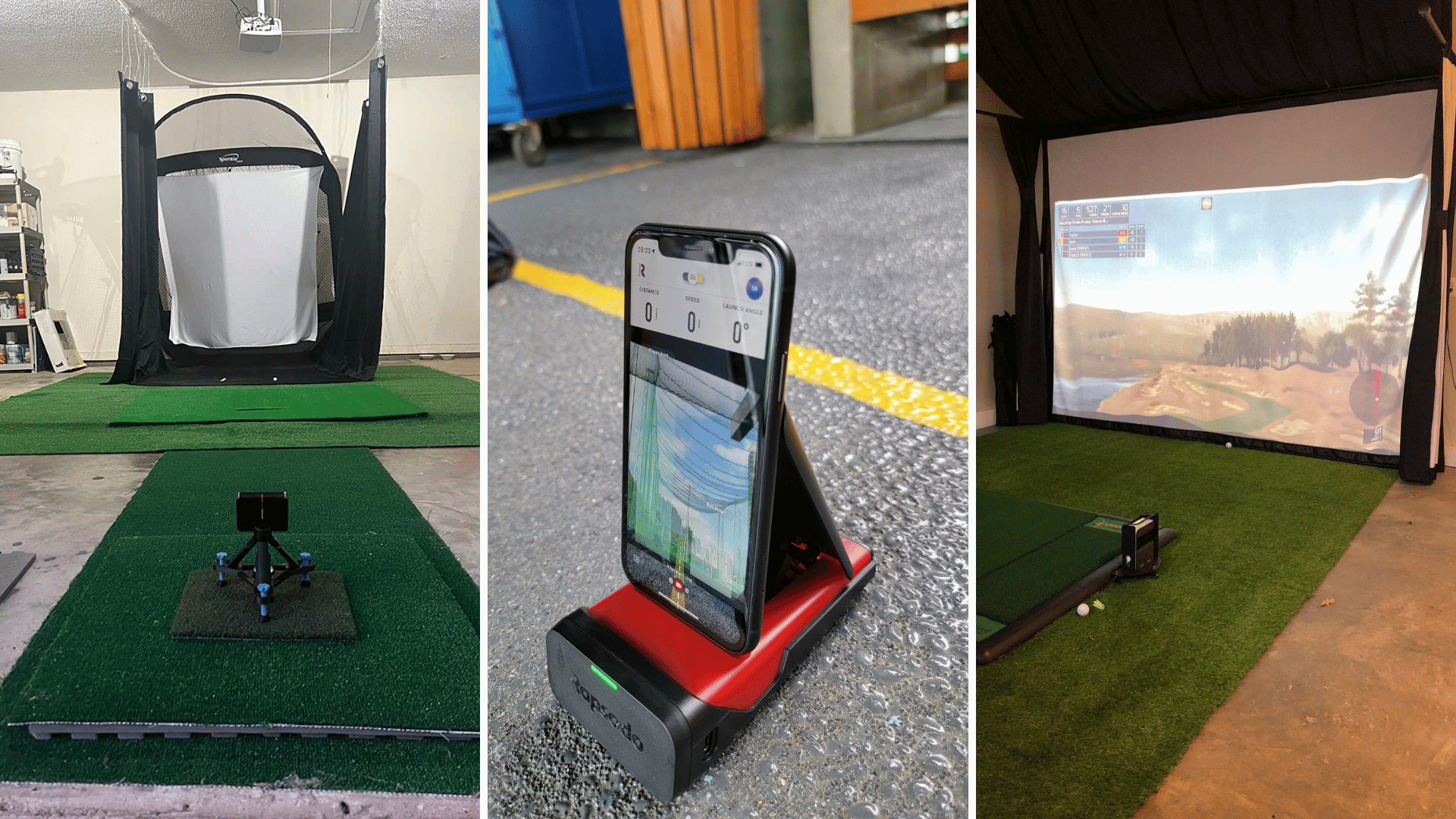



Guessing your carry distance is how strokes get wasted. A golf launch monitor takes the guesswork out completely — real ball speed, spin rate, launch angle, and carry distance on every single swing, whether you're at the range, in your backyard, or hitting into a net in the garage. Here's a complete breakdown of the best golf launch monitors in 2026, what actually separates them, and which one fits your game and budget.
What Does a Golf Launch Monitor Actually Measure?
A launch monitor uses radar or camera-based tracking (sometimes both) to capture data the moment you make contact with the ball. Depending on the model, this typically includes club head speed, ball speed, smash factor, launch angle, spin rate, spin axis, carry distance, and total distance. Higher-end units add shot shape tracking, video swing capture, and full golf simulator functionality, letting you play virtual rounds on real-world courses from your garage or basement.
The technology falls into two main categories: Doppler radar (tracks the ball's flight path through the air) and camera-based/photometric systems (captures data at the moment of impact using high-speed cameras). Some newer models combine both for more complete data.
The 6 Best Golf Launch Monitors in 2026
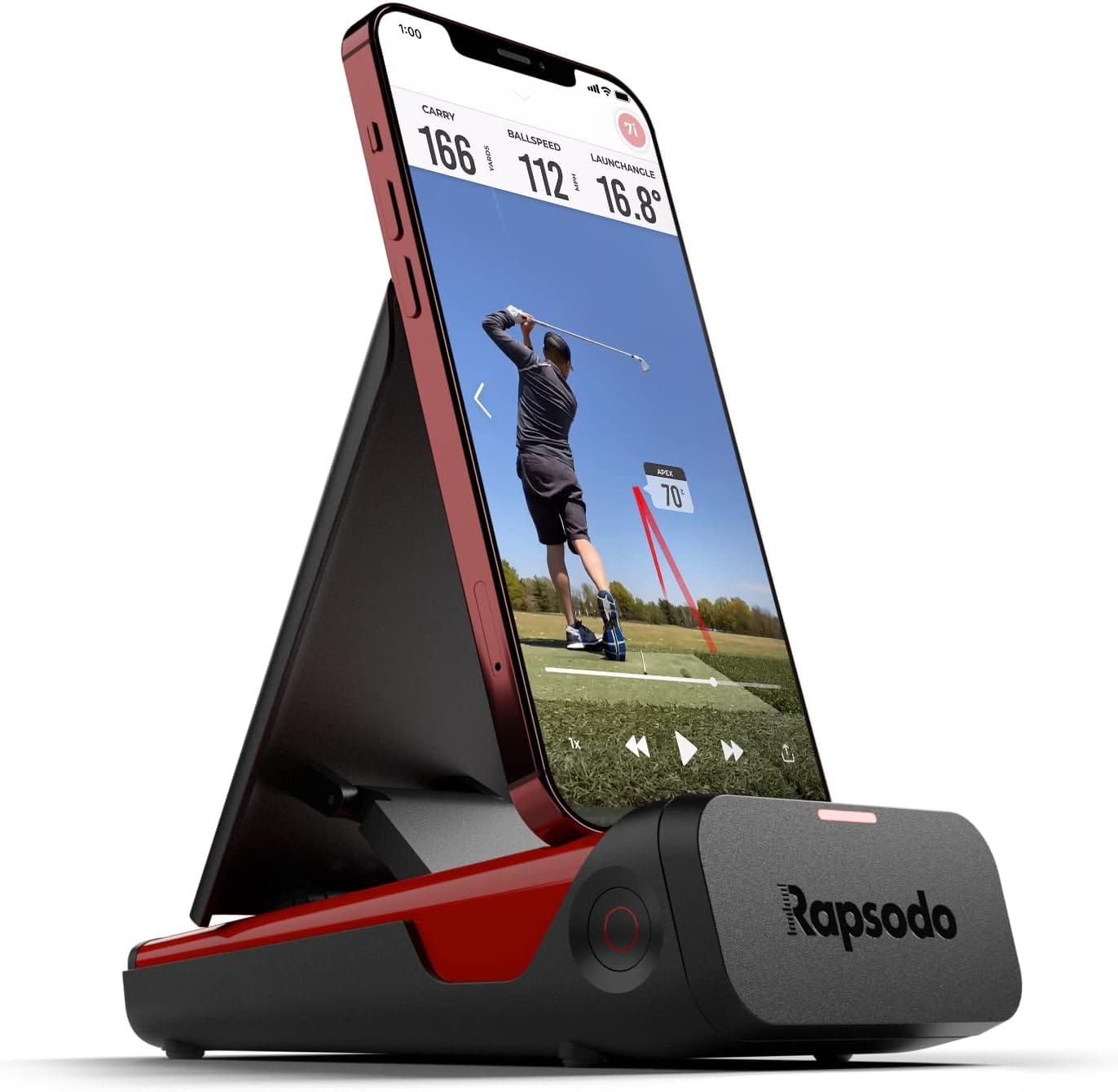
Rapsodo's original Mobile Launch Monitor remains one of the most popular entry points into serious data-driven practice, and for good reason — it delivers shot-by-shot feedback whether you're at the range, in your backyard, or hitting into an indoor net.
What it tracks: Ball speed, club speed, launch angle, carry distance, and shot shape on every single shot, giving you the core numbers needed to dial in yardages and track real improvement over time.
Standout feature: Video replay with an on-screen shot tracer shows your true ball flight, making it easy to spot and immediately correct swing faults instead of guessing what went wrong.
Compatibility: Built specifically for iPhone/iPad (iOS only) and pairs with the free Rapsodo app. A premium tier unlocks simulator courses and additional game modes.
Best for: Golfers who want reliable core metrics and video feedback in a portable, easy-to-use package — a strong gift option for players at any skill level.
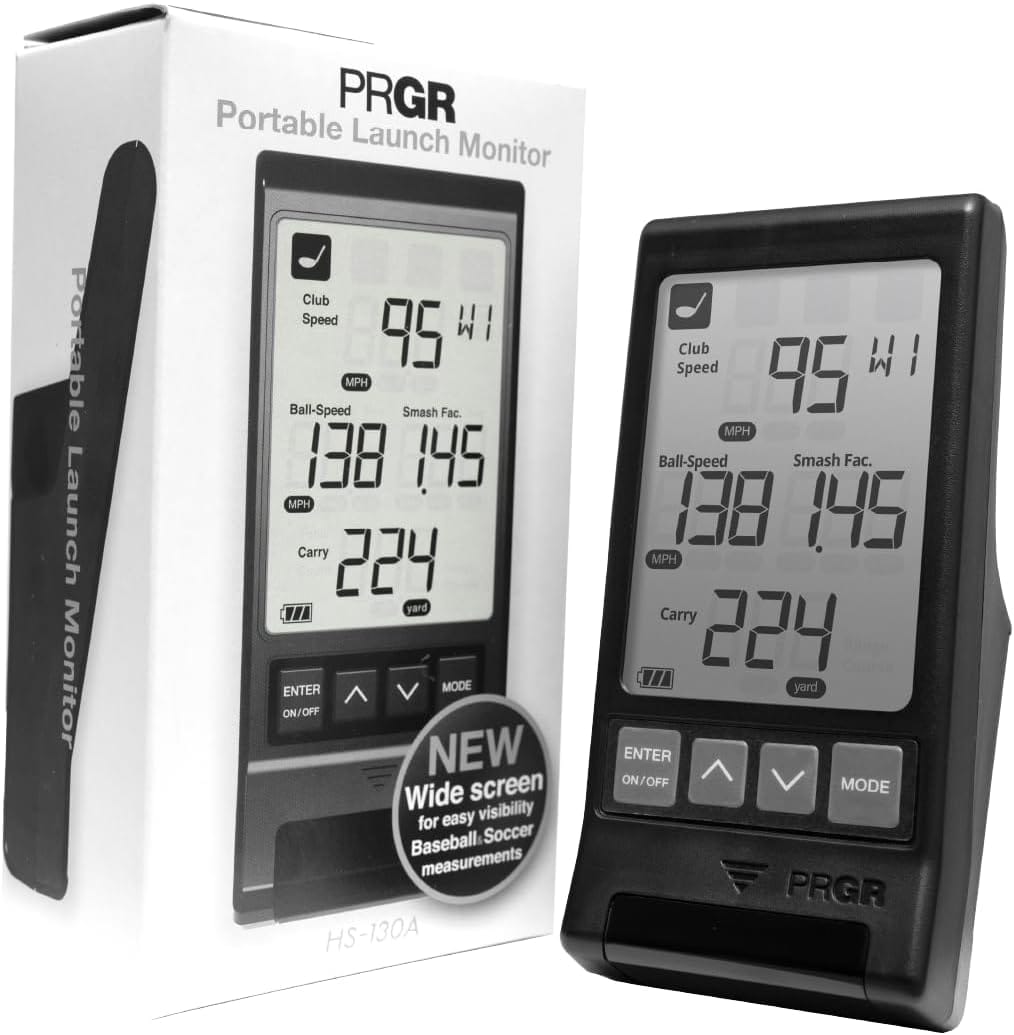
If budget is your primary concern, the PRGR HS 130-A is genuinely the most affordable serious launch monitor on the market, and it's trusted at a surprisingly high level — 3-time Major Champion and Hall of Famer Padraig Harrington uses this exact unit for his swing speed training.
What it tracks: Club head speed (with or without a ball), ball speed, smash factor, and total and carry distance, using advanced Doppler radar technology.
No-frills reliability: No Wi-Fi, Bluetooth, or app required — it runs entirely on AAA batteries and stores up to 500 past swings in memory, making it refreshingly simple compared to app-dependent competitors.
Unique advantage: It's one of the only launch monitors on the market that measures club head speed without needing a ball, making it ideal for pure swing speed training. It also works across multiple sports — baseball, tennis, soccer, and hockey.
Best for: Budget-conscious golfers who want accurate, no-nonsense swing speed data without needing an app, subscription, or smartphone pairing.
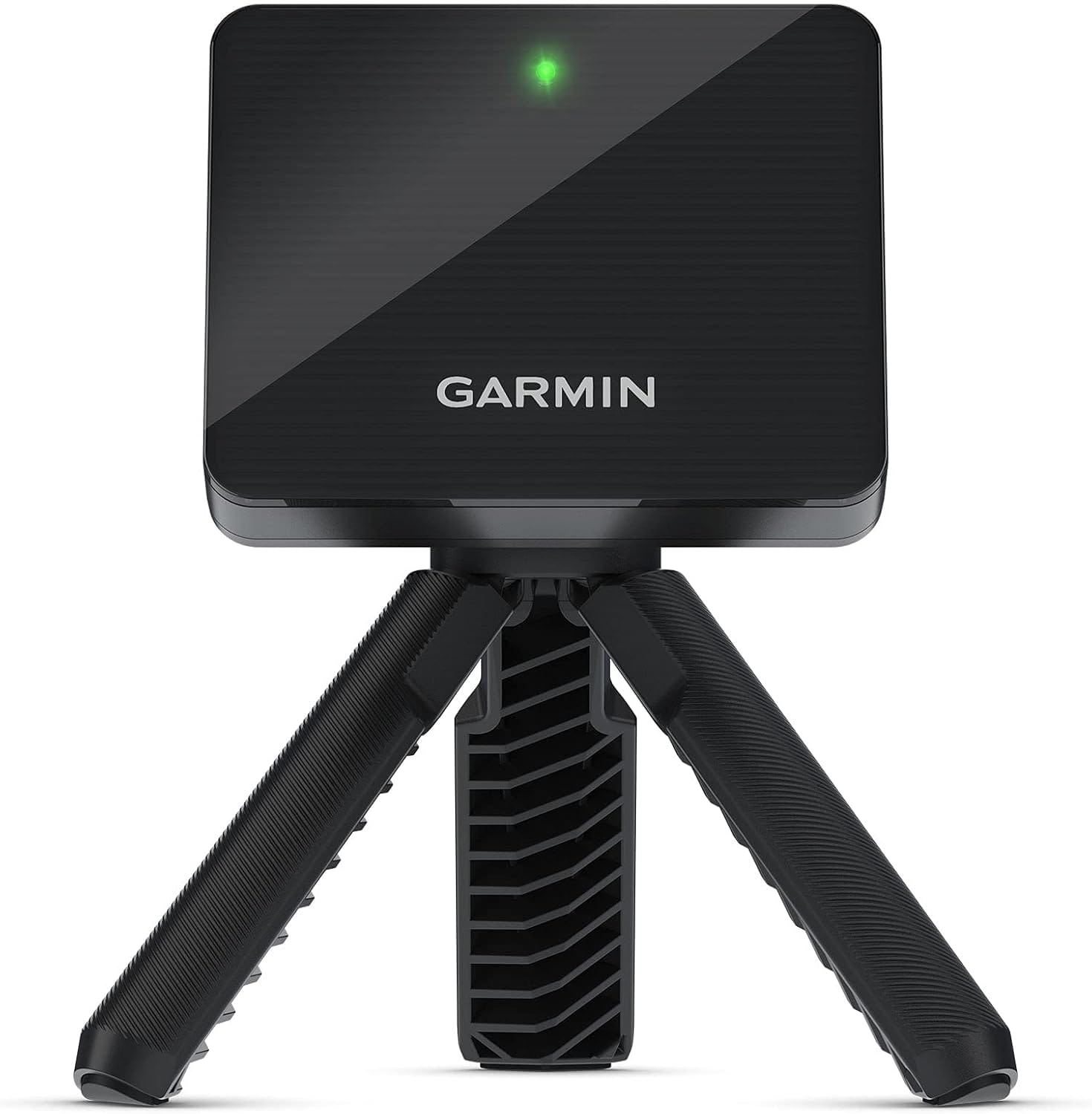
Garmin brings serious engineering credibility to this category, and the Approach R10 backs it up with genuinely impressive accuracy specs: club head speed within ±3 mph, ball speed within ±1 mph, and launch angle and direction both within ±1 degree.
What it tracks: Club head speed, ball speed, swing tempo, ball spin, launch angle, and more, when paired with a compatible smartphone running the Garmin Golf app.
Built for real conditions: IPX7 waterproof rating means it can genuinely handle outdoor range sessions in less-than-ideal weather, and voice control adds a hands-free convenience most competitors don't offer.
Training and analysis tools: Training mode tracks stats per club and generates a shot dispersion chart based on estimated ball flight, helping you identify specific weaknesses in your bag rather than just overall averages. Automatically recorded video clips sync your swing with the exact metrics from that shot.
Virtual play: With an active subscription, play virtual rounds across more than 42,000 real-world courses and compete in weekly tournaments on a global leaderboard.
Battery life: Up to 10 hours of continuous use, among the longest on this list, meaning less time worrying about charging and more time actually practicing.
Best for: Golfers who want rugged, weatherproof reliability combined with genuine simulator functionality and access to a massive course library.
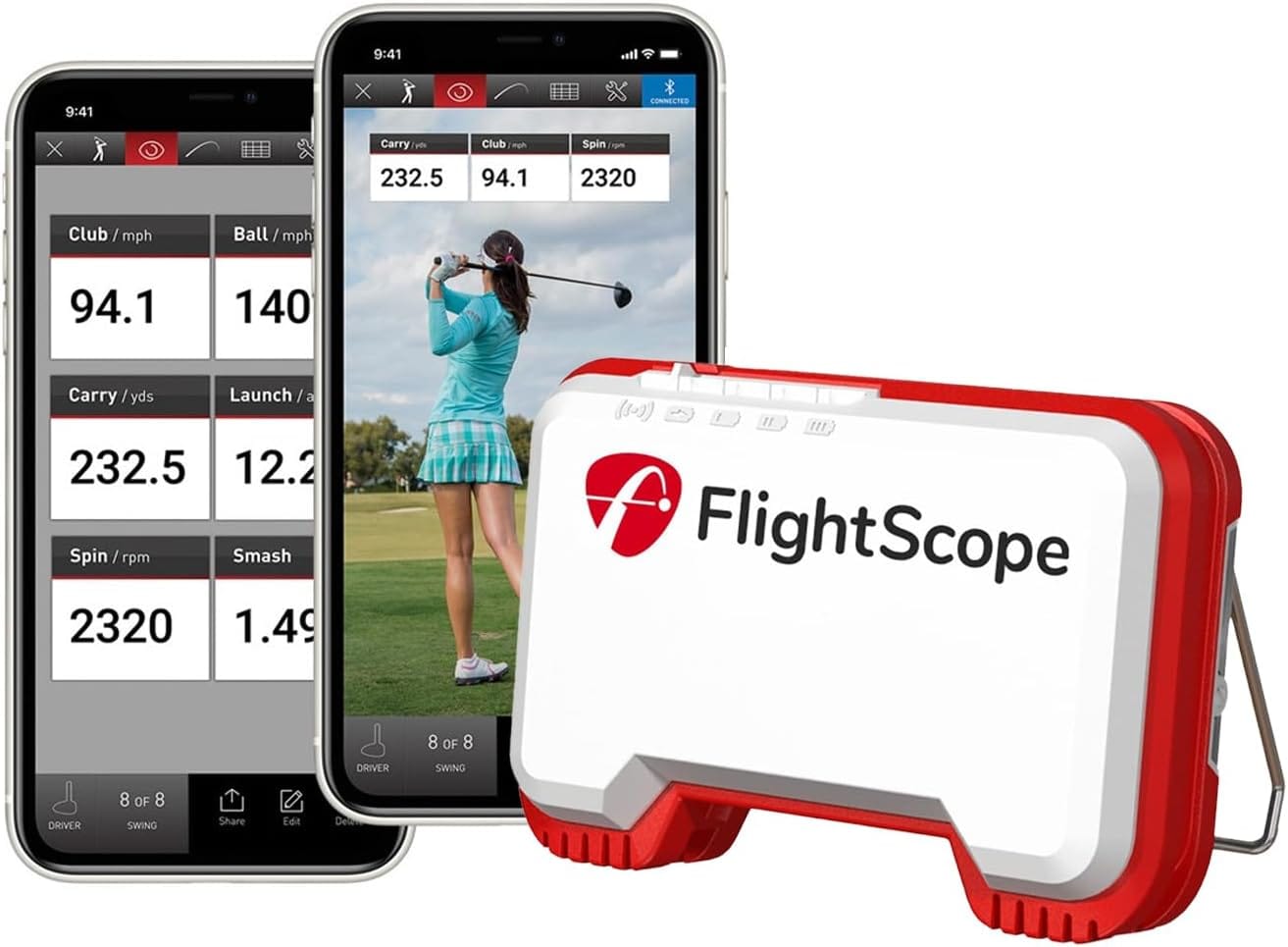
FlightScope brings genuine 3D Doppler radar technology into a lightweight, portable package, giving you legitimate performance data anywhere you choose to practice — the range, the course, or your own backyard.
What it tracks: 8 full swing performance data parameters, including direct spin measurements — a meaningful differentiator, since some competing units estimate spin rather than measuring it directly.
Built-in gamification: Mevo Skills Challenges include official PGA and LPGA challenges, a Long Drive Competition, and Range Competition modes, adding genuine game-like engagement to practice sessions instead of just staring at raw numbers.
Best for: Golfers who want direct (not estimated) spin data in a genuinely portable unit, plus some competitive, game-based practice modes to keep sessions engaging.
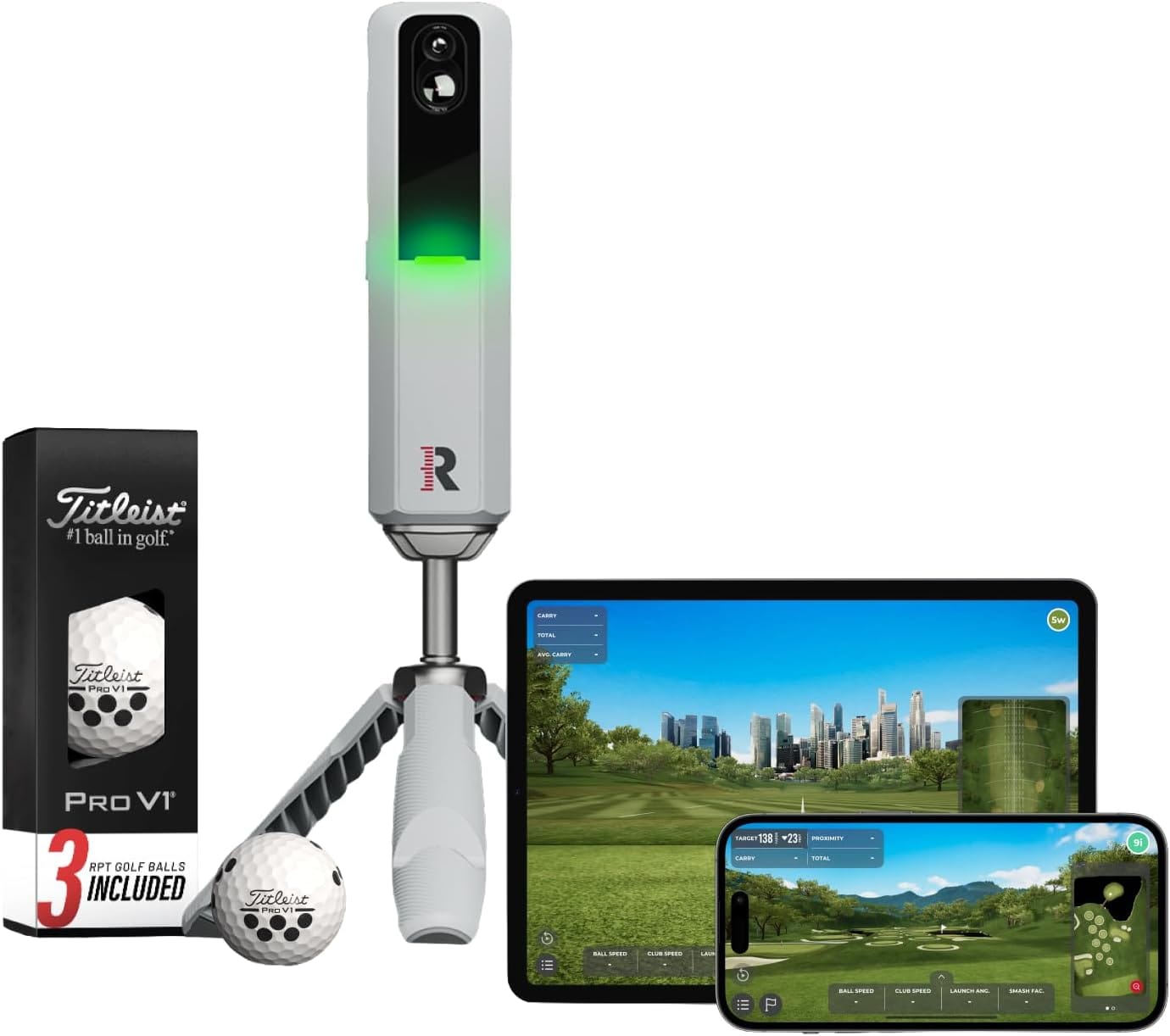
The MLM2PRO is Rapsodo's flagship unit, and it's a significant step up from their original Mobile Launch Monitor. Combining Doppler radar with dual-camera capture, it tracks 15 total metrics — nearly double what many competitors offer.
What it tracks: Spin rate, spin axis, ball speed, club speed, club path, launch angle, and carry distance among its full 15-metric suite, delivering genuinely comprehensive data on every single shot.
Cross-platform compatibility: Unlike the original Rapsodo unit, the MLM2PRO connects via Bluetooth to both iOS and Android devices, opening it up to a much wider range of users.
Simulator access: Comes with a 45-day free Premium trial, unlocking simulator courses, third-party simulator app compatibility, Target Range, Impact Vision, and Rapsodo Combine — essentially the full simulator experience before you commit to a subscription. Beyond the trial, over 30,000 simulator courses are available.
Swing analysis: Video swing capture with slow-motion review lets you examine club and ball contact frame-by-frame to spot mechanical patterns and fix faults faster.
Best for: Golfers who want the most comprehensive data set on this list combined with genuine simulator capability, and who want Android compatibility that the original Rapsodo model doesn't offer.
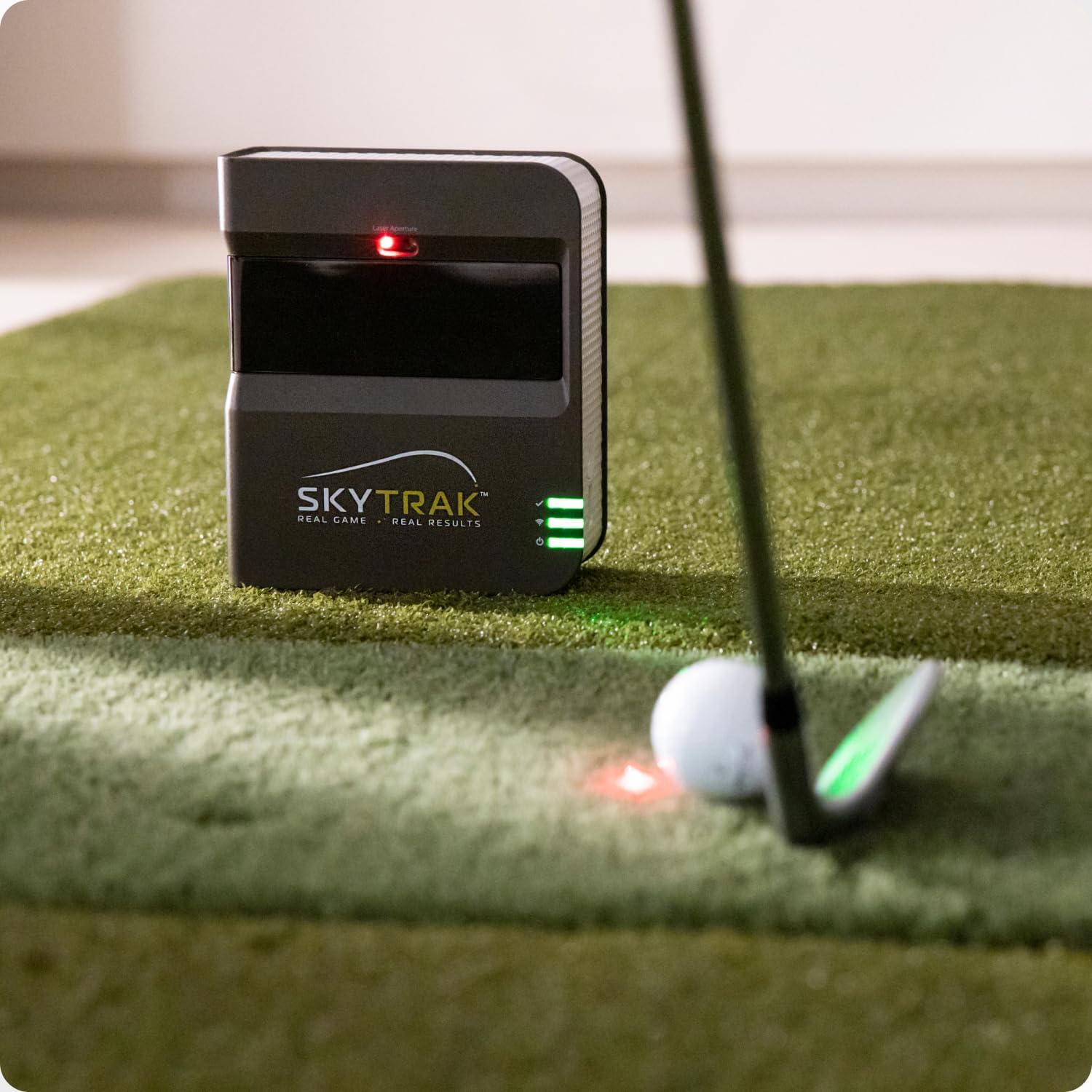
SkyTrak has built a strong reputation as a genuine hybrid practice-and-play system, offering both serious data collection and full simulator functionality in one portable unit.
What it tracks: Ball speed, launch angle, spin rates, and more, delivered through real-time 3D ball flight visualization powered by high-speed photography — giving you immediate visual feedback, not just numbers on a screen.
Portability: A compact, wireless unit with a built-in rechargeable lithium-ion battery delivering up to 4 hours of continuous use, making it genuinely practical for both indoor training sessions and taking your game-improvement setup on the road.
Getting started: Includes a 14-day trial membership, giving you a real opportunity to explore the simulator and data features before deciding on a long-term subscription.
Best for: Golfers who want a genuine blend of serious data tracking and immersive simulator play, with the flexibility of wireless, portable use both indoors and out.
How to Choose the Right Golf Launch Monitor
If budget is your top priority: The PRGR HS 130-A delivers accurate swing speed and distance data at the most accessible price point on this list, with zero app or subscription requirements.
If you want the most comprehensive data: The Rapsodo MLM2PRO tracks 15 metrics — the most of any unit here — combined with dual-camera capture for genuinely detailed shot analysis.
If durability and weatherproofing matter: The Garmin Approach R10's IPX7 waterproof rating and rugged build make it the strongest choice for regular outdoor range use in unpredictable weather.
If you want direct spin measurement: The FlightScope Mevo measures spin directly rather than estimating it, which matters if precision on spin rate specifically is important to your training.
If simulator play is your main goal: The SkyTrak and Rapsodo MLM2PRO both offer genuinely strong simulator ecosystems with large course libraries, making them the top picks for golfers who want to play virtual rounds, not just practice swings.
If you're training pure swing speed: The PRGR HS 130-A's ability to measure club head speed without a ball makes it uniquely useful for dedicated speed training sessions.
What to Look for in a Golf Launch Monitor
Radar vs. camera-based tracking. Doppler radar units (PRGR, FlightScope, Garmin) track the ball's actual flight path, while camera-based systems capture data at the moment of impact. Some premium units combine both for more complete, accurate data.
Data accuracy specs. Look for stated accuracy ranges (like the Garmin R10's ±1-3 mph/degree specs) rather than vague marketing claims — this tells you how much you can actually trust the numbers you're seeing.
Number of tracked metrics. Entry-level units typically track 5-8 core metrics (speed, distance, launch angle), while premium units like the Rapsodo MLM2PRO track up to 15, including more advanced data like spin axis and club path.
Simulator functionality. If you want to play virtual rounds on real courses, prioritize units with strong course libraries and active simulator ecosystems (Garmin Approach R10, SkyTrak, Rapsodo MLM2PRO all offer this).
App and device compatibility. Some units are iOS-only (original Rapsodo Mobile), while others support both iOS and Android (Rapsodo MLM2PRO). If you're on Android, confirm compatibility before purchasing.
Battery life and power source. Battery-powered units (PRGR runs on AAA batteries) avoid charging entirely, while rechargeable units vary significantly in runtime — the Garmin R10's 10-hour battery life significantly outlasts the SkyTrak's 4-hour runtime.
Subscription requirements. Many launch monitors require an active subscription to unlock full simulator features and course libraries. Factor this ongoing cost into your budget beyond the upfront device price.
Frequently Asked Questions About Golf Launch Monitors
Are Golf Launch Monitors Accurate Enough To Actually Improve My Game?
Yes, when used consistently. Even entry-level launch monitors provide significantly more precise feedback than guessing based on visual observation alone. The real value comes from tracking your data over time to identify patterns and measure genuine improvement, not just single-session numbers.
Do I Need A Golf Simulator Screen To Use A Launch Monitor?
No. Most launch monitors work perfectly well for data collection and swing analysis without any simulator screen or projector setup — you simply hit into a net or open space and review your metrics on a connected phone or tablet. A full simulator setup (screen, projector, hitting mat) is only necessary if you want the visual, virtual-course playing experience.
What's The Difference Between Radar-based And Camera-based Launch Monitors?
Radar-based units (like Doppler radar) track the ball's actual flight trajectory through the air, generally providing very accurate distance and trajectory data. Camera-based units capture data at the moment of club-ball impact using high-speed photography, which can offer more precise club path and face angle data. Some premium units combine both technologies for the most complete data set.
Can I Use A Golf Launch Monitor Indoors?
Yes, most portable launch monitors are specifically designed for indoor use, provided you have enough space to swing and a net or barrier to catch the ball. Camera-based and radar-based units both function indoors, though check specific space requirements (some radar units need extra distance behind the ball for accurate readings).
Do Golf Launch Monitors Require A Subscription?
It depends on the model and features you want. Basic data tracking (speed, distance, launch angle) typically doesn't require a subscription on most units. However, full simulator functionality — playing virtual rounds on real-world courses — usually requires an active premium subscription after any included free trial period.
Which Golf Launch Monitor Is Best For Beginners?
The PRGR HS 130-A is a strong beginner option due to its simplicity (no app, no subscription, just AAA batteries) and affordability. For beginners who want app-based feedback and video review, the original Rapsodo Mobile Launch Monitor is also a solid, approachable entry point.
How Much Does A Good Golf Launch Monitor Cost?
Golf launch monitors span a wide price range, from budget-friendly options under $300 (like the PRGR HS 130-A) to premium units costing well over $1,000 for advanced simulator-capable systems (like SkyTrak and the Rapsodo MLM2PRO). Your ideal price point depends on whether you need core swing data or full simulator functionality.
Final Thoughts
The right golf launch monitor depends heavily on what you're actually trying to accomplish. If you want simple, reliable swing speed data without any technology headaches, the PRGR HS 130-A remains the most accessible option. If comprehensive data and simulator play matter most, the Rapsodo MLM2PRO and SkyTrak lead the pack. And if you're practicing outdoors in unpredictable weather, the Garmin Approach R10's ruggedness and battery life make it the most dependable long-term investment.
Whichever you choose, the real value isn't the device itself — it's using the data consistently to identify patterns in your game and actually apply what you learn on the course.
Disclosure: This post contains affiliate links. As an Amazon Associate I earn from qualifying purchases.