
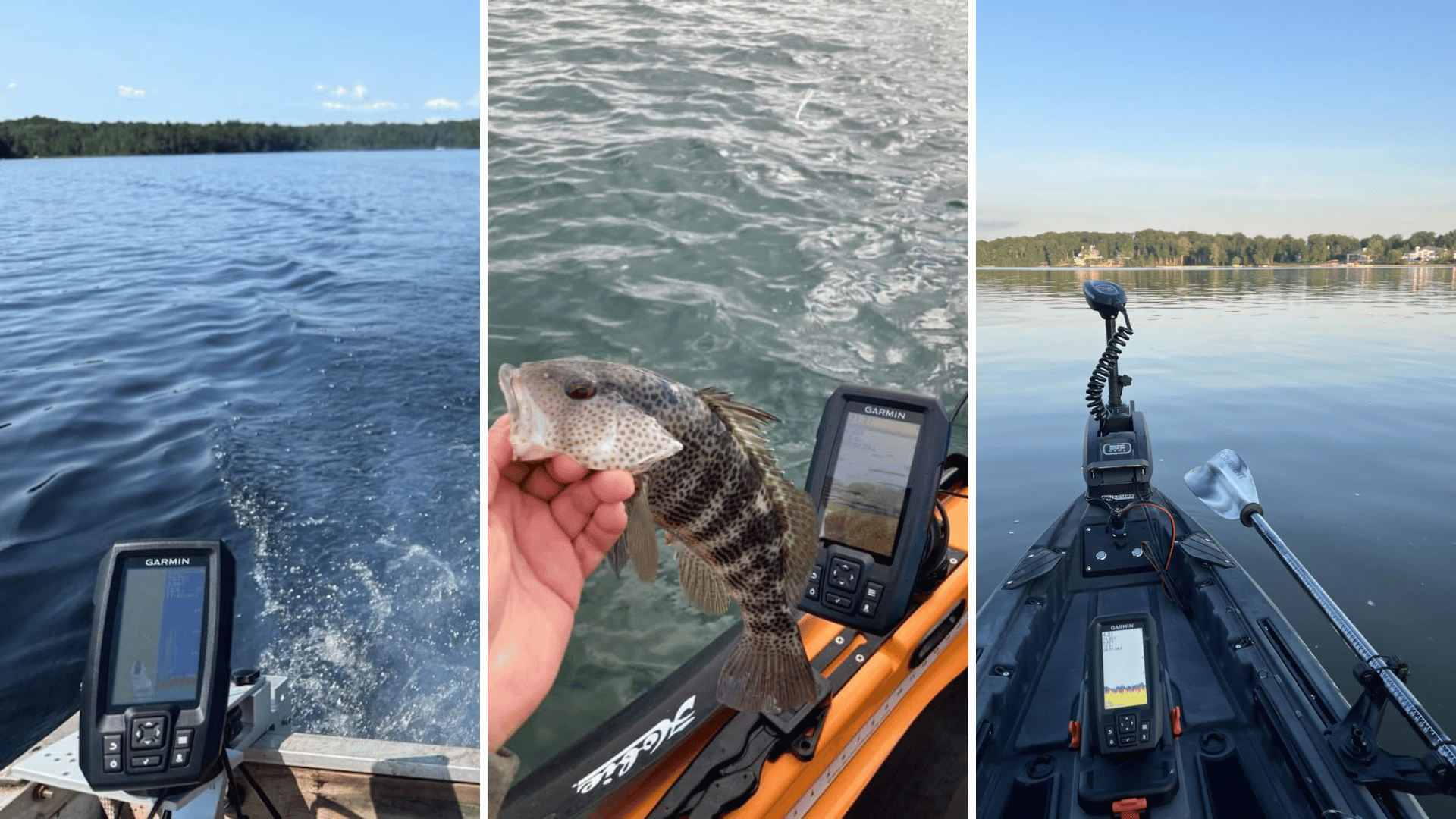



Guessing where the fish are wastes hours on the water. A good fish finder shows you exactly what's below your boat, kayak, or dock — fish location, depth, structure, and bottom contour — turning blind casting into targeted fishing. Here's a complete breakdown of the best fish finders in 2026, from full boat-mounted units to budget-friendly portable options, and which one actually fits how you fish.
How Do Fish Finders Actually Work?
Fish finders use sonar (sound navigation and ranging) to detect what's beneath the water's surface. A transducer sends sound waves down into the water, and when those waves hit something — fish, structure, the lake bottom — they bounce back and get translated into a visual image on your display.
Modern fish finders use several sonar technologies, often combined in the same unit:
Traditional/CHIRP sonar — sends a continuous sweep of frequencies rather than a single frequency, providing a wider range of information and creating crisper fish arches with better target separation (meaning you can tell individual fish apart instead of seeing one blurry blob).
ClearVü/DownScan imaging — high-frequency scanning sonar that produces near-photographic images of structure and fish, giving you a much more detailed picture of what's actually down there compared to traditional sonar alone.
GPS and mapping — many modern fish finders include built-in GPS for marking waypoints (productive spots, brush piles, docks) and creating or overlaying detailed contour maps of lakes and waterways.
The 5 Best Fish Finders in 2026
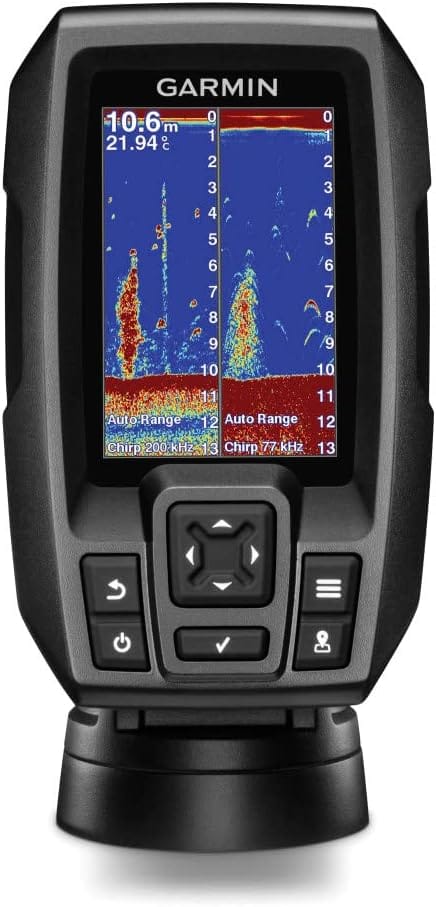
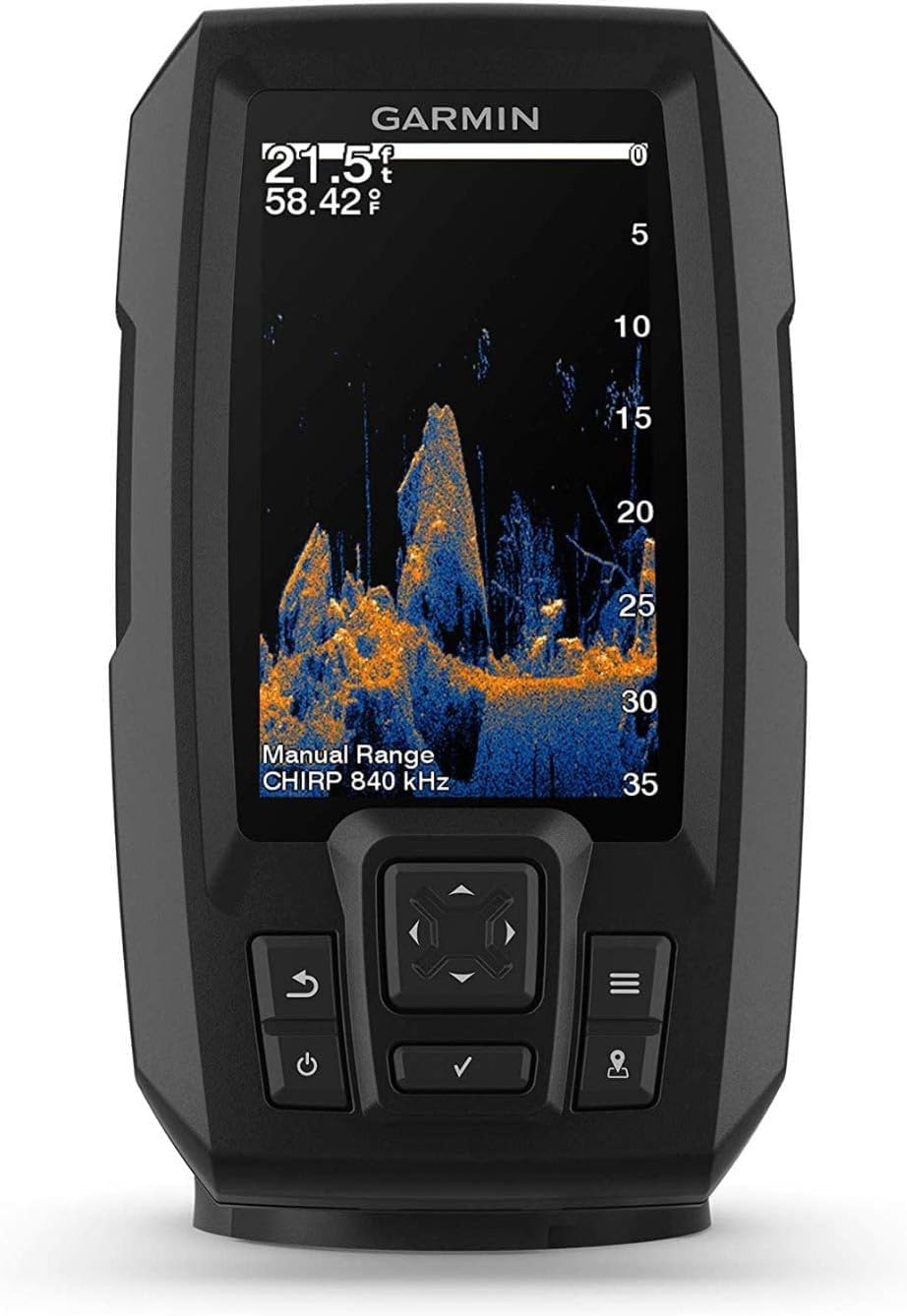
1. Garmin Striker 4 with Transducer, 3.5" GPS Fishfinder
Best for: Anglers who want a simple, reliable, easy-to-install fish finder with genuinely detailed sonar imaging, without a steep learning curve.
The Garmin Striker 4 remains one of the most trusted entry points into serious fish finding technology, combining high-frequency ClearVü scanning sonar with genuine ease of use — a keyed interface with dedicated buttons makes it simple to operate even for anglers who've never used a fish finder before.
What it shows: ClearVü scanning sonar delivers near-photographic images with detailed representations of objects, structure, and fish — a noticeable step up from older, blockier sonar displays.
CHIRP technology: Sends a continuous sweep of frequencies for a wider range of information, creating crisper fish arches with better target separation so you can actually distinguish individual fish from each other.
Waypoint mapping: Built-in waypoint map lets you mark and navigate back to productive spots — brush piles, stumps, docks — without relying on memory or landmarks.
Depth range and durability: Rated to 1,600 feet in freshwater and 750 feet in saltwater, with an IPX7 water rating for genuine durability in wet boat conditions. Available in 3.5, 5, and 7-inch display sizes depending on your boat setup.
Bonus feature: Built-in flasher mode displays sonar data in classic flasher format, ideal for ice fishing or vertical jigging — a genuinely useful crossover feature for anglers who fish multiple seasons.
2. Garmin Striker Vivid 4cv Fishfinder with Transducer
Best for: Anglers who want the reliability of the Garmin Striker line with the added benefit of clearer color differentiation between fish and structure, plus the ability to build custom depth maps over time.
The Striker Vivid 4cv builds on the original Striker line with a genuinely useful upgrade: new vivid scanning sonar color palettes specifically designed to make it easier to visually distinguish fish from structure on your display — a real practical improvement, not just a cosmetic one.
What it includes: A GT20 transducer delivers both built-in Garmin CHIRP traditional sonar and CHIRP ClearVü scanning sonar in one unit, giving you both detection styles without needing separate hardware.
GPS and mapping: High-sensitivity GPS lets you mark waypoints, create routes, and monitor your boat's speed, while built-in Quickdraw Contours mapping lets you create your own detailed depth maps of water you fish regularly — genuinely valuable for anglers who return to the same lakes repeatedly.
Mounting: Includes a tilt/swivel bailmount bracket, making it easy to adjust your viewing angle based on sun position or seating arrangement.
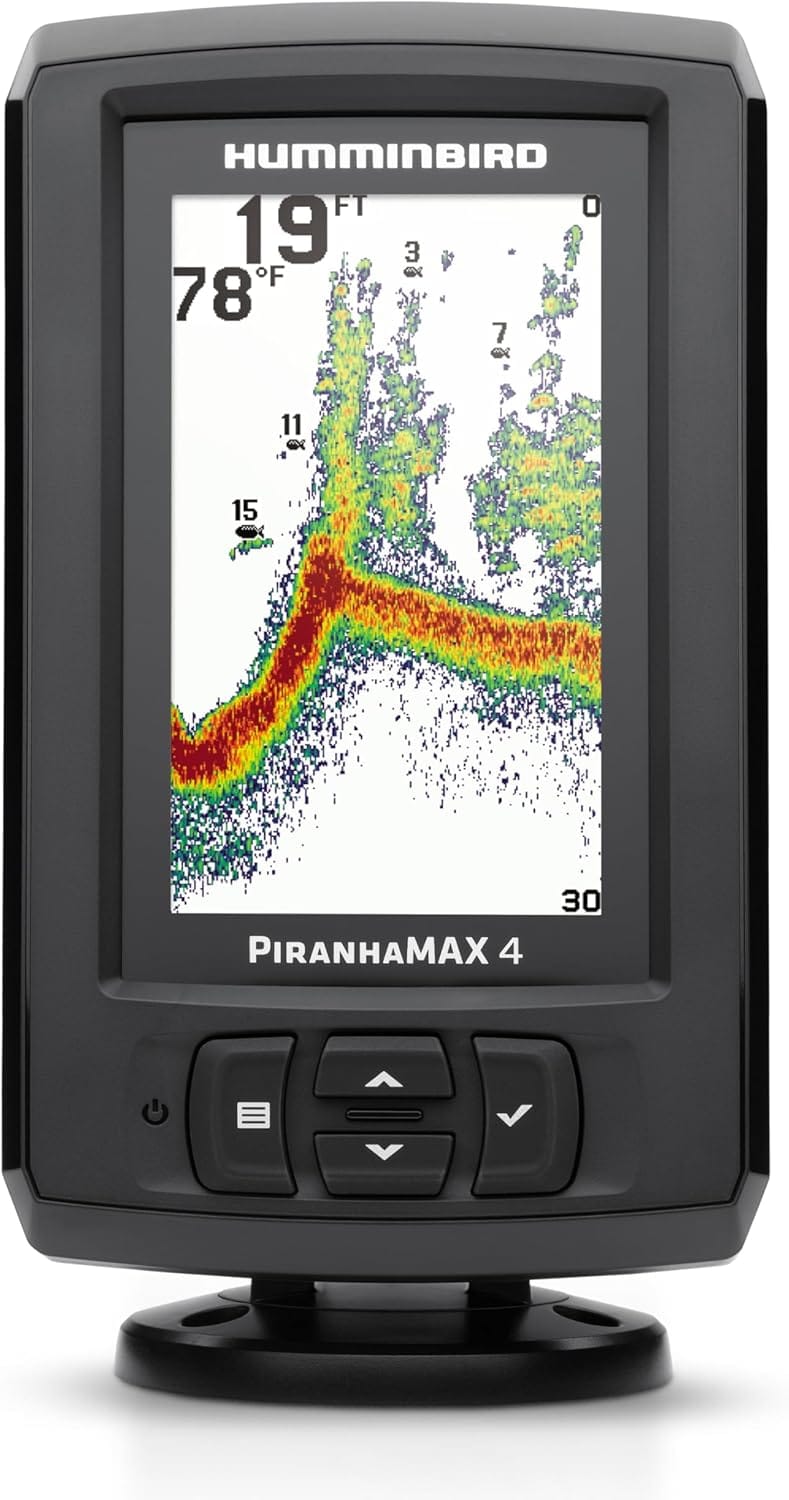
3. Humminbird PiranhaMAX 4
Best for: Anglers who want the most advanced mapping capability on this list combined with genuinely hands-off, autotuning sonar performance.
The PiranhaMAX 4 gives you genuine flexibility with dual beam sonar — choose between a narrow beam for greater detail or a wide beam for broader coverage area, letting you adjust your approach based on whether you're pinpointing a specific spot or scanning a larger area for structure and fish activity.
What it includes: The complete package comes with the PiranhaMAX 4 fish finder unit, a tilt and swivel mount for quick viewing angle adjustments, and an XNT 9 28 T transom-mount transducer — everything needed to get set up without hunting down separate components.
Warranty: Backed by a 1-year limited warranty, giving you reasonable peace of mind for a budget-friendly unit.
4. Lowrance HOOK Reveal 5 SplitShot
Best for: Anglers who want the most advanced mapping capability on this list combined with genuinely hands-off, autotuning sonar performance.
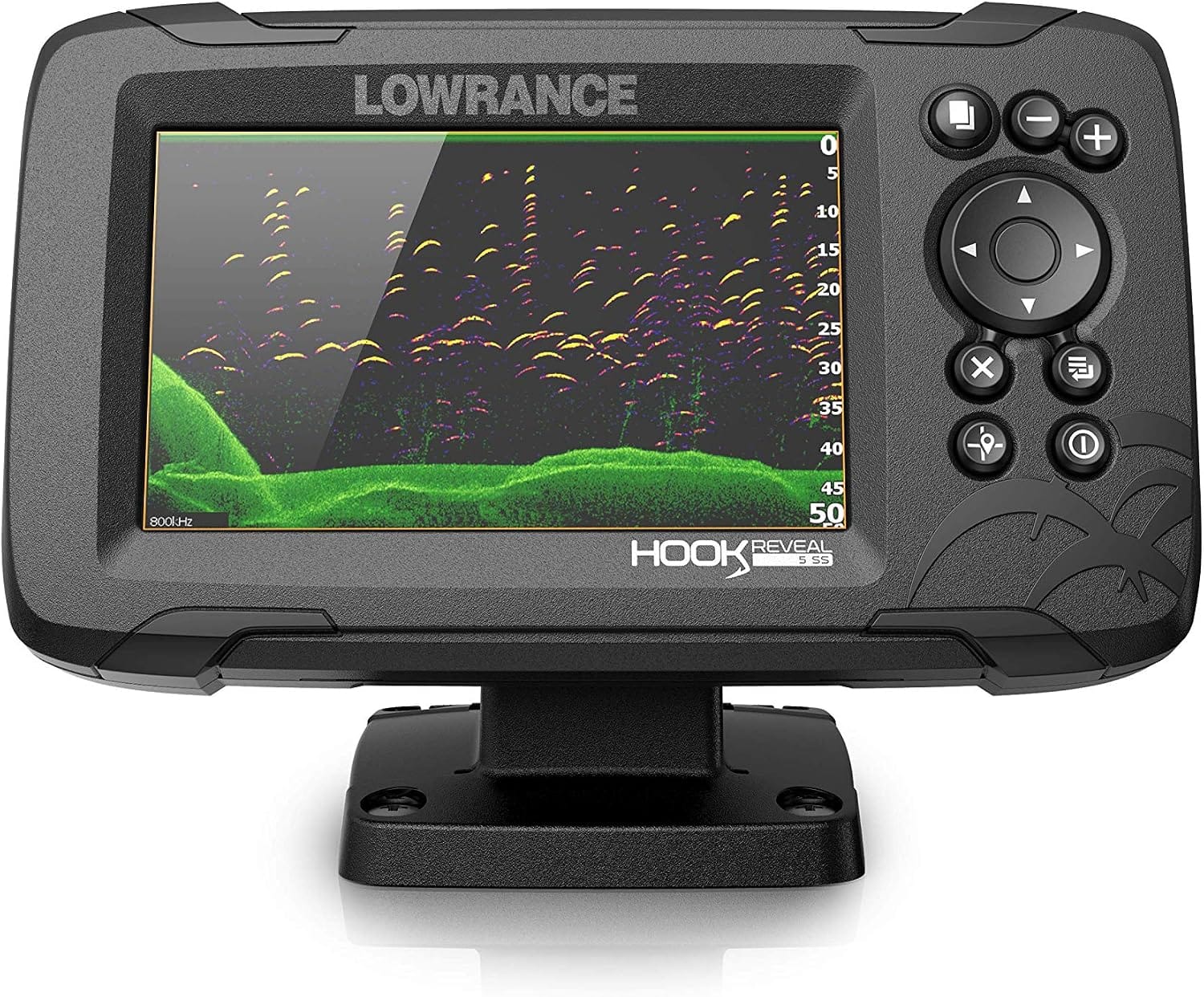
4. Lowrance HOOK Reveal 5 SplitShot
https://amzn.to/45wCW3b
The HOOK Reveal 5 SplitShot stands out with FishReveal technology, which combines the target separation strength of Lowrance CHIRP sonar with the high-resolution structure imaging of DownScan Imaging — the result is fish that genuinely "light up" more clearly on your display compared to standard sonar overlays.
Mapping: Includes high-detail inland maps covering nearly 4,000 US lakes right out of the box, plus the ability to create custom contour maps with even greater detail using Genesis Live — a genuinely powerful mapping feature for serious anglers who want more than generic lake outlines.
Transducer technology: The SplitShot transducer combines wide-angle high CHIRP sonar for fish-finding with DownScan Imaging for detailed structure visualization, giving you strong performance directly beneath the boat.
Autotuning sonar: A genuinely time-saving feature — HOOK Reveal automatically adjusts sonar settings as fishing conditions change, meaning less time fiddling with settings and more time actually fishing.
Display quality: The 5-inch SolarMAX display delivers crisp, clear visibility even in direct sunlight, solving one of the most common frustrations with lower-end fish finder screens washing out on bright days.
5. LUCKY Portable Sonar Fish Finder
Best for: Kayak anglers, bank fishermen, ice fishermen, or anyone who wants a genuinely portable, wireless fish finder without permanent boat installation.
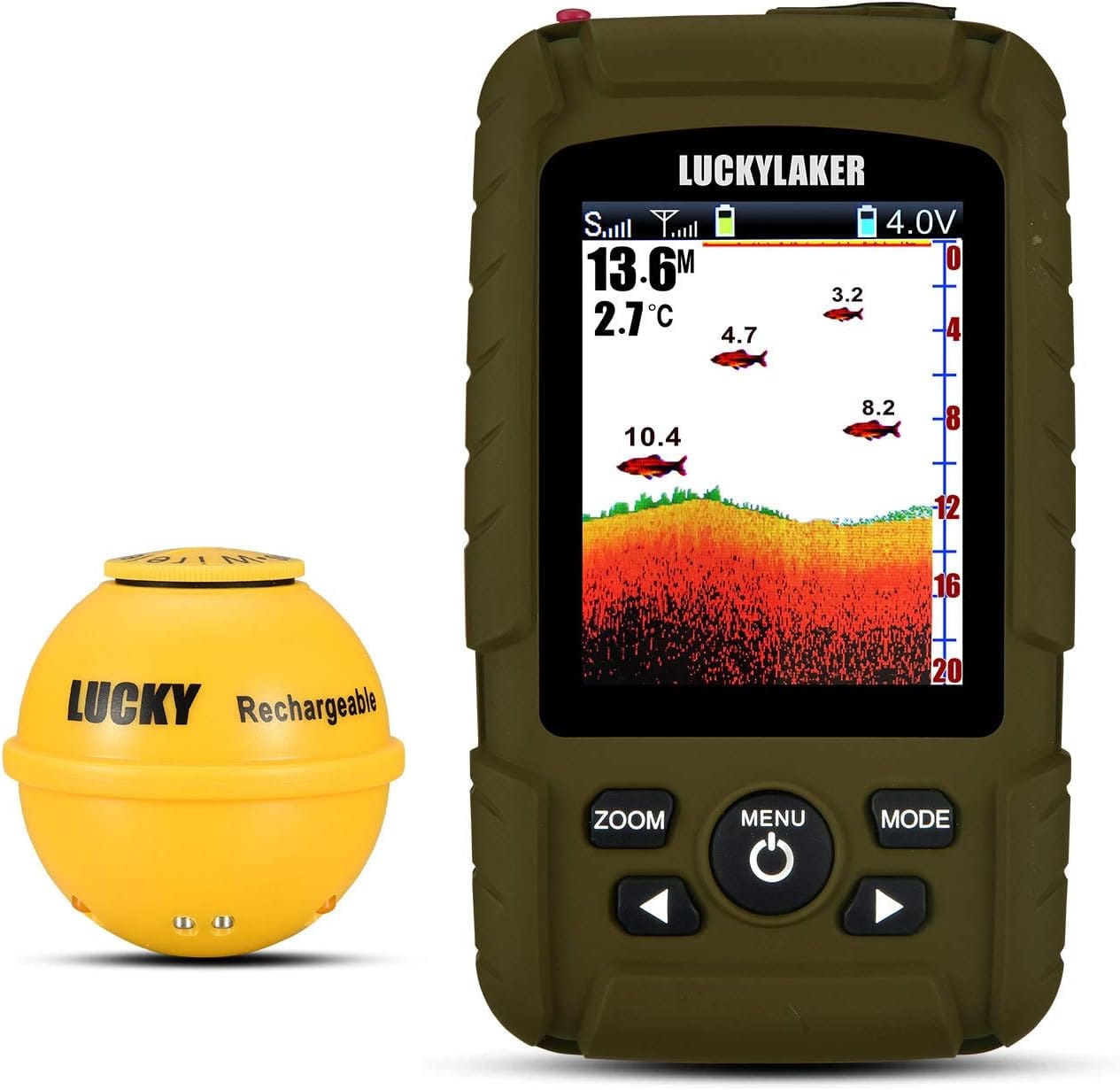
The LUCKY Portable is a completely different category from the boat-mounted units above — a wireless, castable fish finder built for kayak anglers, bank fishermen, and anyone who doesn't have (or want to install) a permanent boat-mounted unit.
Wireless operation: The sonar transducer supports wireless operation up to 656 feet and water depth detection up to 147 feet, with no heavy cable required — you can literally tether it to your fishing line and cast the compact sonar ball directly onto the water.
Waterproof and floating design: Genuinely waterproof and designed to float on the surface even if accidentally dropped into the water, with a recommendation to air out the display after use to prevent internal condensation from temperature differences.
Data display: Shows water depth, approximate fish location, fish size categorization (small, medium, large), water temperature, and bottom contour — a surprisingly comprehensive data set for such a compact, affordable unit. You can also select specific underwater areas on the display for more detailed readings.
Smart alerts: The sonar transducer includes a built-in attractive lamp and operates at 125kHz with a 90-degree beam angle, alerting you when fish or fish schools are detected, plus a shallow-water alert. A glow-in-the-dark replacement cap helps you locate the sonar ball during night fishing.
Versatility and battery life: Ideal for ice fishing, kayak fishing, boat fishing, and bank fishing — genuinely one of the most versatile options on this list in terms of where and how you can use it. Runs 5-6 hours continuously on a full charge, extending to over 10 hours with battery save mode enabled.
How to Choose the Right Fish Finder for You
If you want simple, reliable performance with minimal learning curve: The Garmin Striker 4 offers genuinely easy operation with a keyed interface, making it ideal for anglers new to fish finder technology.
If you want the clearest visual distinction between fish and structure: The Garmin Striker Vivid 4cv's vivid color palettes are specifically designed to make this distinction easier to see at a glance.
If flexibility between detail and coverage matters: The Humminbird PiranhaMAX 4's dual beam sonar lets you switch between narrow (detailed) and wide (broad coverage) based on your current needs.
If detailed mapping is your top priority: The Lowrance HOOK Reveal 5 SplitShot's nearly 4,000 pre-loaded lake maps and Genesis Live custom contour mapping are unmatched on this list.
If you're a kayak angler, bank fisherman, or don't want permanent installation: The LUCKY Portable Sonar Fish Finder's wireless, castable design solves the installation problem entirely.
If you fish multiple seasons including ice fishing: Both the Garmin Striker 4 (with its built-in flasher mode) and the LUCKY Portable (explicitly designed for ice fishing use) offer genuine cross-season versatility.
What to Look for in a Fish Finder
Sonar technology. CHIRP sonar generally outperforms older single-frequency sonar for target separation and image clarity. ClearVü/DownScan imaging adds near-photographic detail of structure and fish, which matters significantly if you're trying to identify specific structure types, not just fish presence.
Display size and quality. Larger displays (5-7 inches) make it easier to read detail at a glance, but require more mounting space. Sunlight readability (like the Lowrance HOOK Reveal's SolarMAX display) is a genuinely important factor often overlooked until you're squinting at a washed-out screen on a bright day.
GPS and mapping capability. If you fish the same waters regularly, built-in mapping (pre-loaded lake maps or custom contour creation) can save significant time finding productive structure compared to fish finders without mapping features.
Depth range. Confirm the stated maximum depth range matches your typical fishing conditions — freshwater and saltwater depth ratings often differ significantly, and this matters if you fish both types of water.
Portable vs. permanent mount. Boat-mounted units (Garmin Striker line, Humminbird PiranhaMAX, Lowrance HOOK Reveal) require installation and are generally more powerful, while portable/wireless units (LUCKY Portable) sacrifice some power and range for genuine flexibility and zero installation requirements.
Transducer type and beam angle. Wider beam angles cover more area but with less detail; narrower beams provide more precise detail in a smaller coverage area. Dual-beam units (like the Humminbird PiranhaMAX 4) let you switch between the two depending on conditions.
Battery and power source. Boat-mounted units typically wire directly into your boat's electrical system, while portable units rely on internal rechargeable batteries — confirm battery life expectations match your typical time on the water.
Frequently Asked Questions About Fish Finders
Are Fish Finders Worth It For Beginners?
Yes. Even entry-level fish finders significantly improve your ability to locate fish and understand underwater structure compared to fishing blind. Simple, easy-to-use models like the Garmin Striker 4 are specifically designed with beginners in mind, offering genuine performance without an overwhelming learning curve.
What's The Difference Between Chirp Sonar And Traditional Sonar?
Traditional sonar sends a single frequency, while CHIRP (Compressed High-Intensity Radiated Pulse) sonar sends a continuous sweep across a range of frequencies. This results in significantly better target separation — meaning you can distinguish individual fish from each other and from structure — rather than seeing a single blurry blob on your display.
Do I Need A Boat To Use A Fish Finder?
No. Portable, wireless fish finders (like the LUCKY Portable Sonar Fish Finder) are specifically designed for kayak fishing, bank fishing, and ice fishing without requiring any boat installation. You can literally cast the sonar transducer directly into the water on your fishing line.
How Deep Can Fish Finders Detect?
Depth range varies significantly by model and water type. Entry-level units may detect down to a few hundred feet, while more powerful units (like the Garmin Striker 4) can detect up to 1,600 feet in freshwater and 750 feet in saltwater. Portable units generally have shallower maximum depth ratings, often in the 100-150 foot range.
What Does A Fish Finder's Display Actually Show?
Most fish finders display water depth, bottom contour, structure (weeds, rocks, drop-offs), and fish presence, often shown as distinct arch shapes on traditional/CHIRP sonar or more detailed, near-photographic images on ClearVü/DownScan imaging. GPS-equipped units also display your boat's position, speed, and marked waypoints.
Can Fish Finders Tell You The Size Of The Fish?
Some fish finders provide general fish size categorization (small, medium, large) based on the sonar return signal, as seen in the LUCKY Portable Sonar Fish Finder. However, this is generally an estimate based on sonar arch size, not a precise measurement.
Do I need GPS on my fish finder?
GPS isn't strictly necessary for basic fish detection, but it adds significant practical value — marking productive spots (waypoints), navigating back to them later, and viewing detailed lake maps. If you fish the same waters repeatedly, GPS and mapping capability (like the Lowrance HOOK Reveal or Garmin Striker Vivid's Quickdraw Contours) can meaningfully improve your efficiency on the water.
Final Thoughts
The right fish finder for you depends heavily on how and where you fish. The Garmin Striker 4 remains an excellent all-around choice for anglers wanting reliable, easy-to-use sonar without a steep learning curve. The Striker Vivid 4cv adds genuinely useful visual clarity for distinguishing fish from structure. The Humminbird PiranhaMAX 4 offers flexible dual-beam sonar at an accessible price. The Lowrance HOOK Reveal 5 SplitShot leads the pack for serious mapping capability and autotuning convenience. And the LUCKY Portable Sonar Fish Finder solves the entire installation question for kayak anglers and bank fishermen who need genuine portability.
Whichever you choose, match your fish finder to how you actually fish — a powerful boat-mounted unit does you no good if you're primarily bank fishing, and a portable unit won't give a serious boat angler the depth range and mapping detail they need.
Disclosure: This post contains affiliate links. As an Amazon Associate I earn from qualifying purchases.