
A chamber vacuum sealer for home is the fix for one very specific kitchen heartbreak: you try to seal a bag of chili or marinated chicken with a regular sealer, and the machine slurps the juice right up into its motor. Suction sealers pull air out of the bag, so liquid comes along for the ride. A chamber sealer works differently. It pulls the air out of the whole box, bag and all, so soups, sauces and juicy meats stay put. If you batch cook, buy meat in bulk, hunt, fish or do a lot of sous vide, this is the upgrade that actually changes your freezer. Here are the 4 best chamber vacuum sealers for home kitchens in 2026.
What to Look For in a Chamber Vacuum Sealer for Home
Counter space (and weight). These are not little gadgets you tuck in a drawer. Most home models are about 14 inches wide and 12 to 18 inches deep, and they're heavy. Measure the spot under your upper cabinets, and leave room for the lid to open.
Seal bar length. The seal bar sets the widest bag you can use. Around 11.5 to 12 inches covers a whole chicken, a rack of ribs or a family-size portion of soup. Smaller bars mean smaller bags.
Chamber depth. Width gets the attention, but depth decides whether a thick roast or a tall pouch of stew fits. A 3-inch deep chamber is fine for flat packs. Closer to 4 inches gives you more breathing room.
Pump type. Every pick here uses a dry (oil-free) pump, which means no oil changes. Oil pumps are stronger and quieter for daily commercial use, but they need maintenance and cost a lot more. For a home kitchen, dry is the easier life.
Controls you'll use. Adjustable vacuum and seal time lets you go gentle on bread or soft fish and go hard on meat. A marinate mode and a jar hose are nice extras if you want them.
The 4 Best Chamber Vacuum Sealers for Home in 2026
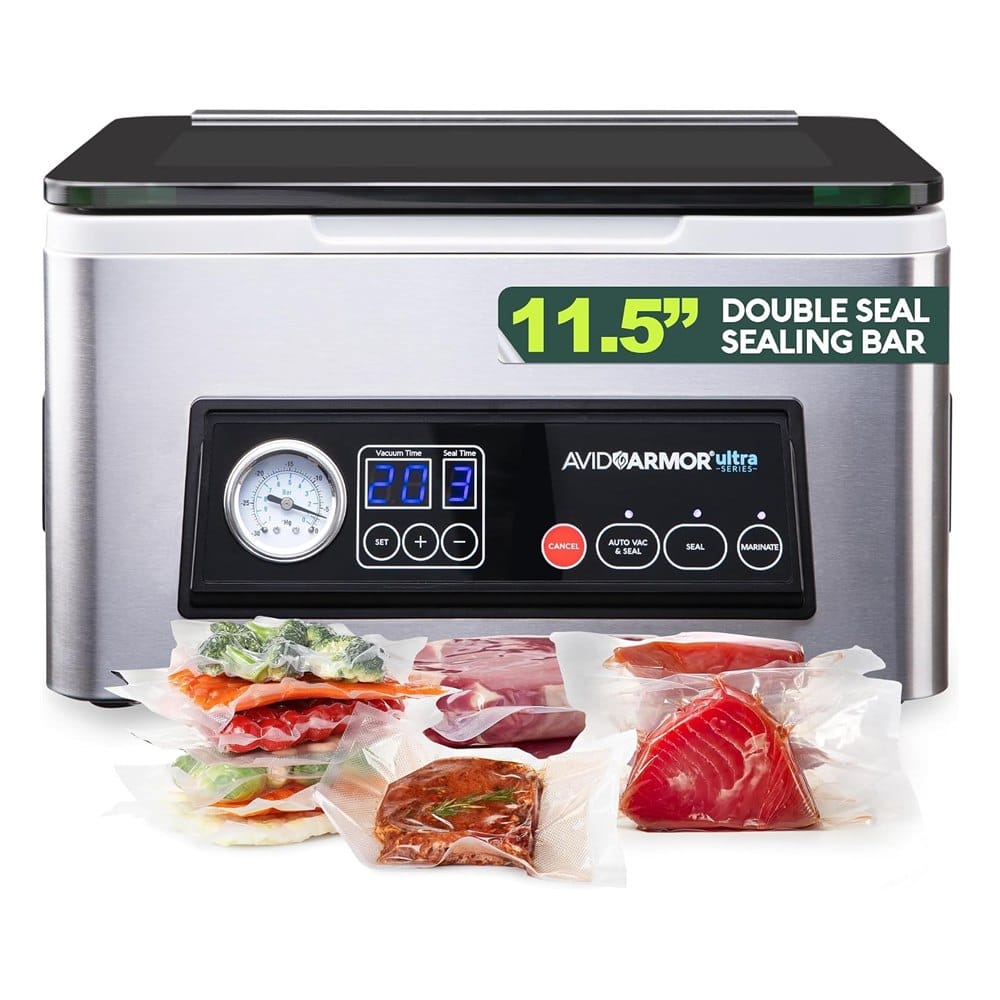
1. Avid Armor USV20 Chamber Vacuum Sealer
Best for: most home kitchens that want liquid-proof sealing without giving up half the counter.
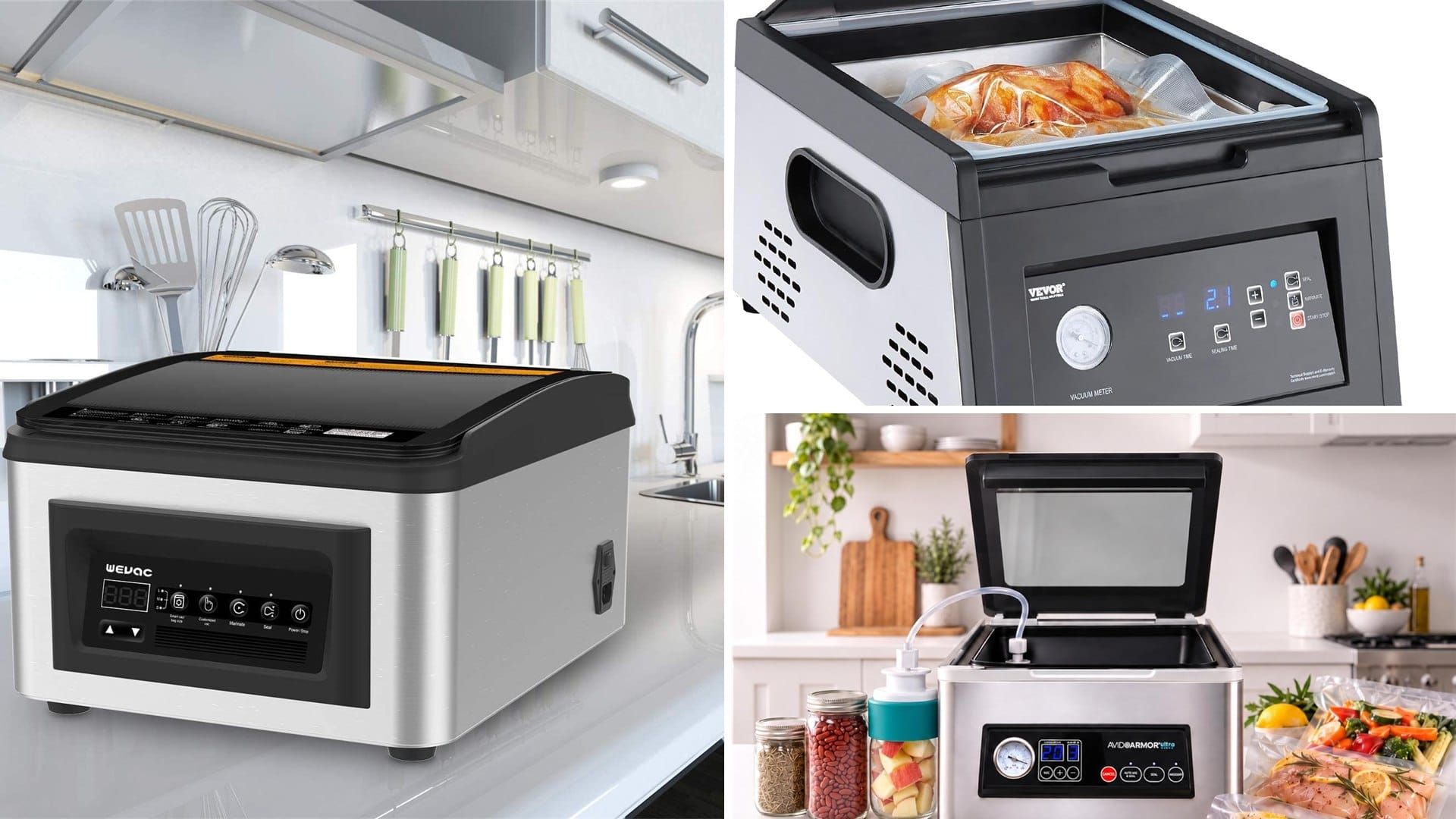
This is the one we'd buy. The USV20 is Avid Armor's compact chamber model, and it's the most reviewed home chamber sealer we found, with a 4.7-star average from over a thousand buyers. The body is about 14 inches wide, 12 inches deep and 8.25 inches tall, and it weighs around 17.5 pounds, so it can live on the counter under your cabinets or slide into a pantry between uses.
What makes it stand out: You get a 4-liter stainless steel chamber (about 12.25 x 8.5 x 3 inches inside) with an 11.5-inch seal bar, which handles family-size portions. Vacuum time is adjustable from 15 to 60 seconds, so you can stop early on delicate things like berries or bread. The seal bar is user-replaceable, which matters on a machine you plan to keep for years. Avid Armor is a Kansas company with US customer care.
Good to know: The chamber is only about 3 inches deep, so a thick brisket or a bone-in roast may not fit. Bags top out at roughly 11 x 10 inches, which is smaller than the Wevac's range. If you mostly seal big cuts, look at #3.
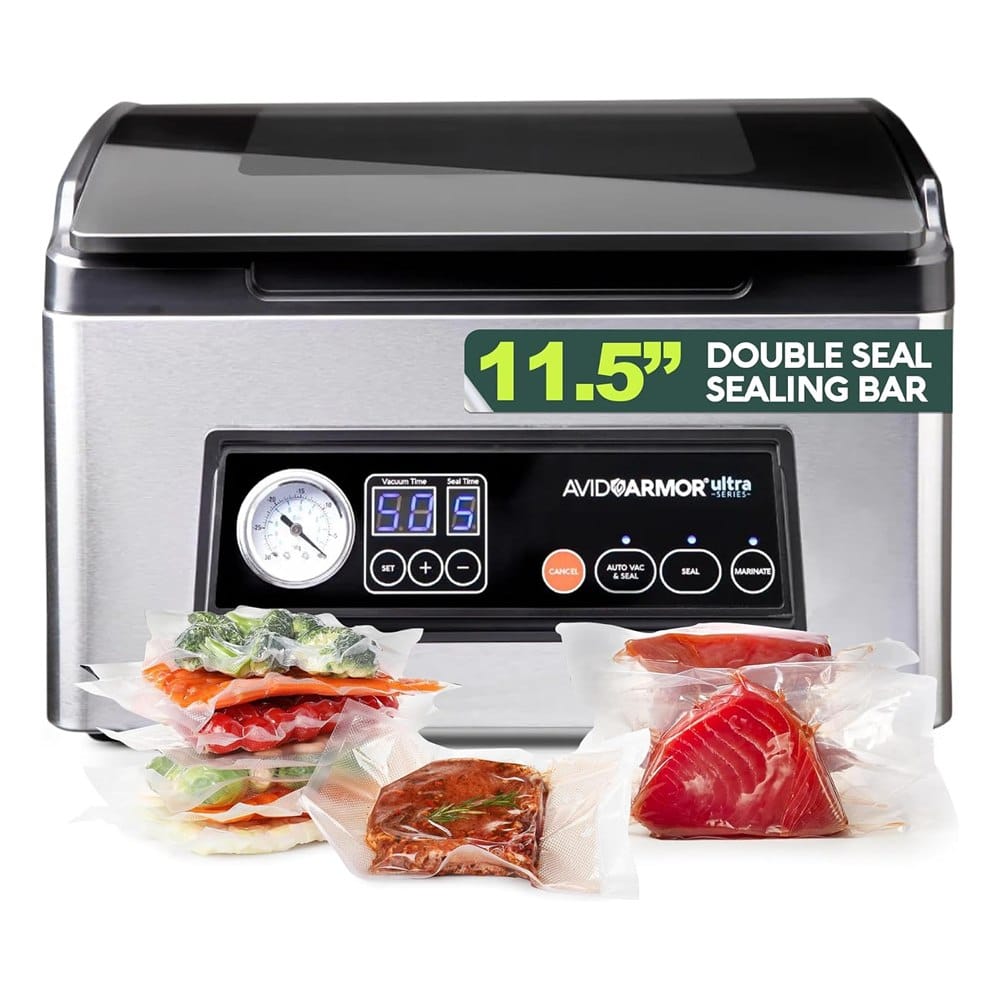
2. Avid Armor USV32 Chamber Vacuum Sealer
Best for: hunters, bulk buyers and sous vide fans who seal a lot in one session.
The USV32 is the bigger sibling. It has a stainless steel chamber, a tempered glass lid so you can watch the bag shrink down, and a heavy-duty 11.5-inch dual-wire seal bar. Dual wires lay down two seal lines, which is extra insurance on thick pouches and anything headed for months in the freezer.
What makes it stand out: It runs on a simple one-touch automatic cycle, so there's no guessing. There's a marinate mode that uses the pressure change to push marinade into meat in minutes instead of overnight. And there's an accessory hose port for sealing jars and canisters outside the chamber, which is handy for coffee beans, nuts and dry pantry goods.
Good to know: It's big and heavy. At least one reviewer called it "very large/heavy" and pointed people toward the USV20 if counter space is tight. If you only seal a few bags a week, the smaller model makes more sense.
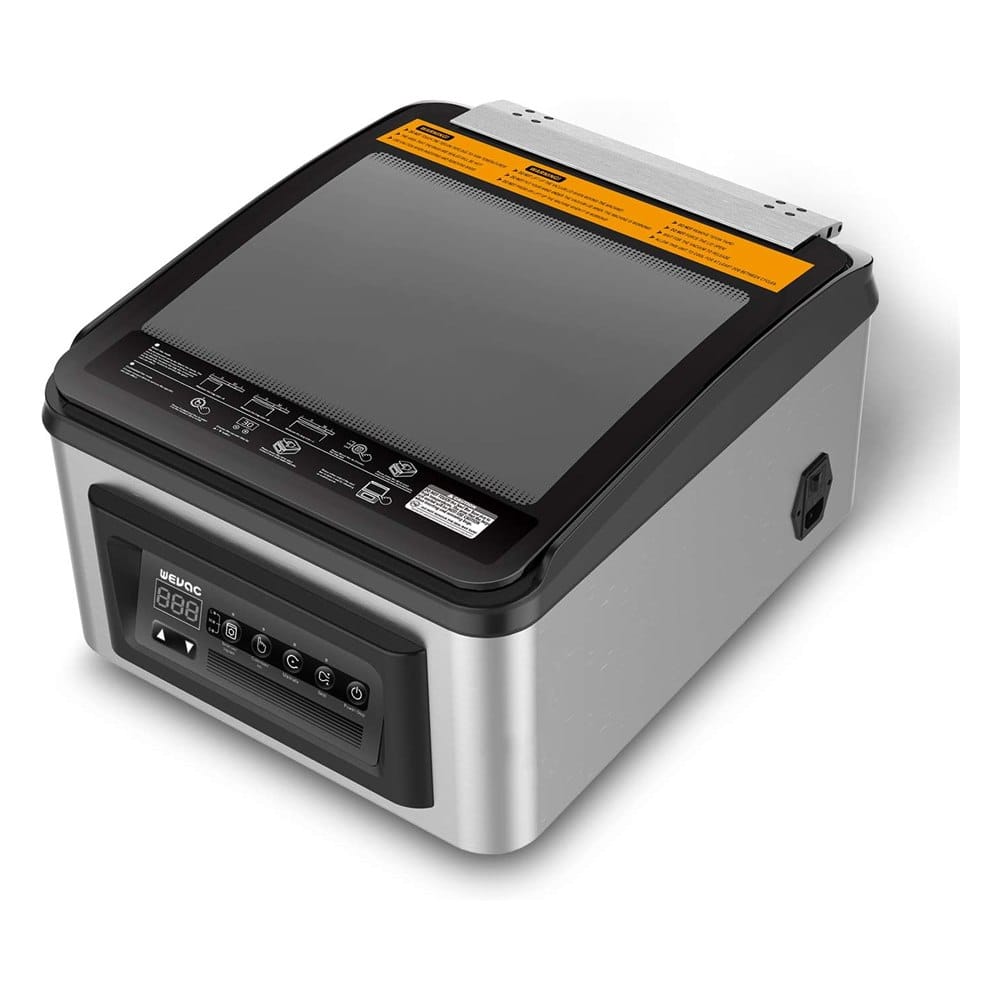
3. Wevac CV12 Chamber Vacuum Sealer
Best for: big cuts of meat and anyone who wants the deepest chamber on this list.
The Wevac CV12 has the roomiest chamber of the bunch: about 12.2 inches wide, 13 inches long and 3.9 inches deep. That extra inch of depth is what lets a pork shoulder or a stack of steaks fit without wrestling. The outside measures about 14.5 x 18.1 x 9.6 inches, so it needs a deep counter.
What makes it stand out: The 12-inch seal bar takes flat pouches from 6 x 10 up to 11 x 16 inches, a wider range than the others here. You can let SmartVac mode handle the timing or set the vacuum time yourself. It runs on a dry piston pump (no oil to change) and has a tempered glass lid on a stainless body. The box includes 20 starter bags, a spare piece of seal tape and an external vacuum hose.
Good to know: It has the lowest star rating of our four (4.1), so it's not the safest bet if you just want something that works every time with zero fiddling. It's also the largest footprint here. Not for small apartment kitchens.
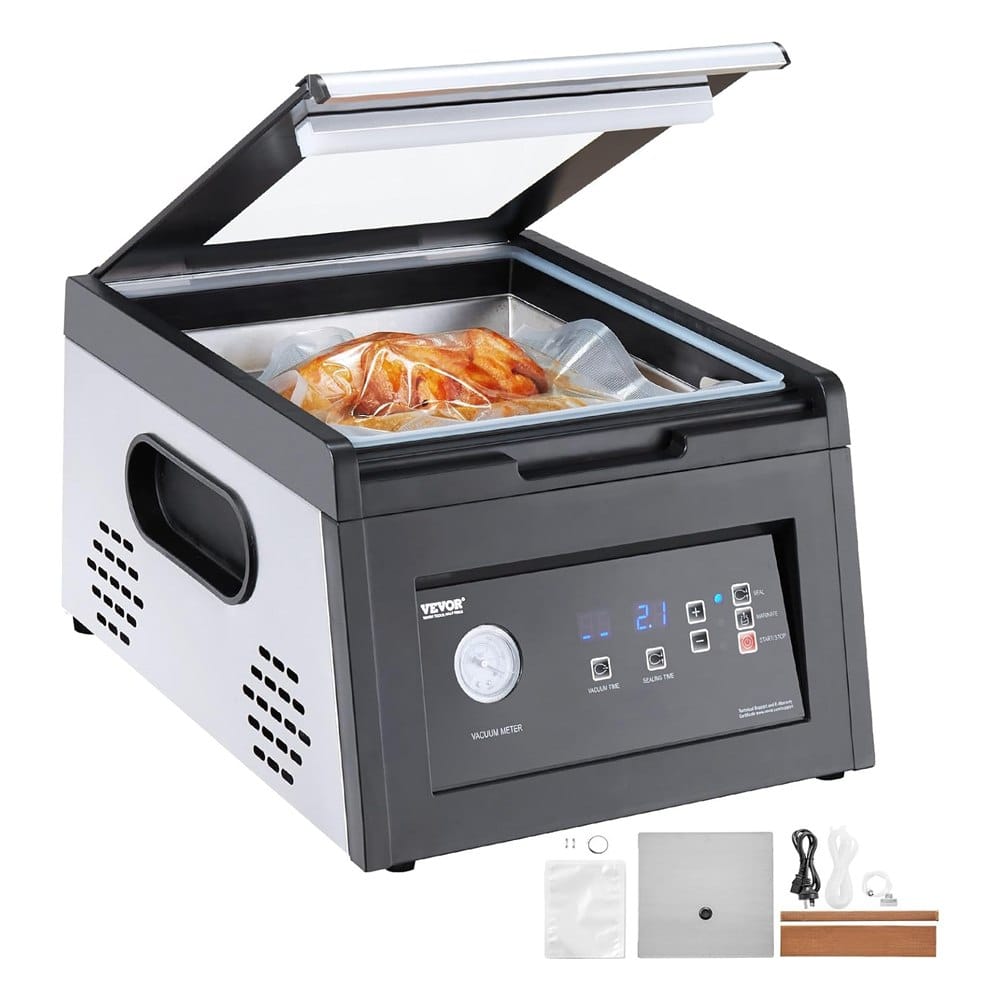
4. VEVOR Chamber Vacuum Sealer 380W
Best for: people who want strong suction plus extras like marinate and jar modes.
VEVOR's chamber sealer leans on raw power. The listing quotes a 380W pump that pulls 90 liters of air a minute and reaches better than -95 kPa. The chamber is 304 stainless steel, about 12.87 x 12.2 x 3.15 inches, under a full glass lid.
What makes it stand out: It's built for long sessions, with a cooling pump meant to keep going through a pile of bags without resting. You get adjustable vacuum and seal time plus marinate, single-seal and jar-vacuum modes, and the pump is oil-free. It's also one of the few here that says it handles powdery and paste-like foods along with wet ones.
Good to know: It has far fewer reviews than the Avid Armor machines (around a hundred), so there's less of a track record. It's also a heavy, chunky unit. VEVOR makes several chamber sealers with similar names, so double-check you're looking at the 380W model before you order.
How to Get Great Seals From a Chamber Sealer
- Use chamber pouches, not textured bags. Chamber sealers work with smooth, flat pouches, which cost much less than the embossed rolls regular sealers need. (If you're still on a suction sealer, our vacuum sealer bags for food roundup covers those.)
- Chill liquids first. Warm soup can boil under vacuum, even at room temperature. Cool it in the fridge, or freeze it flat for an hour, before sealing.
- Leave a few inches of headspace. Fill bags about two-thirds full and lay the open end flat across the seal bar with no wrinkles.
- Start short on soft foods. Bread, berries and fish crush easily. Use a shorter vacuum time and stop when the bag just hugs the food.
- Wipe the bar and chamber after juicy jobs. A clean seal bar makes a clean seal. Most of these have removable parts or flat stainless chambers that wipe out fast.
- Portion before you seal. Single-meal packs thaw faster and cut waste. A small scale helps (our food scale picks work well here), and sealed portions drop right into a meal prep lunch box for the week.
Frequently Asked Questions
Chamber vacuum sealer vs regular vacuum sealer: which is better for home?
Can a chamber vacuum sealer seal liquids and soup?
Can you use regular vacuum sealer bags in a chamber sealer?
Can a chamber vacuum sealer do mason jars?
Keep Reading
- Vacuum sealer bags for food storage
- Reusable vacuum seal bags for food and clothes
- Insulated meal prep lunch boxes
Final Thoughts
For most people, the Avid Armor USV20 is the chamber vacuum sealer for home we'd pick. It's compact, it has the best ratings from the most buyers, and the adjustable vacuum time covers everything from soup to steak. If you process a deer every fall or buy meat by the case, step up to the USV32 for its dual seal bar and marinate mode.
Need room for thick roasts? The Wevac CV12 has the deepest chamber and the widest bag range. And if you want lots of modes and a strong pump, the VEVOR 380W is worth a look, as long as you're fine with a newer track record.
Disclosure: This post contains affiliate links. As an Amazon Associate I earn from qualifying purchases. Here's how we pick products.