
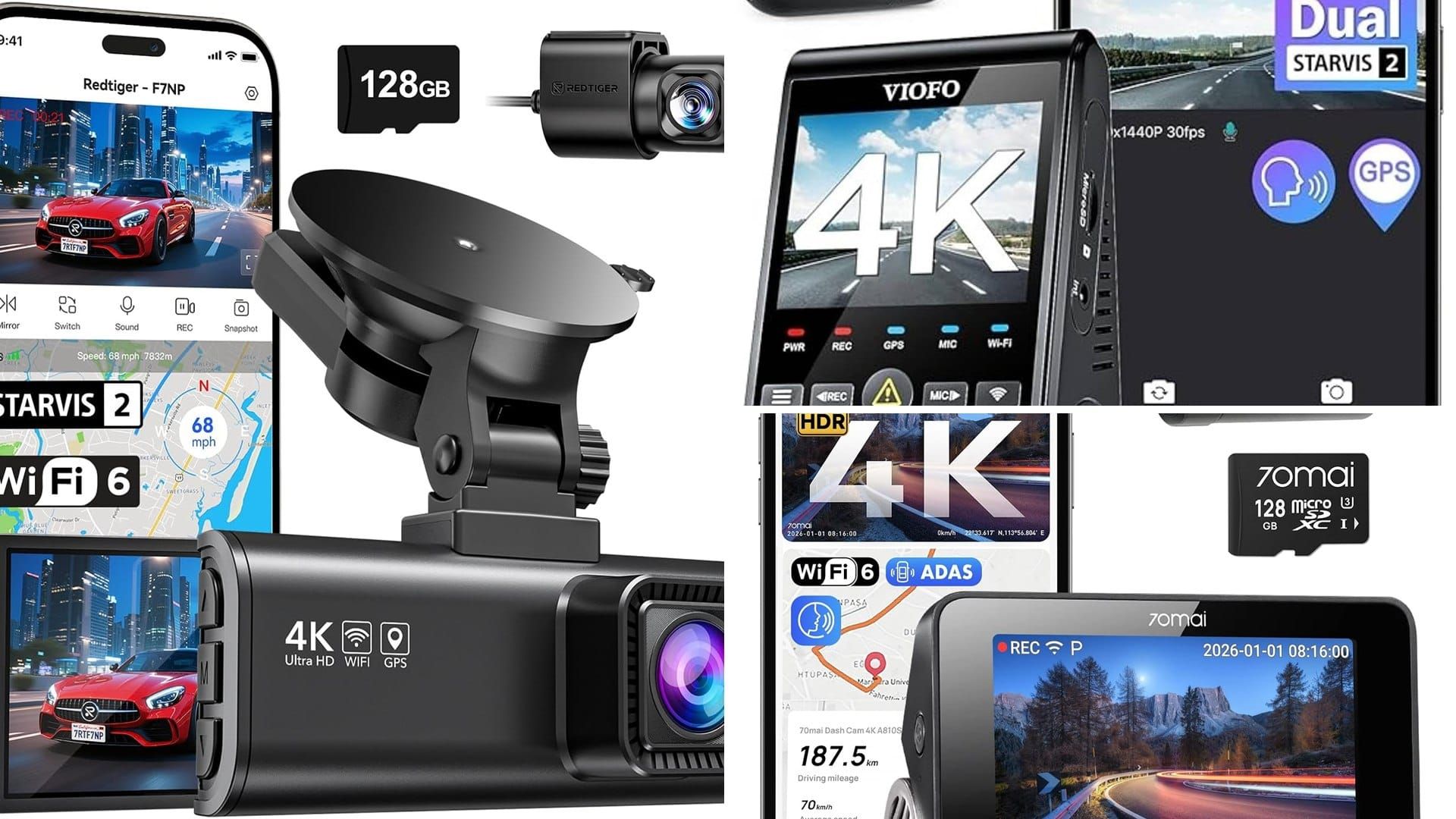


A wireless dash cam front and rear setup is what most people picture when they get rear-ended at a light and realize the only witness was the other driver. You want video of both ends of the car, and you want to pull that clip onto your phone in the parking lot, not dig out a card reader at home. Here's the catch nobody puts in the title: "wireless" on these cams means Wi-Fi to your phone. The rear camera still runs a thin cable to the front unit, and the front unit still needs power. That's not a bad thing. Cabled rear cams are far more reliable than battery ones. Here's what I'd check before buying, and the 4 best wireless dash cams front and rear in 2026.
What to Look For in a Wireless Dash Cam Front and Rear
Real Wi-Fi speed. Every cam here has an app. The difference is how fast it moves a 4K clip to your phone. 5GHz or Wi-Fi 6 is noticeably quicker than old 2.4GHz connections, which matters when you're standing next to a dented bumper.
Sensor, not just resolution. "4K" on the box doesn't mean much at night. Look for Sony STARVIS 2 sensors. That's what helps read a license plate under street lights. Also check the rear resolution: 1080p rear is fine for most, 2K rear is better for plates.
Supercapacitor vs battery. A car in summer sun gets hot. Supercapacitors handle heat better than lithium batteries and last longer. The REDTIGER and the 70mai A810 both list a supercapacitor. For any other cam, check the listing before you buy if you live somewhere hot.
Parking mode needs a hardwire kit. Every one of these cams can watch your car while parked, but only with a hardwire kit wired to your fuse box. It's sold separately on all four. Budget for it, or for a shop to install it.
GPS and warranty. GPS stamps your speed and location on the video, which is useful for an insurance claim. The REDTIGER F7NP and 70mai A810 both list an 18-month warranty. For the other two, check the listing.
The 4 Best Wireless Dash Cams Front and Rear in 2026
1. REDTIGER F7NP 4K Front and Rear Dash Cam
Best for: most drivers who want a proven front and rear setup with a screen, at a fair price.
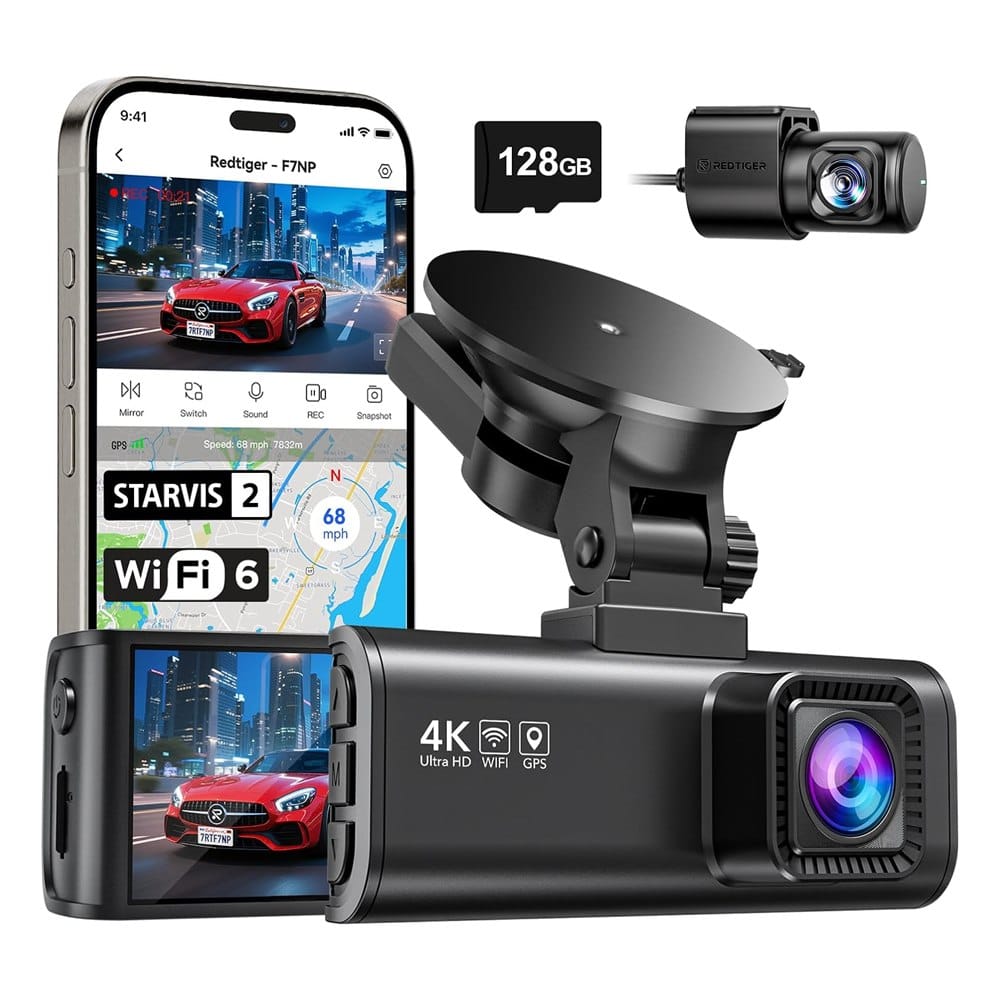
This one has more reviews than the rest of this list combined, tens of thousands, and it still holds a solid rating. It records 4K up front and 1080p in the rear, with a 170° front lens and a 140° rear lens. The front sensor is STARVIS 2 with an F1.5 aperture, and it has its own screen, so you can check the view without opening the app.
What makes it stand out: the 5.8GHz Wi-Fi. REDTIGER rates downloads at up to 20MB/s, and the app shows GPS route and speed next to the video. A memory card is in the box, and it runs on a supercapacitor instead of a lithium battery. The warranty is 18 months.
Good to know: the rear camera is 1080p, a step below the VIOFO's 2K rear. Parking mode needs a hardwire kit that isn't included. With this many reviews you'll see some complaints about cable fit and app hiccups, so take the time to route the rear cable carefully.
2. 70mai A810 4K Front and Rear Dash Cam
Best for: tech-minded drivers who want Wi-Fi 6, driver alerts and the option of 4G remote viewing.
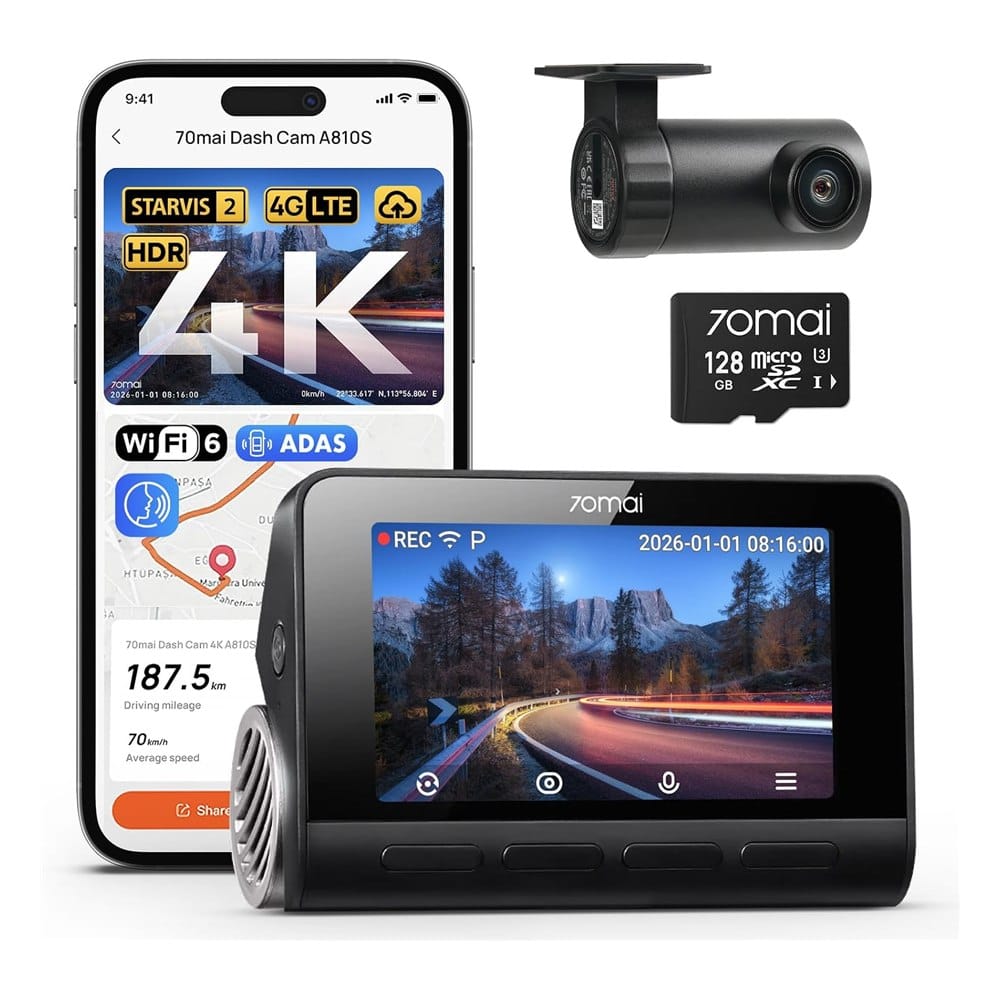
The A810 records true 4K up front and 1080p in back, with Sony STARVIS 2 sensors on both cameras (IMX678 front, IMX662 rear). Field of view is 146° front and 130° rear. It has Wi-Fi 6 for transfers and a 5-system GPS (GPS, BDS, Galileo, GLONASS, QZSS) for accurate speed and location.
What makes it stand out: it does more than record. ADAS gives lane departure and forward collision warnings, voice control lets you lock a clip without touching it, and AI motion detection watches for people and vehicles while parked. Add 70mai's optional 4G hardwire kit (UP05) and you can view the car live from anywhere through the app. Warranty is 18 months.
Good to know: the 4G remote access and 24-hour parking mode both need that extra kit, and 4G service means a data plan. If you just want video of what happened, you're paying for features you won't use. The rear camera has the narrowest view in this group.
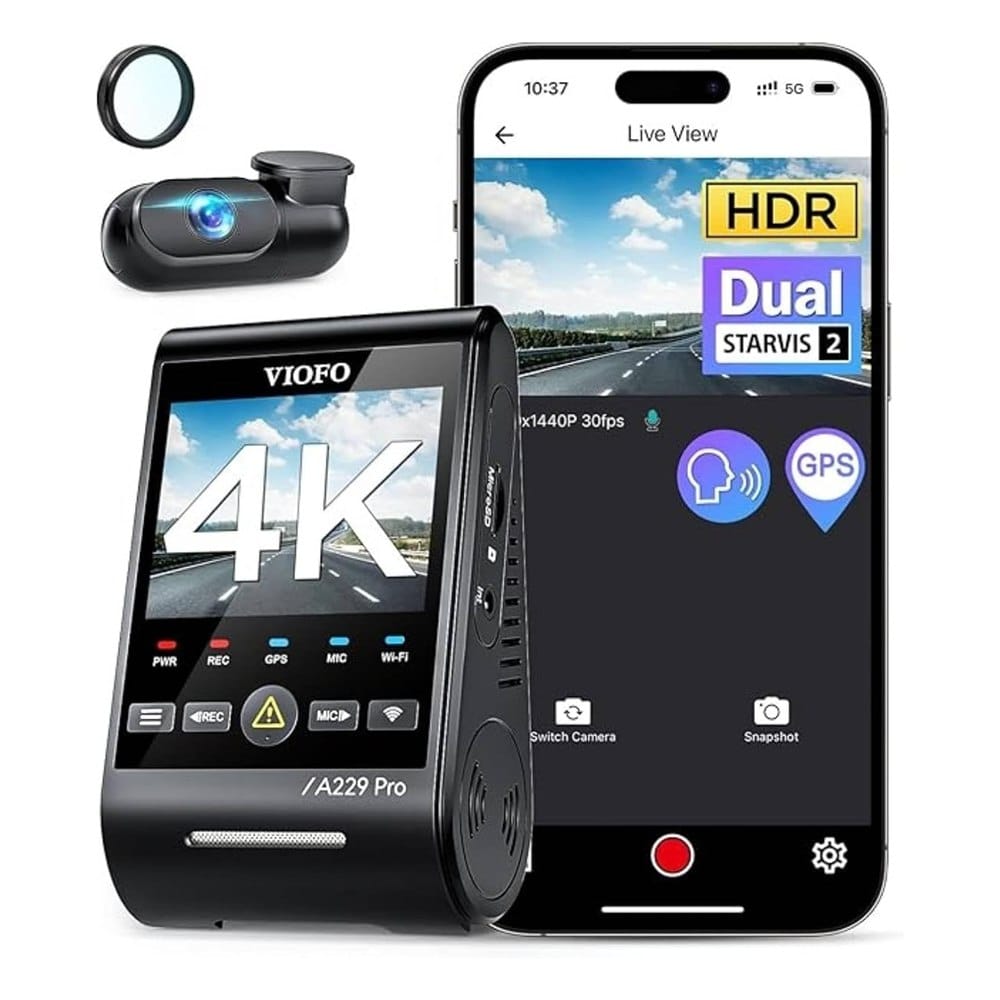
3. VIOFO A229 Pro 2CH 4K + 2K Dash Cam
Best for: drivers who care most about reading plates behind them, day or night.
VIOFO is the brand dash cam forums keep pointing to, and the A229 Pro is why. It pairs two STARVIS 2 sensors: IMX678 for 4K up front and IMX675 for 2K (1440p) in the rear, both with HDR. That rear camera is the sharpest on this list, and the rear is where most fender-bender evidence comes from.
What makes it stand out: the parking mode is buffered. When it spots motion it saves 15 seconds before the event and 30 seconds after, so you see the car pulling in, not just the bump. You get 3 parking modes (auto event, low bitrate and time-lapse), 12 voice commands, 5GHz Wi-Fi and quad-mode GPS.
Good to know: it's the most expensive pick here, and the HK4 hardwire kit for parking mode is sold separately. Its listing doesn't mention lane or collision alerts like the 70mai A810's. Check whether your bundle includes a memory card. If not, buy a high-endurance card with it.
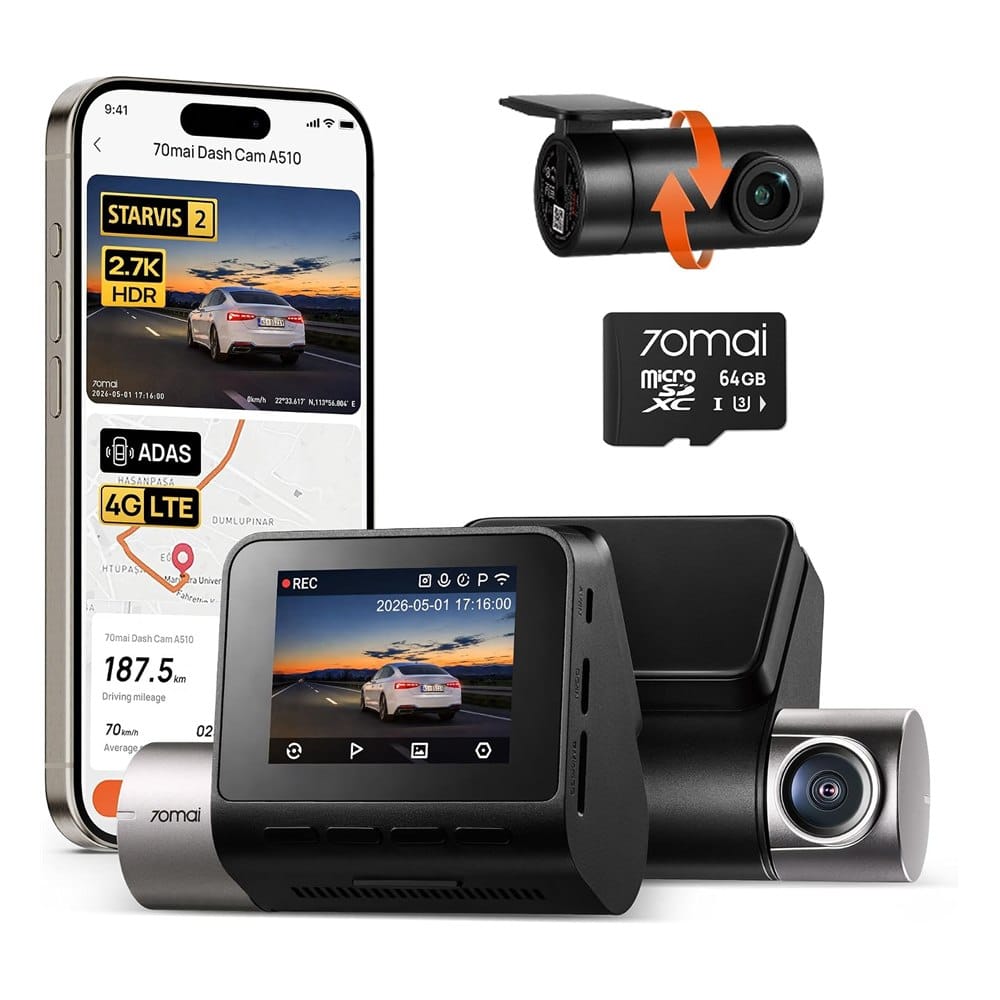
4. 70mai A510 2.7K Front and Rear Dash Cam (Budget Pick)
Best for: a second car, a new driver, or anyone who wants front and rear coverage without spending much.
The A510 drops to 2.7K up front with 1080p in the rear, and costs about half as much as the A810. It still has a Sony IMX675 sensor with an F1.8 aperture and HDR, so night video holds up better than the no-name cams in the same price range. A 64GB card is in the box, and it takes cards from 32 to 256GB.
What makes it stand out: the rating. It sits at 4.4 stars, tied for the highest here, at the lowest price. You get Wi-Fi app control, a G-sensor that locks crash clips, and time-lapse parking mode with the UP05 hardwire kit.
Good to know: no 4K, and the Wi-Fi is basic. It doesn't have the A810's driver alerts or 4G option. If you drive a lot at night on highways, the extra sharpness of the 4K models is worth the money.
How to Install a Front and Rear Dash Cam
- Mount the front cam behind the mirror. It stays out of your view and gets a centered shot. Clean the glass with alcohol first so the mount sticks.
- Tuck the power cable along the headliner. Push it into the gap between the headliner and windshield, down the A-pillar trim, and under the dash to the 12V socket. Keep it clear of the airbag marked on the pillar.
- Run the rear cable the same way. Along the headliner to the back, then up to the top of the rear glass. On SUVs and hatchbacks, route it through the rubber boot at the hinge so it doesn't get pinched.
- Check the angle in the app. Aim for about 60% road and 40% sky up front. Check the rear view after dark too.
- Add parking mode later if you want it. That's where the hardwire kit goes into the fuse box. If you're not comfortable with fuses, a car audio shop can do it quickly.
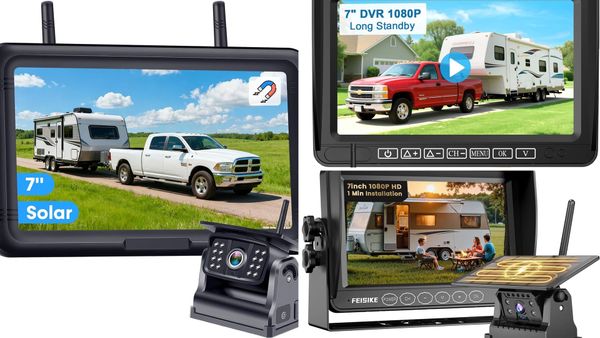
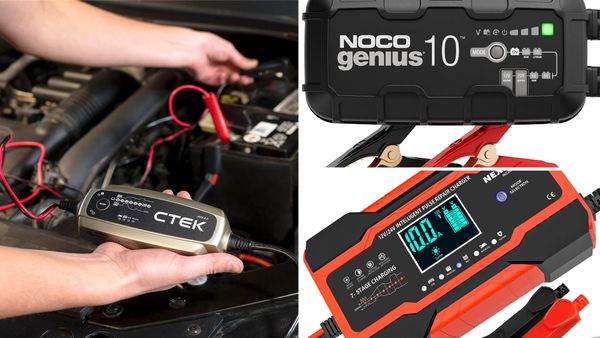
If you want to watch the car while it's parked, our dash cam with parking mode picks go deeper on that. Pickup owners who also want to see behind them while reversing should look at our wireless backup cameras for trucks. And if you'll leave a cam on a hardwire kit, a smart battery charger is cheap insurance against a weak battery.
Frequently Asked Questions
Is there a truly wireless dash cam front and rear, with no wires?
Do you need a rear dash cam?
Does a dash cam drain the car battery?
Will a dash cam lower my insurance?
Keep Reading
- Dash cams that record while your car is parked
- Dash cams for Uber and Lyft drivers, with cabin cameras
- Wireless backup cameras for trucks
Final Thoughts
The REDTIGER F7NP is the one I'd point most people to. It has a huge review base, a screen, fast 5.8GHz Wi-Fi and a card in the box, at a fair price. If you want the sharpest rear video and the smartest parking mode, spend more on the VIOFO A229 Pro.
Pick the 70mai A810 if you want lane and collision alerts or plan to check on the car remotely over 4G. For a second car or a teen driver, the 70mai A510 covers front and rear for much less. Whatever you buy, get the hardwire kit if parking mode matters to you.
Disclosure: This post contains affiliate links. As an Amazon Associate I earn from qualifying purchases. Here's how we pick products.