

A masticating cold press juicer is the one you want if your current juicer screams like a jet engine, leaves your kale pulp soaking wet, and makes juice that separates into foam before you've even rinsed the parts. You buy a whole bag of celery with big plans, and half of it ends up in the bin. Slow juicers fix most of that. They crush and press instead of spinning a blade, so they're quieter and squeeze more out of leafy greens. They also cost more, and they're not all equal on prep time or cleanup. We read through the listings, specs and a lot of reviews, and here are the 4 best masticating cold press juicers in 2026.
What to Look For in a Masticating Cold Press Juicer
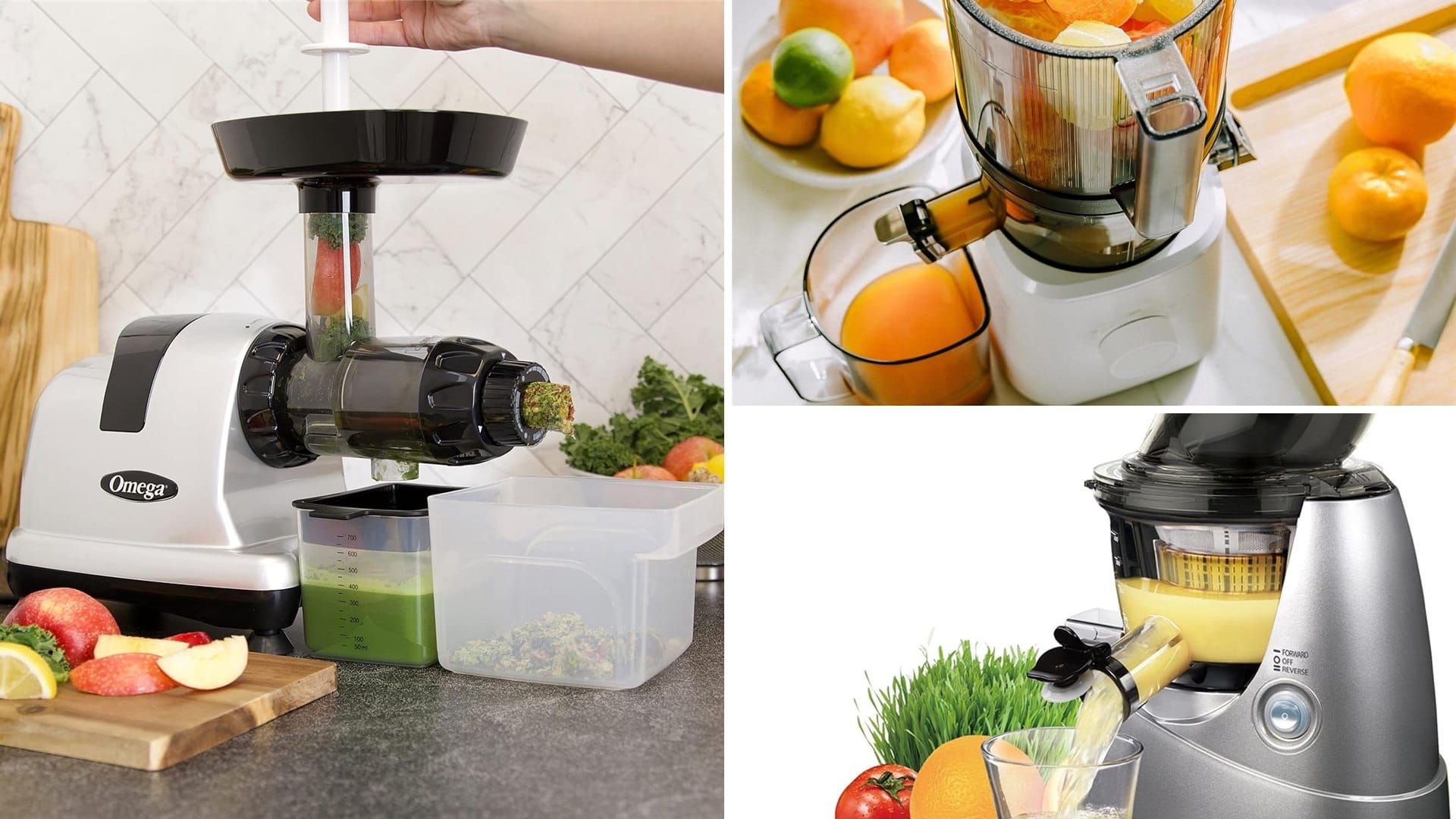
Vertical or horizontal. Vertical juicers (like the Ninja, Nama and Kuvings here) take up less counter space and feed themselves better with fruit. Horizontal ones (like the Omega) are the old favorite for wheatgrass and leafy greens, and they usually double as a pasta or nut butter machine. They're longer, though, so measure your counter.
Chute size and prep time. This is the thing people underestimate. A narrow chute means chopping everything into small pieces first, every single time. A 3-inch chute or a self-feeding hopper cuts prep way down, and that's often the difference between juicing daily and letting the machine collect dust.
Speed (RPM). Slow juicers run somewhere around 50 to 80 RPM. Lower speed means less heat and less foam, which is why the juice tastes fresher and keeps a bit longer in the fridge.
Cleanup. Count the parts. Look for dishwasher-safe pieces and an included brush for the strainer, because the mesh screen is where pulp gets stuck. If cleanup takes 15 minutes, you'll stop using it.
Warranty. Slow juicers have a motor and a gearbox that work hard. Long warranties (10 to 15 years) are common at the higher end, and they're a real reason to spend more.
The 4 Best Masticating Cold Press Juicers in 2026
1. Ninja NeverClog Cold Press Juicer (JC151)
Best for: first-time slow juicers who want easy cleanup and a small footprint.
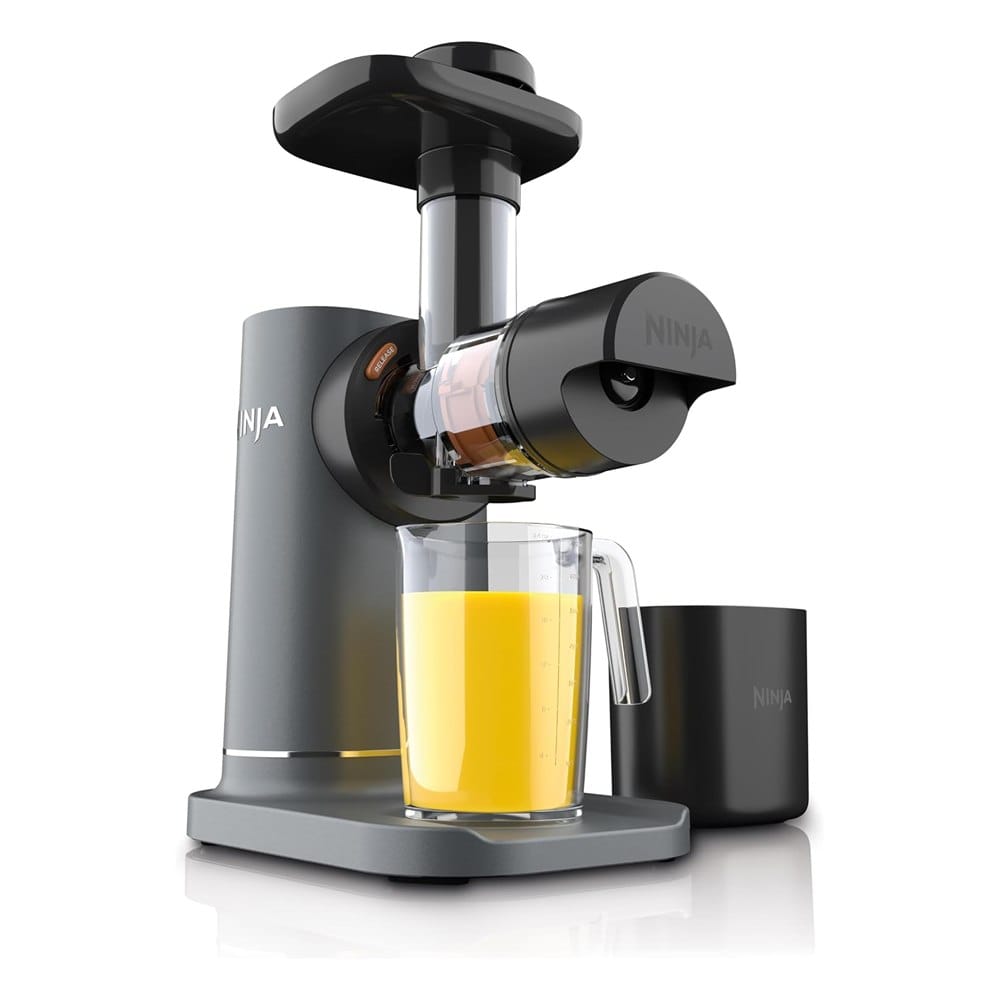
The Ninja is the most-reviewed slow juicer we looked at, with thousands of ratings and a strong average. It's a compact vertical machine with a 150-watt high-torque motor, a 24 oz juice jug and a 36 oz pulp container, and it's short enough to sit under most kitchen cabinets. You get two programs, Start/Stop and Reverse, so there's no learning curve.
What makes it stand out: the two interchangeable pulp filters. One gives you smoother juice, the other leaves more pulp in, so you can pick your texture. All the parts that touch juice are dishwasher safe, and there's an anti-drip lever so you can swap cups without a puddle on the counter. For the price, it's the easiest way to try cold press juicing without a big commitment.
Good to know: the warranty is 1 year limited, much shorter than the premium brands below. The feed chute is smaller than the Nama's hopper, so you'll still be cutting apples and carrots into pieces. If you plan to juice every single morning for years, the longer-warranty models start to make more sense.
2. Omega J8006HDS Nutrition System
Best for: green juice and wheatgrass fans who also want nut butter, sorbet and pasta from one machine.
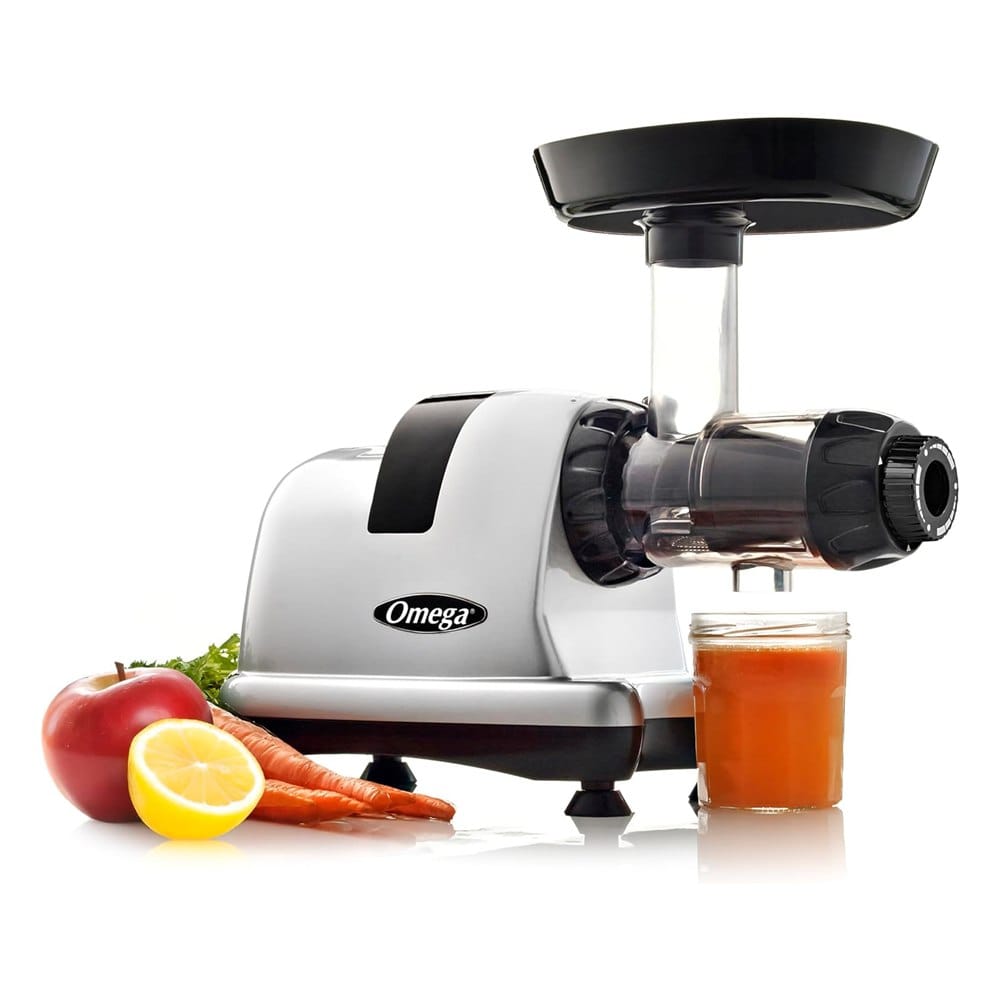
This is the classic horizontal slow juicer, and it's been a favorite for years. It runs at 80 RPM with a 200-watt motor and a triple-stage auger, and the adjustable end cap has 3 pressure settings so you can squeeze harder for greens or ease off for softer fruit. Pulp ejects automatically, so you can keep juicing without stopping to empty a basket.
What makes it stand out: it's a lot more than a juicer. With the included nozzles it makes nut butter, extrudes pasta, minces herbs and garlic, makes baby food and frozen fruit desserts, and even soy milk. Leafy greens and wheatgrass are its strong suit, which is exactly where cheaper juicers struggle.
Good to know: it's long. The listing puts it at about 15.5 inches tall, 14.5 inches deep and 6.5 inches wide, so plan a spot for it. The chute is narrow, so expect more chopping than with the Nama or Kuvings, and the product care note says hand wash only. Very soft fruits like berries aren't its favorite.
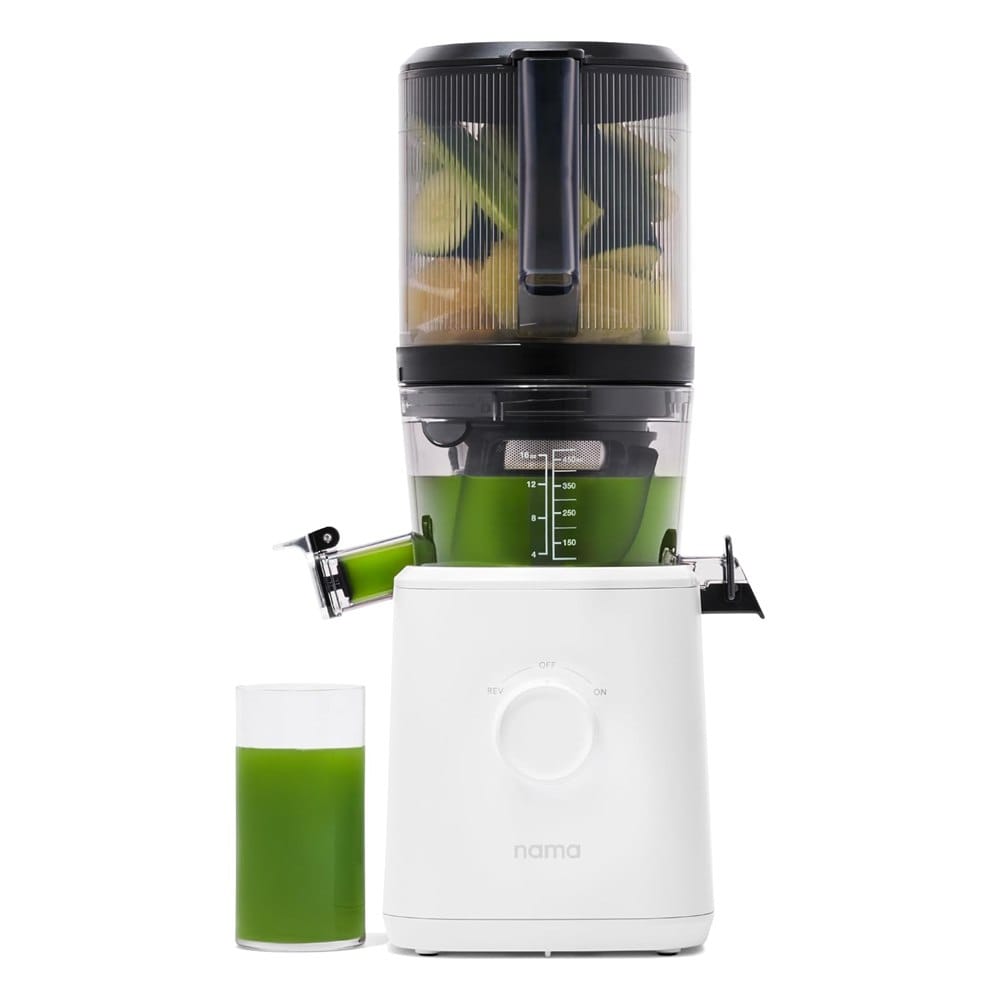
3. Nama J2 Self-Feeding Cold Press Juicer
Best for: daily juicers who hate prep and want to load everything at once and walk away.
The Nama J2 has the highest star rating in this group. Its big selling point is the wide self-feeding hopper: you drop in a whole recipe, close the lid, and the machine cuts and presses it on its own. It runs at a slow 50 RPM with a 200-watt motor and comes with juice containers, strainers, a cleaning brush and guides.
What makes it stand out: hands-free juicing and a 15-year warranty. If your mornings are rushed, being able to fill it and go pack lunches is a big deal. Reviewers tend to point out how quiet it is and how dry the pulp comes out, which means you're getting more juice per bag of produce.
Good to know: it's the most expensive pick here by a wide margin. The tall hopper makes it a taller machine than the Ninja, so check the height listed on Amazon against the space under your cabinets. If you only juice once or twice a week, the Ninja or Omega will get you most of the way for far less.
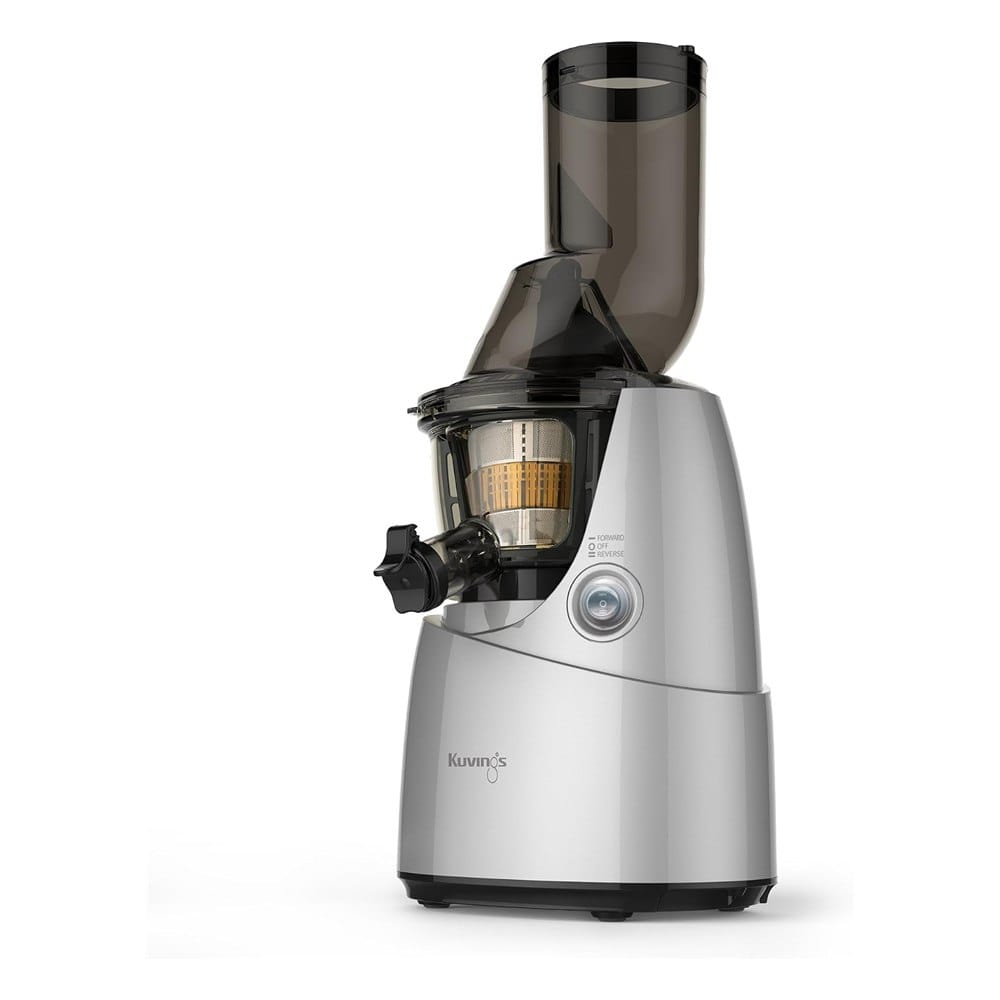
4. Kuvings Whole Slow Juicer (Silver Pearl)
Best for: people who want whole apples to go in uncut, plus smoothies and nut milk.
Kuvings is one of the brands that made the wide-chute vertical juicer popular. This one has a 3-inch feed chute, so smaller apples and oranges can go in whole, plus a 240-watt motor that turns at 60 RPM. A drip-free spout lets you mix juices right in the chamber, and a smaller funnel helps with little produce.
What makes it stand out: the wide chute and a 10-year warranty, at a price below the Nama. It's a 3-in-1 machine for juice, smoothies and nut milk, and the box includes extra strainers and a cleaning tool, so you're not buying accessories later.
Good to know: its rating is a little lower than the top three, and it has fewer reviews. You still feed it by hand, piece by piece, unlike the Nama's hopper. The listing says 110V, US and Canada use only, so it's not one to pack for a move abroad.
How to Get More Out of a Slow Juicer
- Alternate hard and soft produce. Feed a piece of carrot or apple after a handful of spinach. The firm piece pushes the greens through and helps prevent clogs.
- Roll up leafy greens. Kale and chard go through much better rolled into tight bundles than dropped in loose.
- Use reverse at the first sign of a jam. All four of these have a reverse function. Use it early instead of forcing more produce in.
- Rinse right away. Pulp dries onto the strainer fast. A quick rinse while the juice is still cold saves you a scrubbing session later.
- Drink it within a day or two. Cold-pressed juice holds up better than juice from a fast spinning juicer, but it still tastes best fresh. Store it in a full, sealed glass jar to limit air.
If you're making smoothies with the leftover produce, our blue spirulina powder picks are an easy add for color. And if you'd rather compare all juicer types, including faster centrifugal models, see our top-rated juicers on Amazon.
Frequently Asked Questions
Is a masticating juicer the same as cold press?
Is a masticating juicer better than a centrifugal juicer?
What are the disadvantages of a cold press juicer?
How long does cold pressed juice last in the fridge?
Keep Reading
- Top-rated juicers on Amazon, including faster centrifugal models
- Blue spirulina powder for smoothies and baking
- Air fryer toaster ovens that fit a small kitchen
Final Thoughts
For most people, the Ninja NeverClog is where we'd start. It has the most reviews, it's easy to clean, it fits under the cabinets, and it costs a fraction of the premium machines. If green juice and wheatgrass are your main thing, or you want nut butter and pasta from the same machine, the Omega J8006HDS is the better buy.
If you juice every day and prep time is what keeps stopping you, save up for the Nama J2. The self-feeding hopper and 15-year warranty are what you're paying for. The Kuvings sits in between: a wide chute and a 10-year warranty for less than the Nama, as long as you don't mind feeding it yourself.
Disclosure: This post contains affiliate links. As an Amazon Associate I earn from qualifying purchases. Here's how we pick products.