
You buy a nice-looking ball, take it to the park, and two weeks later the cover is peeling and it skids on the blacktop like a bar of soap. Asphalt is hard on basketballs, and the leather ones made for gyms don't last.
This guide is for anyone who plays on a driveway, schoolyard or park court. Here are the 5 best outdoor basketballs in 2026, ranked by rating and review count, from composite covers to a plain rubber ball. We didn't test them ourselves. We read the listings and what reviewers say, and we point out the catch with each one.
What to Look For in an Outdoor Basketball
Cover material. Rubber is the toughest and the cheapest, and it handles concrete well. Composite covers feel closer to a game ball and grip better, but they wear faster on rough ground. Full leather belongs indoors.
Size. A size 7 (29.5 inches) is the standard for men and teens 15 and up. A size 6 (28.5 inches) is for women and for kids around 9 to 11. Size 5 (27.5 inches) is for the youngest players. Check the size on the listing before you add it to your cart.
Channels and grip. Deep channels give your fingers something to hold on to, and a pebbled surface helps in humid weather. Both matter more outside than a logo does.
Air retention. Some balls have an inflation-retention lining so they hold air for longer. It's a small feature that saves you from pumping up the ball every time you play.
Where you play. If you play on rubberized courts, a composite ball is fine. For cracked driveways and old asphalt, a rubber ball is the safer pick. We go deeper on that in our rubber basketball guide.
The 5 Best Outdoor Basketballs in 2026
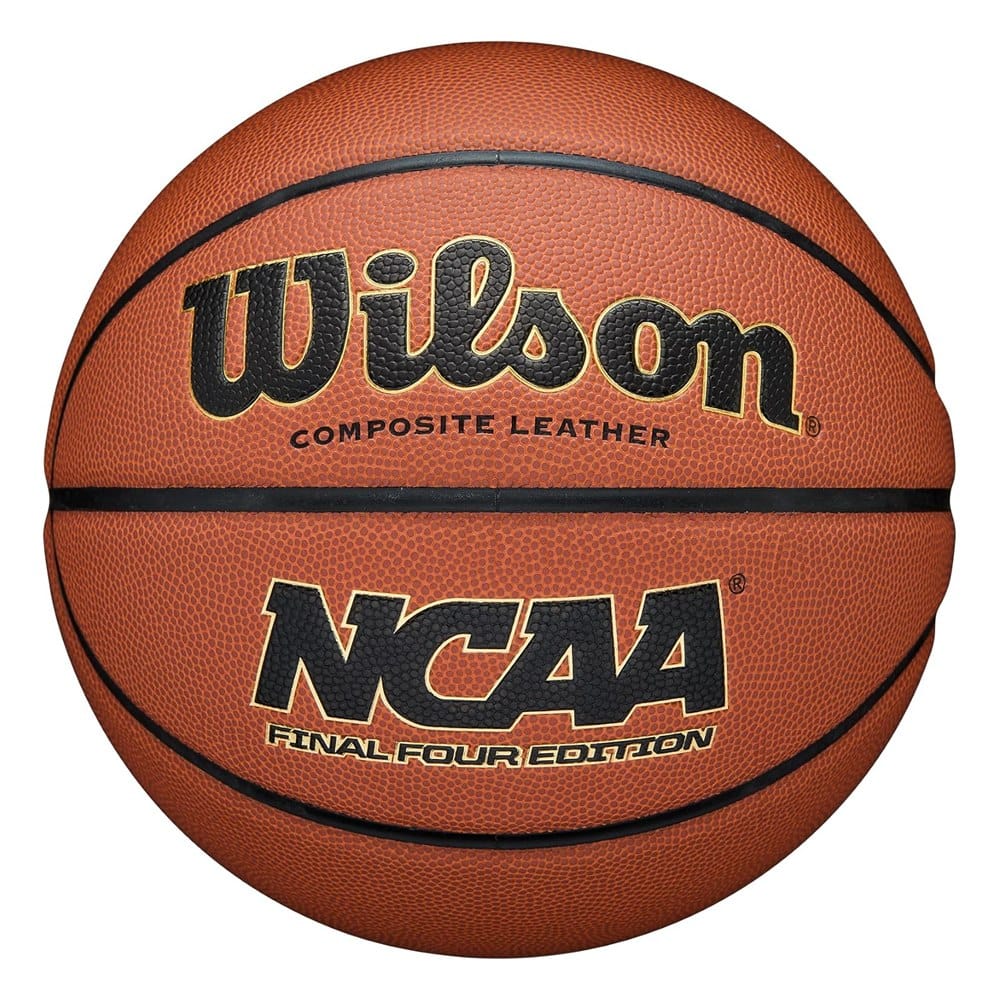
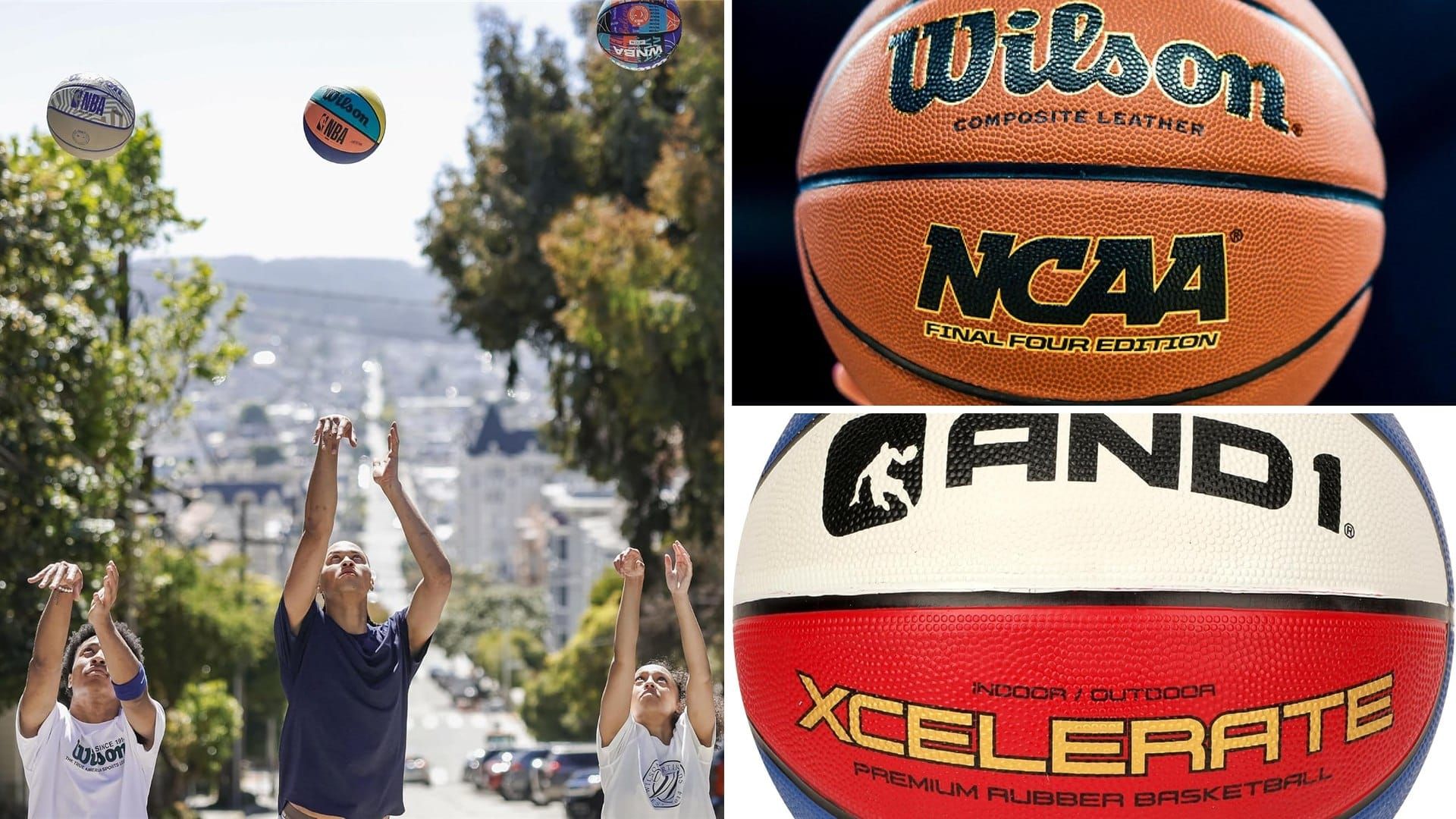
1. Wilson NCAA Final Four Edition Indoor/Outdoor Basketball
Best for: players who want a college-style ball that still works outside.
A composite leather ball with a dual-tone cover, deep channels and a pebbled surface. It's made for both indoor and outdoor play and comes in sizes 6 and 7.
What makes it stand out: It has the most reviews here, close to 10,000 at 4.7 stars, and the price is low for a composite ball. The grip is what most reviewers praise.
Good to know: A composite cover will wear down faster on rough asphalt than a rubber ball. Pick the right size from the menu before you buy, because the listing sells more than one.
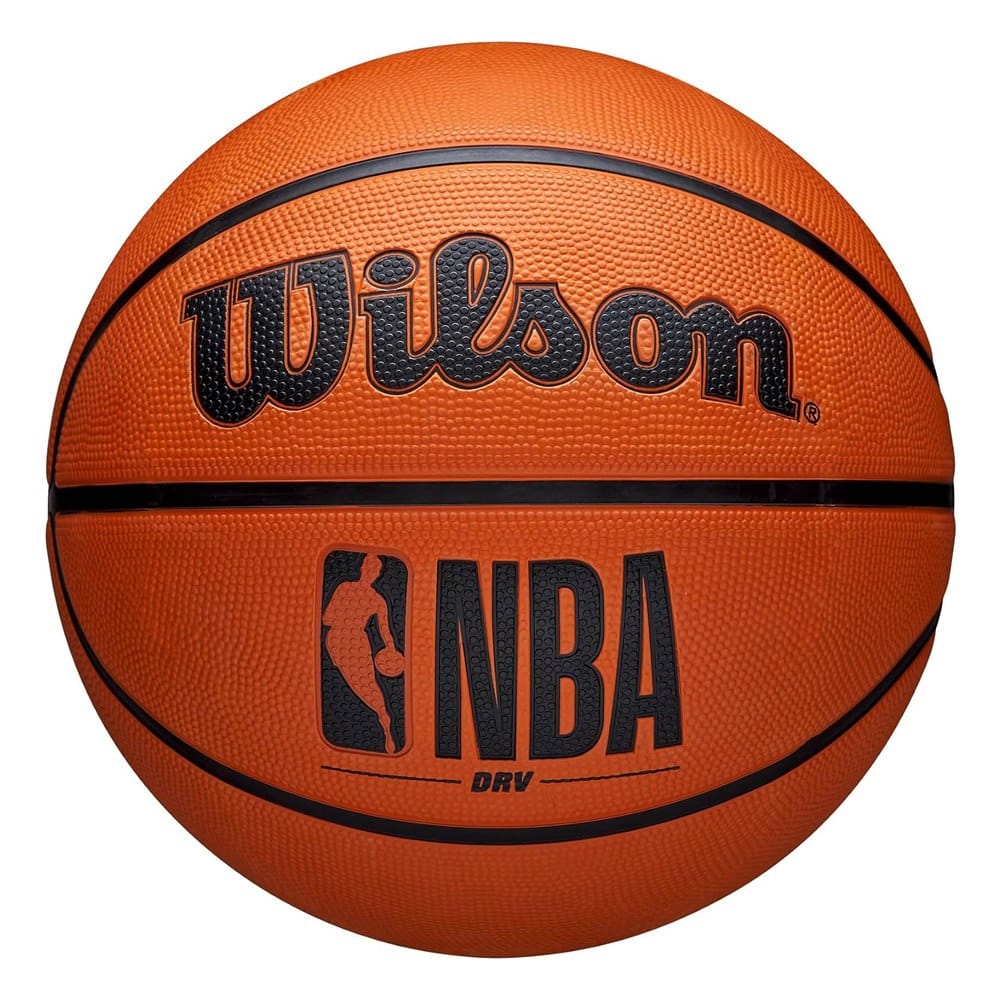
2. Wilson NBA DRV Series Outdoor Basketball
Best for: everyday outdoor games on a budget.
An outdoor ball with an NBA-branded performance cover built for rough surfaces. The listing mentions an inflation-retention lining and channels designed for pro-style grip.
What makes it stand out: It's one of the cheapest balls here and it still has a 4.6 rating across more than 8,000 reviews. It's an easy ball to buy for a kid or to keep in the trunk.
Good to know: It's a basic ball, so expect a stiffer feel than the NCAA ball. The color options and sizes vary, so check the size before you order.
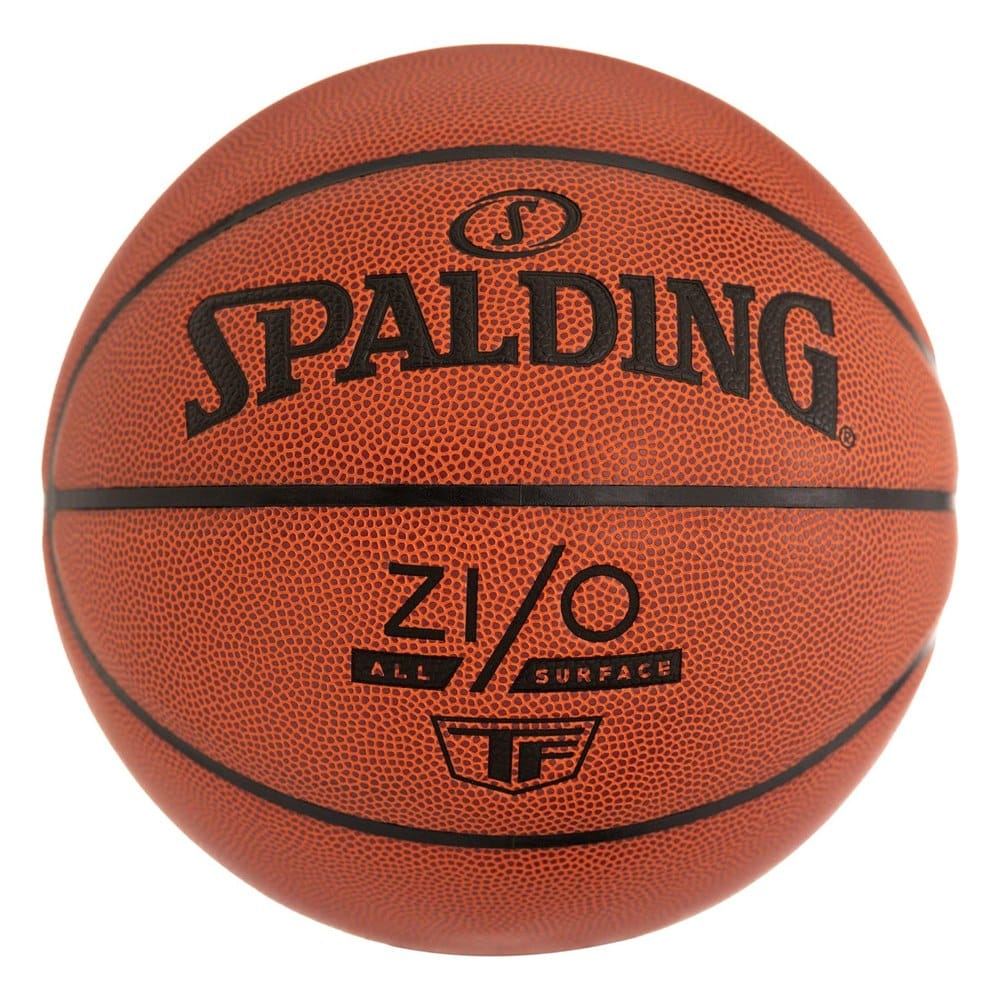
3. Spalding Zi/O TF All Surface Indoor-Outdoor Basketball
Best for: people who play both in a gym and on a court outside.
Spalding's all-surface composite ball, with the Zi/O cover meant to feel soft out of the box and grip on any floor. It's inflated and ready to play.
What makes it stand out: It's the best choice if your week splits between a rec-center gym and an outdoor court. It has a 4.7 rating from more than 3,700 reviews.
Good to know: It costs more than the Wilson balls here, and a composite cover still wears down outdoors. Players who stay on asphalt will get more life from rubber.
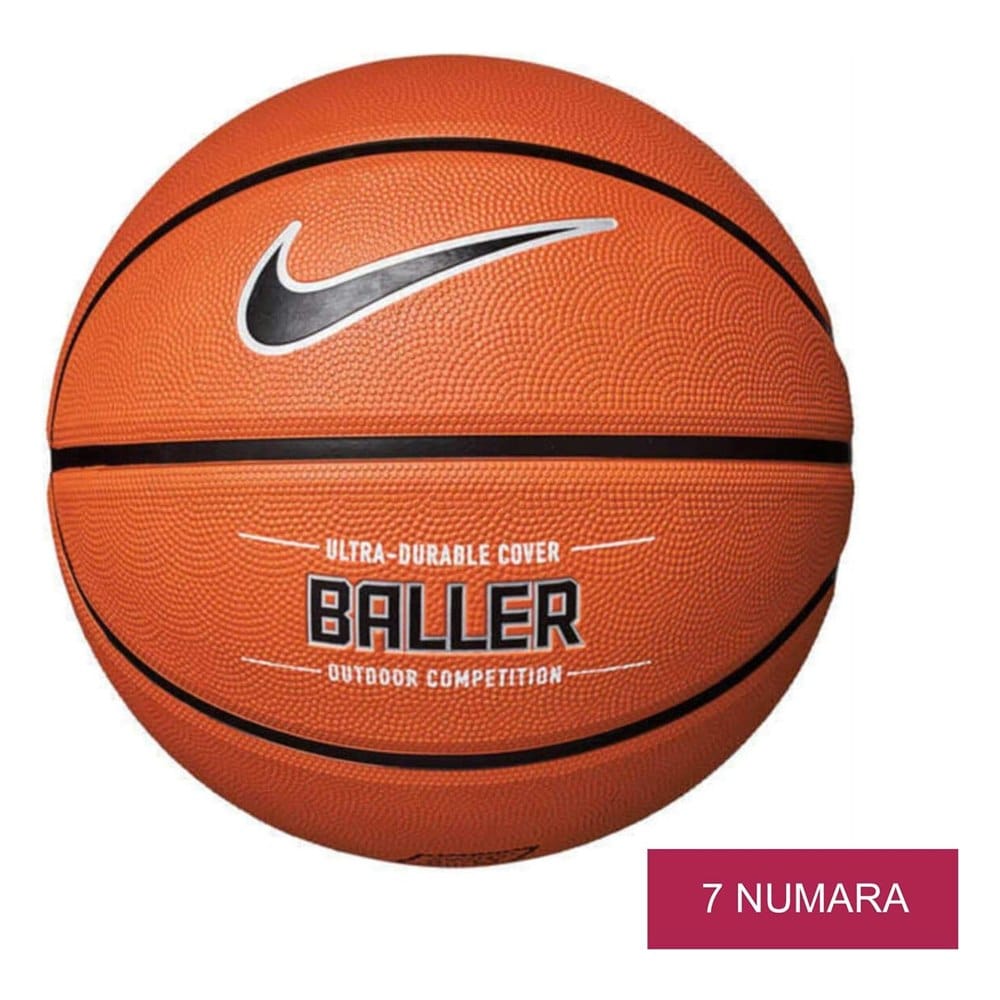
4. Nike Baller Basketball
Best for: kids and teens who want a Nike ball for the park.
A rubber outdoor ball with deep channels and a durable cover. Nike lists it as an outdoor-competition ball.
What makes it stand out: It's tough on concrete and has a 4.6 rating across more than 1,200 reviews. If a young player cares about the brand, this is an easy way to get it.
Good to know: It has the fewest reviews of the five. Rubber balls feel firmer than composite, and the size options differ, so check them before you buy.
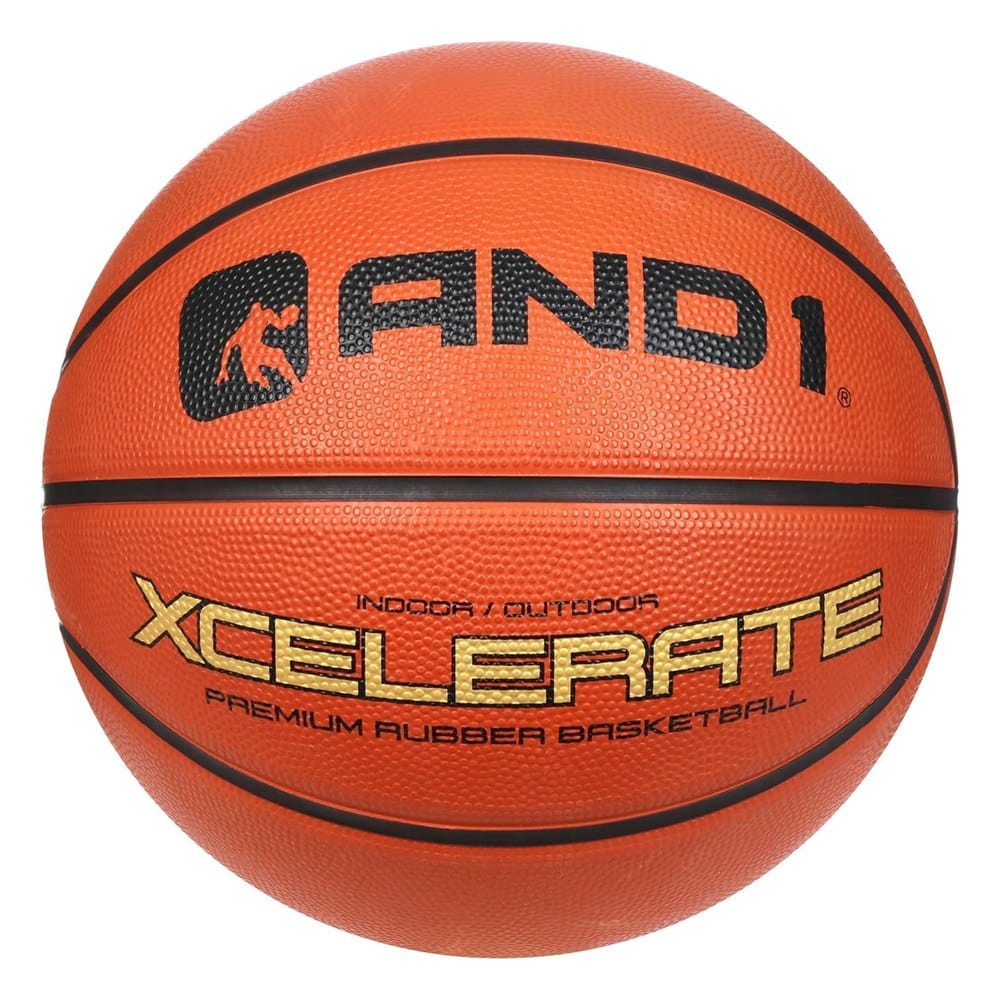
5. AND1 Xcelerate Rubber Basketball
Best for: rough blacktop and a first ball for a kid.
A regulation size 7 (29.5 inch) rubber ball with deep channels. It's sold in several colors, including a camo and red, white and blue, and the listing photos show a pump in the box.
What makes it stand out: It's the one most likely to survive a rough court, and the colors are easy to spot in a pile of balls at the park. It has 4.4 stars from more than 1,500 reviews.
Good to know: It has the lowest rating here. A rubber ball bounces a little harder and feels less soft than a composite one, and some reviewers say the ball loses air over time.
How to Make an Outdoor Basketball Last
- Pump it to the pressure printed near the valve (usually 7 to 9 psi) and check it every couple of weeks.
- Use it outside only if it's listed for outdoor play. A leather gym ball will wear out fast on concrete.
- Wipe it down with a damp cloth after a muddy game and let it dry at room temperature.
- Don't leave it in a hot car or in freezing weather. Heat and cold change the air pressure and can warp the cover.
- Don't sit on it or kick it. Both can damage the seams.
If you play in the heat, an insulated jug helps, and our 2 gallon water jug picks are good for a team day.
Frequently Asked Questions
What is the best material for an outdoor basketball?
Can you use an indoor basketball outside?
What size basketball should I buy?
How long does an outdoor basketball last?
Keep Reading
- Is a rubber basketball the best choice for outdoor play?
- Mouth guards for braces, for sports
- 2 gallon water jugs for sports and parties
Final Thoughts
For most people, the Wilson NCAA Final Four Edition is the one to buy. It's comfortable to hold, it has the most reviews, and it works indoors and out. If you play only on rough blacktop, go with the AND1 Xcelerate or the Nike Baller, since rubber holds up better.
If you're buying for a younger player on a budget, the Wilson NBA DRV is the cheapest way into a decent ball. If you play in a gym and on the court outside, the Spalding Zi/O is the one that fits.
Disclosure: This post contains affiliate links. As an Amazon Associate I earn from qualifying purchases. Here's how we pick products.