
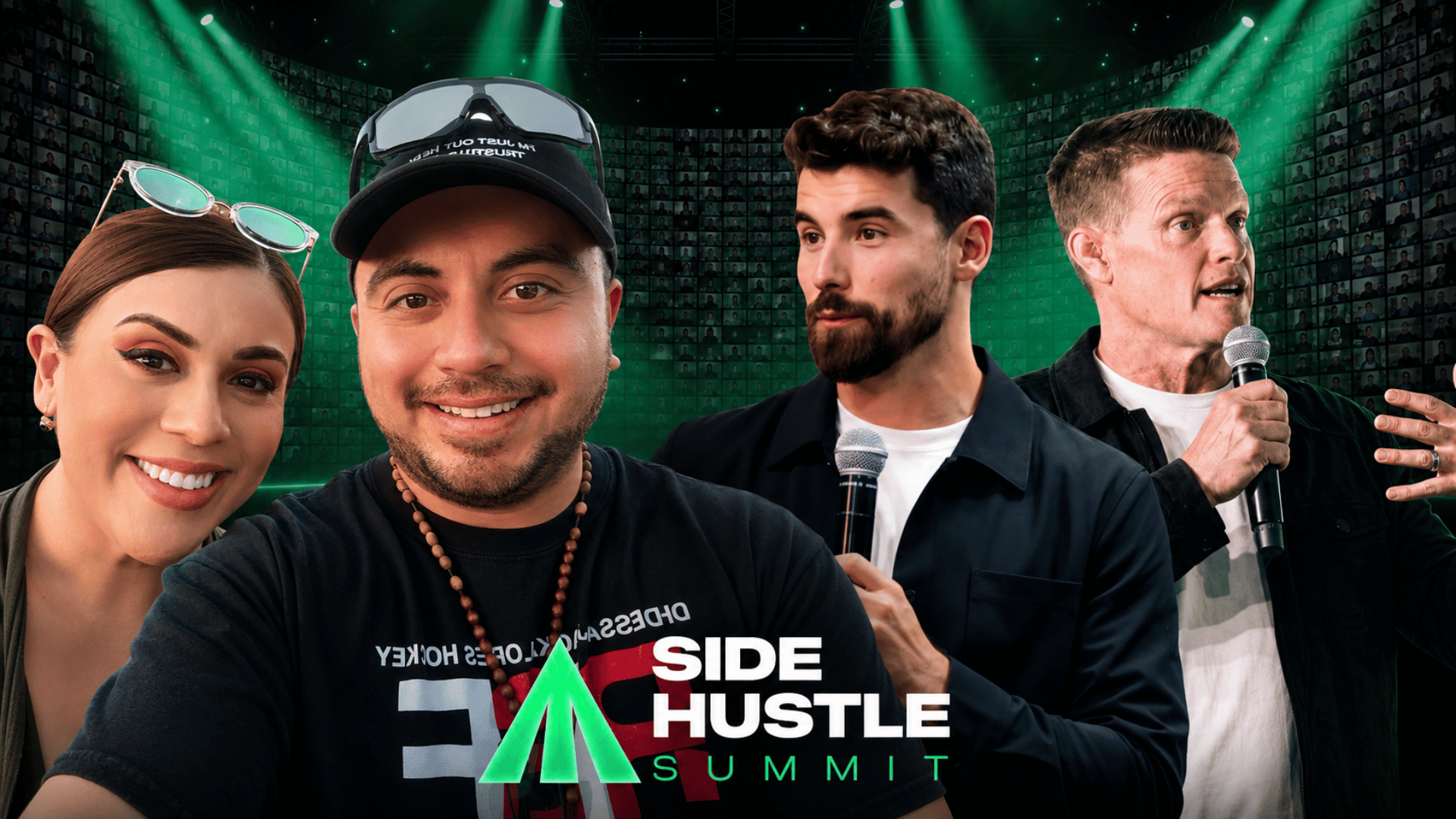



Before a fourth event launches with a new co-host and bigger promises, it's worth looking closely at what the previous three actually delivered. Here's a breakdown of Iman Gadzhi's event series track record, the real numbers behind the marketing claims, and how to think about them ahead of the 2026 Side Hustle Summit.
The Three Events Before This One
The Side Hustle Summit 2026 is the fourth event in a recurring series Iman Gadzhi has run through Consulting.com. The first three events, run without Russell Brunson as co-host, reportedly generated the following in tracked sales from attendees within 90 days of each event:
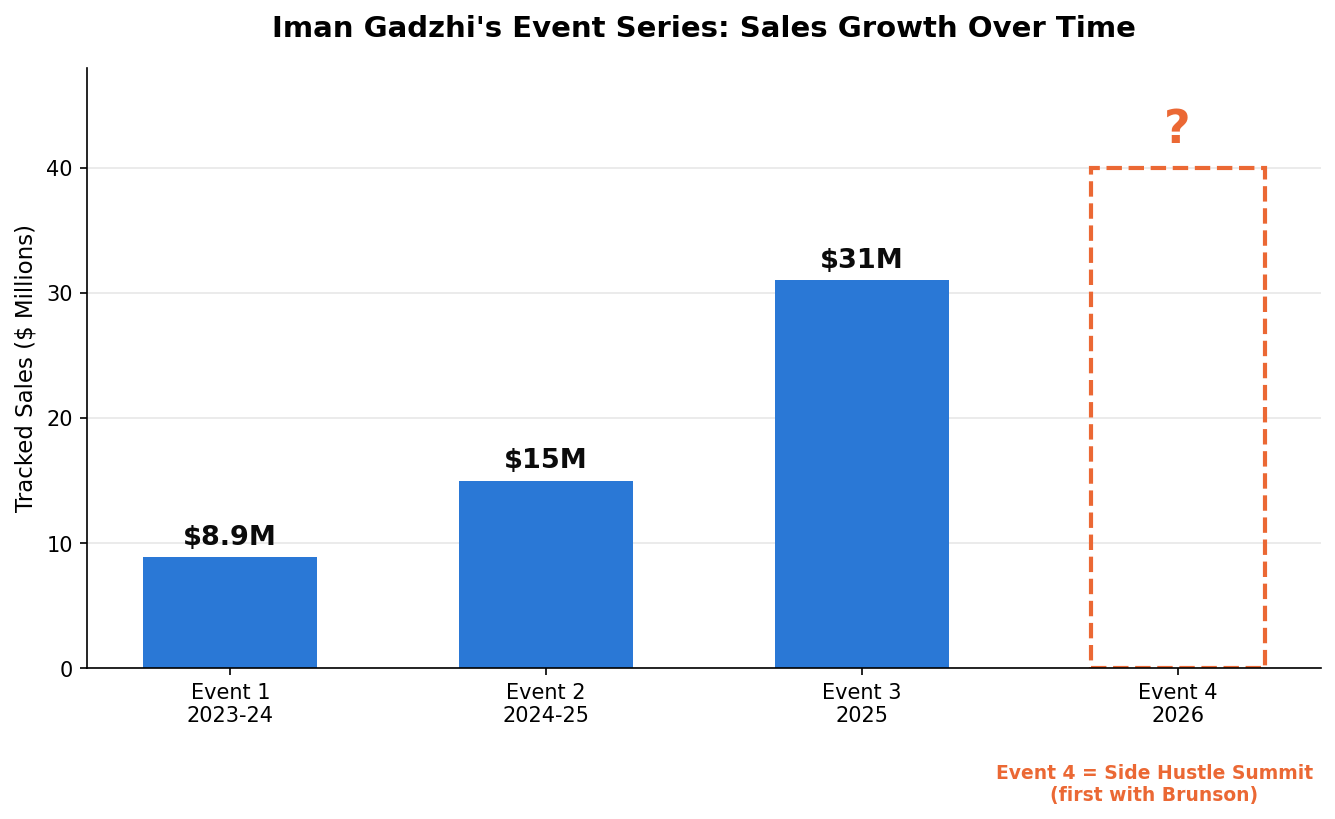
- Event 1: $8.9 million in tracked sales
- Event 2: $15 million in tracked sales
- Event 3: $31 million in tracked sales
- Combined across all three: $55.6 million+
The pattern is a clear upward trend — each event outperformed the last by a wide margin, roughly doubling between Event 1 and Event 2, then roughly doubling again by Event 3. That trajectory is part of the pitch for the 2026 event: if the pattern holds and Brunson's involvement adds additional reach and credibility, the expectation is that Event 4 will outperform Event 3.
What "Tracked Sales" Actually Means
It's worth understanding what this figure represents before treating it as a simple success metric. "Tracked sales" in this context refers to revenue generated by attendees who implemented the teachings from the event and reported or had trackable sales results afterward — not the total number of people who attended, and not a guarantee that every attendee generated any sales at all.
This distinction matters. A $31 million tracked sales figure could come from a small percentage of highly successful attendees, a broad base of moderate results, or some combination — the aggregate number alone doesn't tell you the distribution. Without knowing the total number of attendees or the percentage who generated at least some tracked revenue, it's difficult to calculate an average or typical outcome from the total figure alone.
The Individual Success Story Used Throughout
The most frequently cited specific result across the promotional material for this event series is a 19-year-old attendee with no prior business experience who reportedly made $111,000 in 45 days after attending Event 1.
This story is repeated consistently across marketing for the current 2026 event, which is worth noting on its own — when the same individual example is used as the primary proof point across multiple event launches spanning what appears to be a couple of years, it suggests this may be one of the standout outcomes from the entire event series rather than a representative or typical result. Standout individual results are real and worth acknowledging, but they're generally not what most attendees should expect to replicate.
Reading Growth Numbers Like These Critically
A few things worth keeping in mind when evaluating an upward sales trend like the one shown above:
Audience size likely grew alongside sales. Part of the increase from $8.9M to $31M across three events is very likely explained by a larger audience and bigger marketing reach for each subsequent event, not solely by improved teaching quality or a better system. More attendees generally means more total tracked sales, even if the average result per attendee stayed roughly flat.
Tracked sales measure activity, not average outcome. As mentioned above, without attendee counts or a breakdown of how many people generated $0, a few hundred dollars, or genuinely life-changing income, the total figure doesn't tell you what a typical outcome looks like for someone in your specific situation.
Past performance across three events doesn't guarantee a fourth. Sales growth from Event 1 to Event 3 followed a specific trend, but Event 4 introduces a new variable — a co-host, a different content structure (the schedule includes a dedicated mentorship day from Brunson and a live build session), and market conditions in 2026 that differ from when the earlier events ran. A trend across past events is informative, not predictive.
These figures come from the event organizers. The $55.6 million total and the individual success stories are self-reported by Consulting.com and used in the event's own promotional materials. There isn't independent third-party verification publicly available for these specific figures — a normal characteristic of marketing materials across this entire industry, but worth factoring into how much weight you give the numbers.
Why the Growth Trend Matters for the 2026 Event
The consistent doubling pattern shown in the chart above is likely one of the strongest arguments in favor of this being a legitimate, functioning business — a scam operation would typically not have three consecutive events with an escalating, trackable revenue pattern reported over what appears to be roughly two years. Recurring events with growing engagement generally indicate the previous iterations delivered enough perceived value for the business to continue and expand.
That said, growing event revenue reflects the growth of Iman Gadzhi's audience and marketing operation — it doesn't independently verify that any specific individual attendee's outcome will match the aggregate trend.
Frequently Asked Questions
Is the $55.6 million figure verified by a third party? No independent, third-party audit of this figure is publicly available. It's a self-reported number from the event organizers (Consulting.com), which is standard for this category of business event but worth factoring into how you weigh the claim.
What percentage of attendees actually made money? This specific figure isn't publicly disclosed. The tracked sales total reflects aggregate revenue from attendees who implemented the teachings, not a stated success rate or percentage of total attendees who generated income.
Is the 19-year-old's $111K result typical? No. It's presented as a standout individual result and has been used repeatedly across multiple event launches as the primary proof point, which suggests it represents one of the strongest individual outcomes from the series rather than an average or typical result.
Will Event 4 (Side Hustle Summit) generate more than Event 3? There's no way to know this in advance. The pattern across the first three events showed consistent growth, and the addition of Russell Brunson as co-host is positioned as a reason to expect continued growth, but past event performance doesn't guarantee future results.
Does a growing sales trend across events mean the teachings work? It suggests the business itself is growing and that enough past attendees found value to fuel word-of-mouth and repeat engagement, but it doesn't independently confirm what percentage of individual attendees achieved meaningful results, or that a similar outcome is likely for any specific new attendee.
Final Thoughts
The upward trend across Iman Gadzhi's three prior events — from $8.9 million to $31 million in tracked sales — is a genuinely notable growth pattern and a reasonable signal that the business itself is operating and expanding, not a fly-by-night operation. At the same time, aggregate sales figures and a single standout success story don't provide enough information to predict what a specific individual attendee should realistically expect.
If you're considering attending the 2026 Side Hustle Summit, treat the track record as context, not a promise — real business growth reported by the organizers, alongside the reality that individual results vary significantly and most attendees of any business education event, across every provider in this space, do not match the standout examples used in marketing.
Registration for the 2026 event is free — you can save your spot here.
This post contains affiliate links. If you register or purchase through links on this page, I may earn a commission at no additional cost to you.