
You watched a few videos, bought a fancy-looking machine, and your first shot came out sour, thin and the color of weak tea. It's a common start, and it usually isn't your fault. Some machines are simply easier to learn on than others. If you want an espresso machine for beginners that makes real espresso without a $1,000 price tag, we read through the listings and reviews and picked the four that make the most sense. Here are the 4 best espresso machines for beginners in 2026, ranked by how many happy buyers each one has.
We didn't personally test these. We compared specs, what's in the box and the patterns in thousands of reviews.
What to Look For in an Espresso Machine for Beginners
A steam wand you can live with. Automatic wands do the milk for you. Manual wands give you more control, but you'll waste some milk learning. If lattes are the goal, think about which one you'll actually stick with.
Temperature control. Espresso is picky about heat. Machines with PID or preset temperature levels are much more forgiving than ones where you guess.
Portafilter size. Bigger (58mm) means more accessories and upgrades later. Smaller (54mm) is fine, and it's what a lot of compact machines use. Check that the basket and tamper are included.
Counter space and tank size. Measure your spot. A slim machine is easy to live with, but a small tank means more refills.
A grinder. Almost no beginner machine includes one. Fresh, fine-ground beans matter as much as the machine, so plan to spend $100 to $200 on a grinder unless you're buying pre-ground (which works, but gives flatter shots).
The 4 Best Espresso Machines for Beginners in 2026
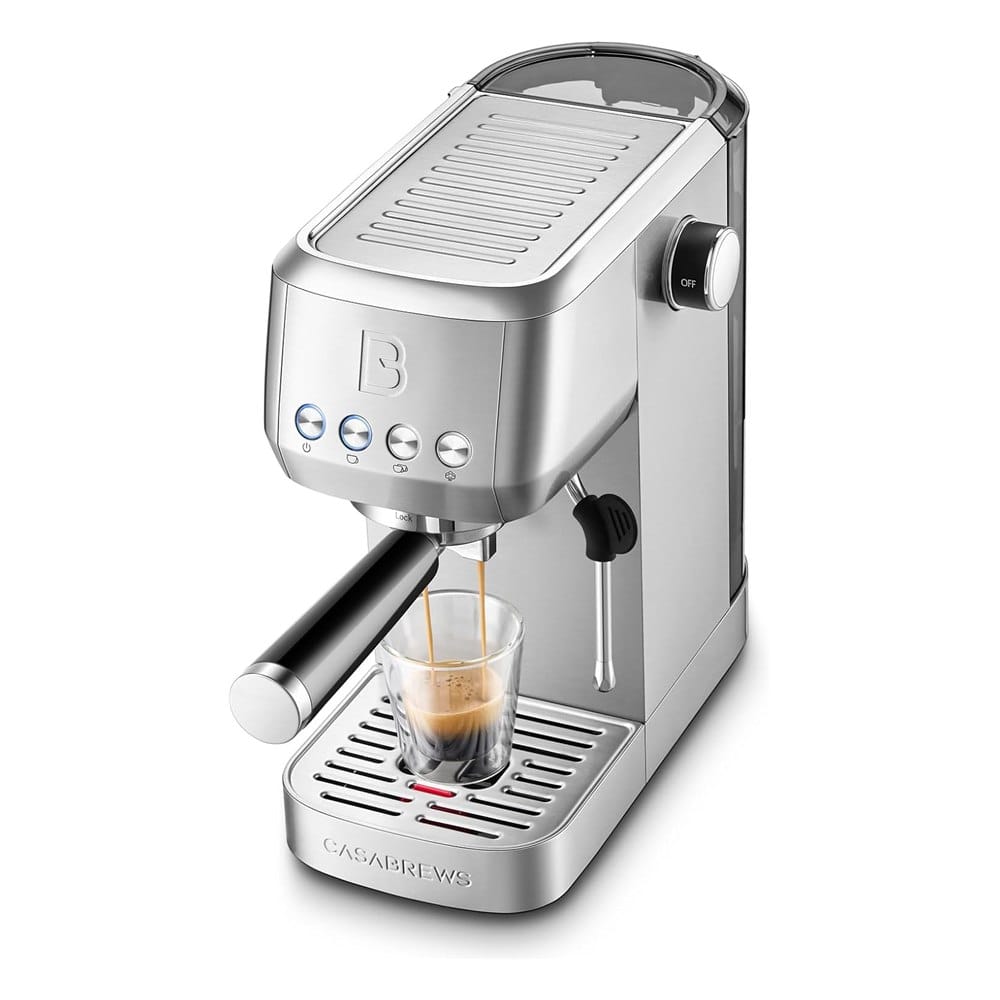
1. CASABREWS 3700 Essential Espresso Machine
Best for: trying espresso at home without spending much.
This is the one most beginners start with. It's a 20-bar machine with a stainless steel body, a 43.9 oz removable water tank and a steam wand for milk. It's about 12.6 inches deep, 5.7 inches wide and 12.5 inches tall, so it fits under most cabinets. With over 3,700 reviews and a 4.2-star rating, it's the most popular on this list.
What makes it stand out: The price. It costs a fraction of the others. If you're not sure you'll love making espresso, this keeps the risk low.
Good to know: You'll need to buy a milk pitcher separately, and the included basket and tamper are basic. Shots get better once you add a decent grinder. Several reviewers also say the steam wand takes practice. If you know you're going to get serious, you may outgrow it.
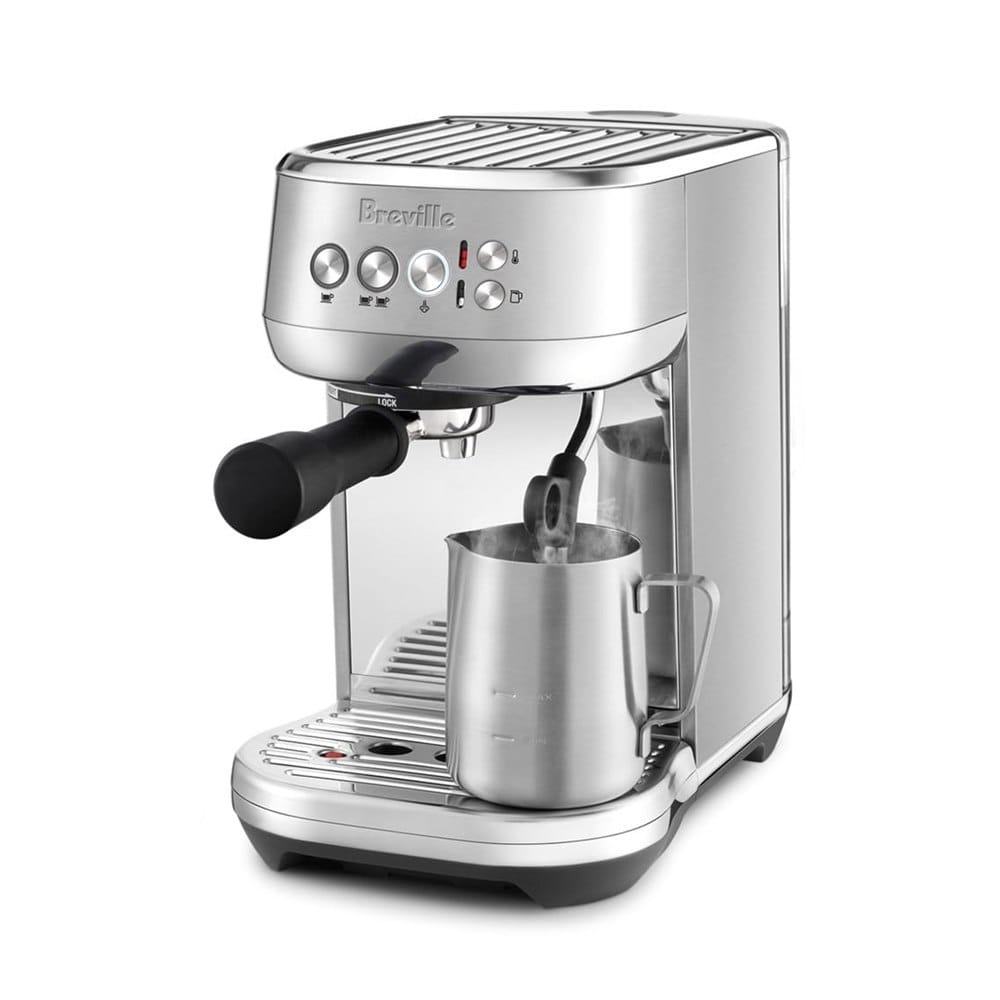
2. Breville Bambino Plus Espresso Machine
Best for: lattes and cappuccinos with the least guesswork.
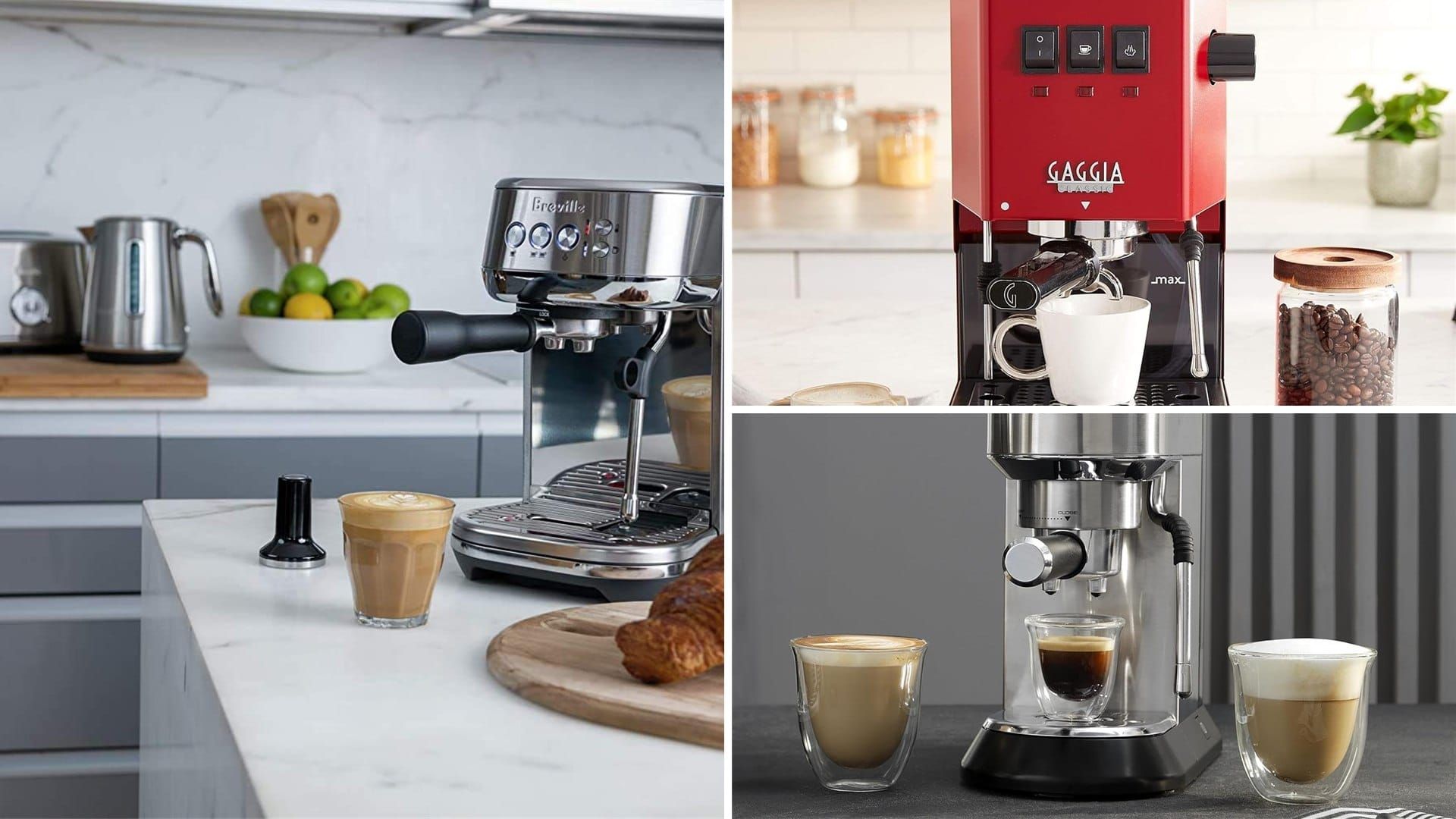
The Bambino Plus is the machine most guides point beginners to. It has digital temperature control (PID), low-pressure pre-infusion, and an automatic steam wand that textures the milk for you. It uses a 54mm portafilter and heats up in about 3 seconds. It holds over 2,400 reviews at 4.1 stars.
What makes it stand out: The automatic milk frothing. You set the temperature and texture, and it does the rest, which takes most of the frustration out of milk drinks. A pitcher, tamper and cleaning tools come in the box.
Good to know: It's the most expensive of the compact picks apart from the Gaggia, and you still need a grinder. The automatic wand is convenient, but it limits how much you can learn about milk later. The tank holds 64 fl oz, so refills are rare.
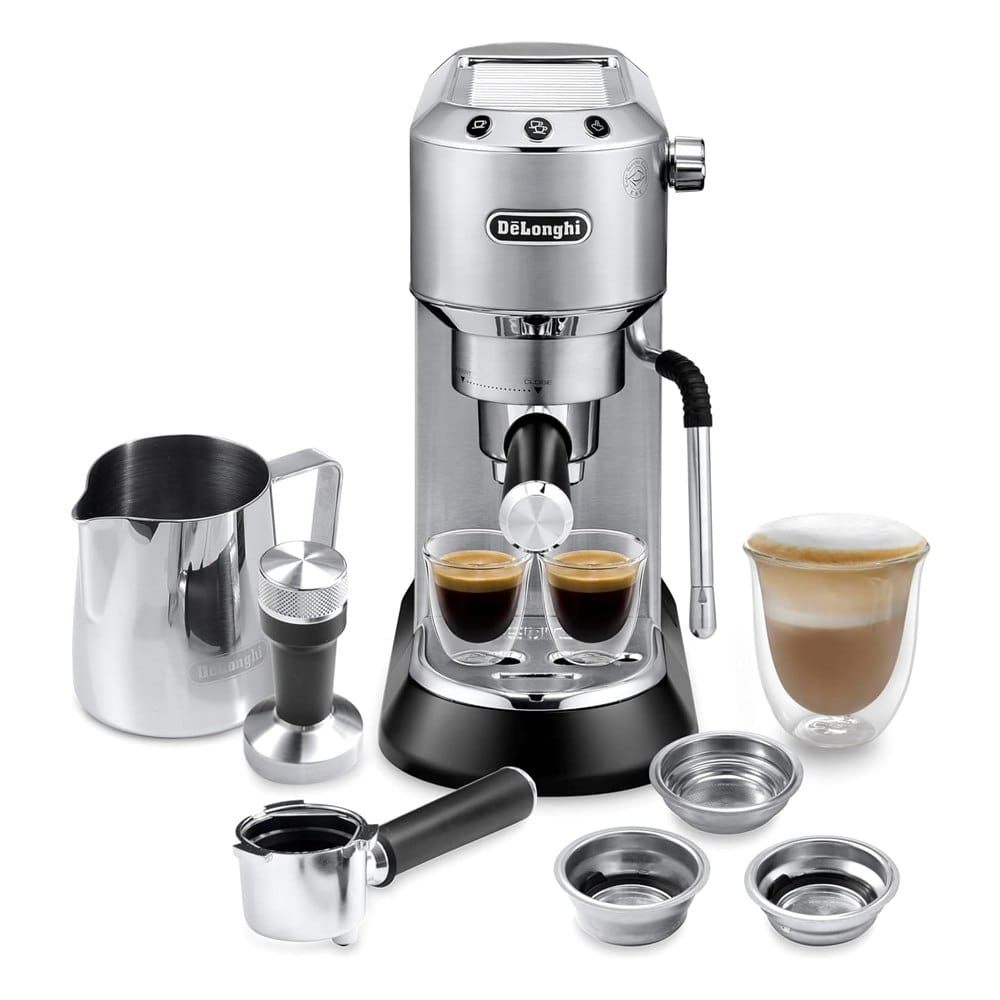
3. De'Longhi Dedica Arte Espresso Machine
Best for: small kitchens and anyone who wants to learn latte art.
This one is only about 6 inches wide, which makes it the slimmest on the list. It has a 15-bar pump, three temperature settings and a "My LatteArt" steam wand made for making microfoam. The stainless steel body looks good on a counter, and the tank holds about 35 fl oz. It has over 2,100 reviews at 4.0 stars.
What makes it stand out: The size. If your counter is crowded, this is the one that actually fits. The manual wand is also a good teacher if you want to pour real latte art.
Good to know: The 4.0 rating is the lowest of the group. The steam wand is manual, so expect a few messy attempts. It also doesn't come with a grinder, like the rest.
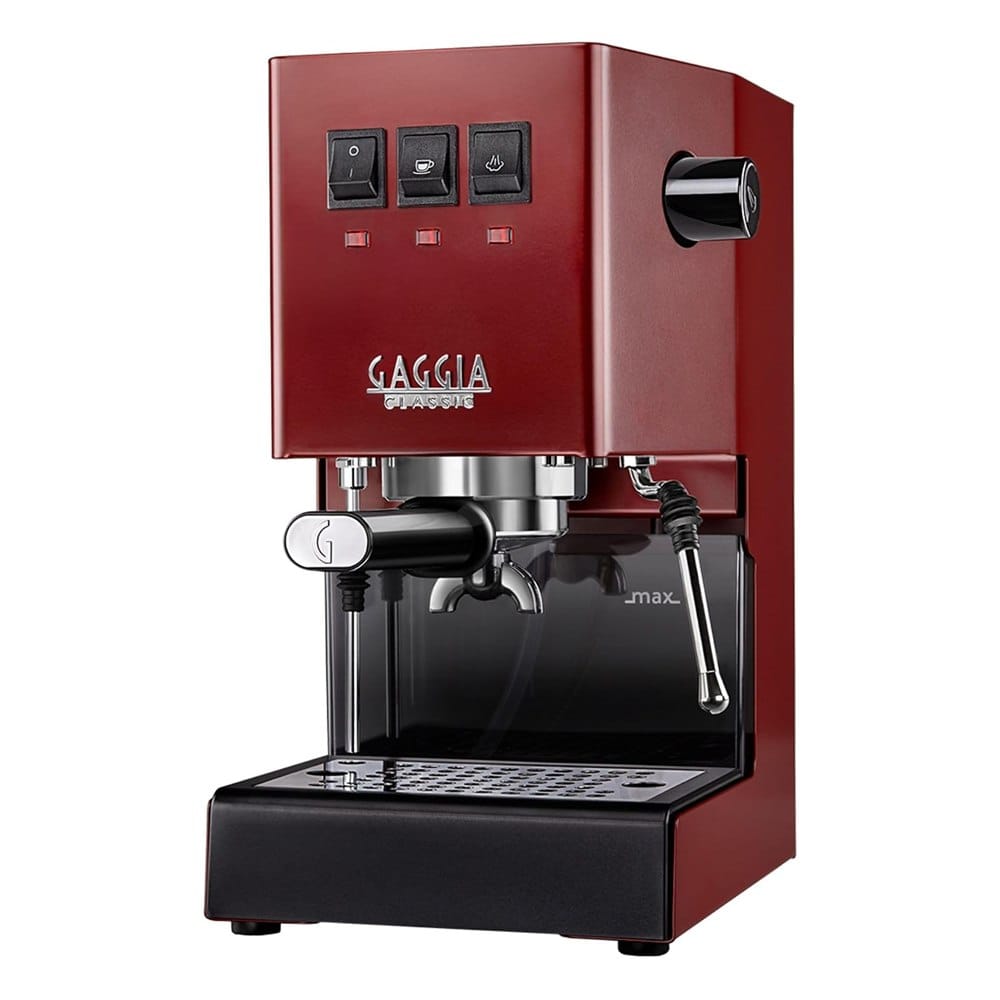
4. Gaggia Classic Pro Espresso Machine
Best for: beginners who already know they want to get serious.
The Classic Pro is the "learn on it for years" pick. It has a commercial-style 58mm portafilter, a three-way solenoid valve (which gives drier, easier-to-clean pucks) and a 1.3 liter tank. It measures about 8 x 9.5 x 14.2 inches. It has 4.3 stars from around 200 reviews on this listing, so there's less data behind it than the others.
What makes it stand out: The 58mm portafilter means a huge range of baskets and tools you can swap in later. It's the machine you grow into rather than out of.
Good to know: It's the steepest learning curve here. The steam wand is manual, and guides mention you need to "temperature surf" (time your shots around the heating cycle) to get the best results. It's also the priciest, and you really do need a good grinder with it. If you want easy, pick the Bambino Plus.
How to Pull Your First Good Shot
- Use fresh beans. Buy whole beans roasted in the last month or two, and grind right before you brew.
- Start with a basic ratio. About 18 grams of coffee in, around 36 grams of espresso out, in roughly 25 to 30 seconds.
- Change one thing at a time. Sour and thin usually means the grind is too coarse. Bitter and slow usually means too fine.
- Tamp level and firm. You don't need to lean on it. Even pressure matters more than hard pressure.
- Clean the steam wand right away. Wipe it after every use so milk doesn't bake on.
If you're still comparing bigger machines, our home espresso machine roundup covers more options.
Frequently Asked Questions
Do I need a grinder for an espresso machine?
What is the easiest espresso machine to use?
Is a more expensive espresso machine worth it for a beginner?
How often do I need to clean an espresso machine?
Keep Reading
- Best home espresso machines compared
- Automatic pour over coffee makers
- Coffee beans worth buying on Amazon
Final Thoughts
For most beginners, we'd pick the Breville Bambino Plus. It handles temperature and milk for you, and it's easy to learn on. If your budget is tight, the CASABREWS 3700 Essential is the cheapest way to find out whether you like making espresso.
The De'Longhi Dedica Arte is the one for tiny counters and latte art fans. The Gaggia Classic Pro is for the person who already knows they'll stick with it and wants a machine that won't hold them back. Whichever you choose, put a grinder in the budget too.
Disclosure: This post contains affiliate links. As an Amazon Associate I earn from qualifying purchases. Here's how we pick products.