

A warbler lands on a branch 80 feet away, and by the time you've got your binoculars up it's gone. A monocular is smaller, lighter and quicker to raise, and it's easy to keep in a jacket pocket. Here are the 5 best monoculars for bird watching in 2026, from a $36 pocket scope to a lifetime-warranty Vortex.
We didn't personally test these. We read the listings and the reviews, checked the specs and ranked them by star rating and review count. One thing before you start: higher magnification isn't always better for birds, and we'll explain why below.
What to Look For in a Monocular for Bird Watching
Magnification. 8x to 10x is the sweet spot. At 12x and up, every hand tremor gets magnified too, and the image gets hard to hold steady without a tripod. Birds also move fast, and a narrow view makes them harder to find.
Lens size. The second number (like 42 in 8x42) is the front lens width in millimeters. Bigger lenses gather more light for dawn and dusk, but they also weigh more.
Prism and coatings. BAK4 prisms and fully multi-coated lenses give a brighter, sharper image than cheaper BK7 glass. Look for both in the specs.
Waterproof and fogproof. Birding means rain, dew and temperature swings. A nitrogen-filled, O-ring sealed body is what keeps the inside from fogging.
Close focus and ease of use. A smooth, one-hand focus wheel matters more than most specs. If you're going to look at butterflies or nearby feeders, check the minimum focus distance too.
The 5 Best Monoculars for Bird Watching in 2026
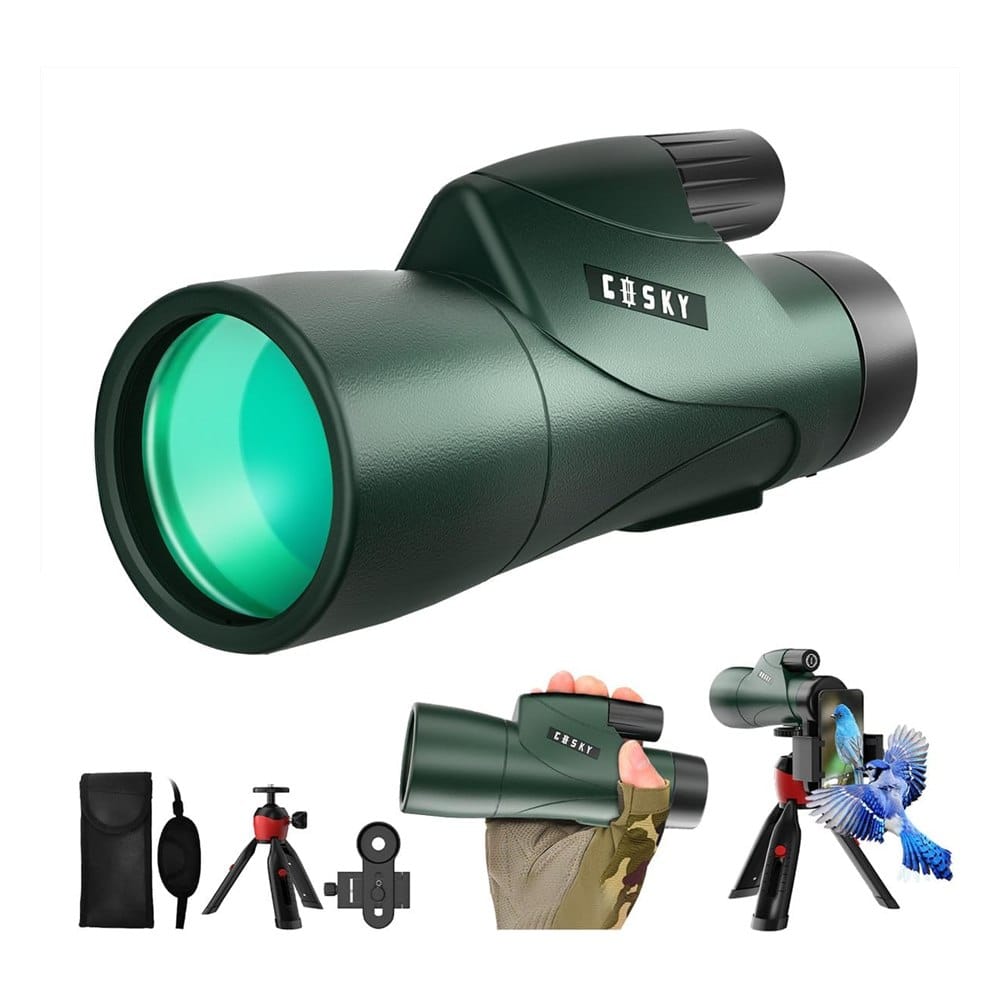
1. Gosky 12x55 HD Monocular Telescope
Best for: long-range viewing and anyone who wants to snap phone photos through the scope.
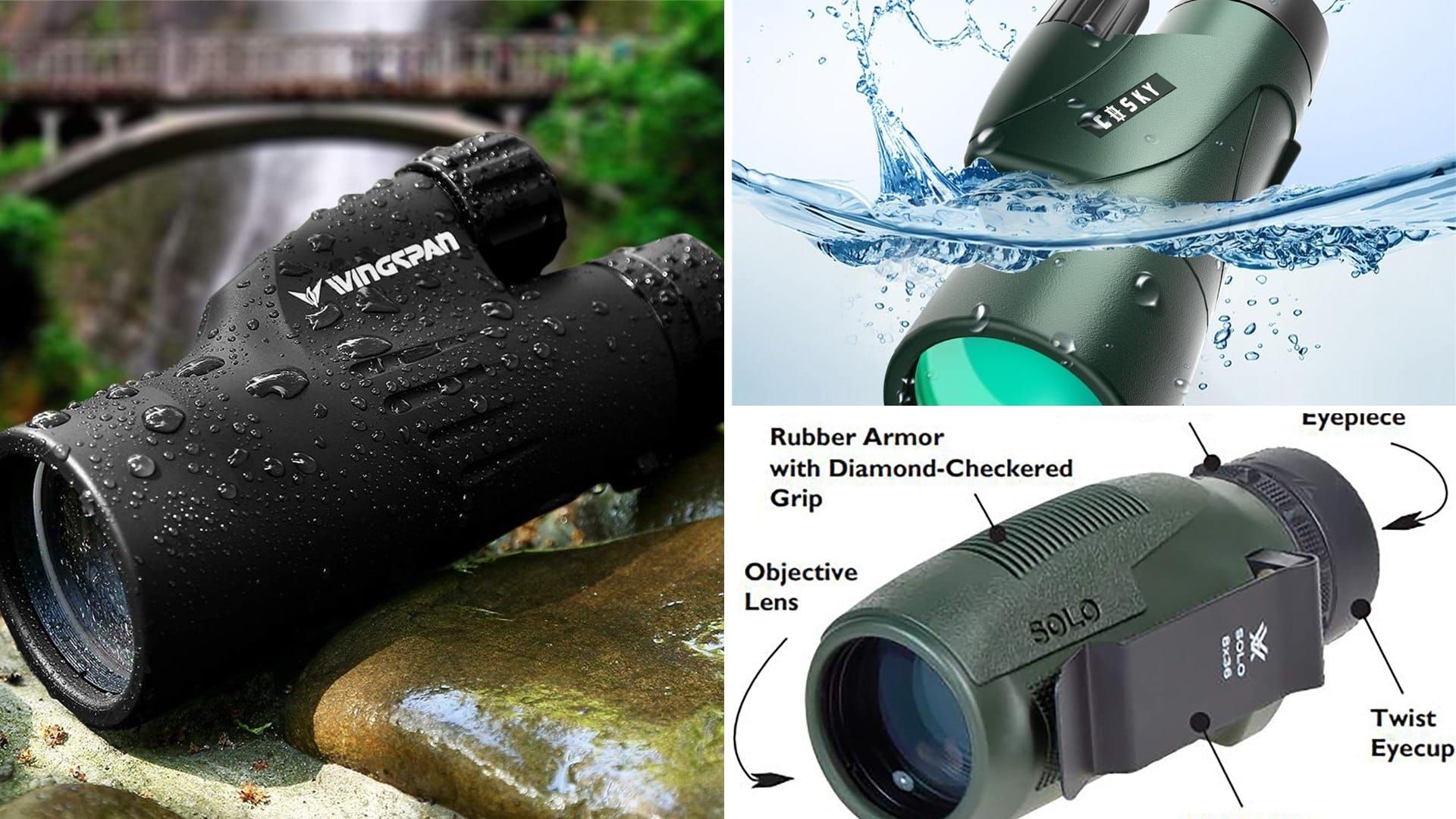
This is a big-lens monocular at around $89. The 55mm lens gathers plenty of light, and the twist-up eyecup is comfortable if you wear glasses. It comes with a tripod mount and phone adapter, which is handy for taking quick photos of birds.
What makes it stand out: More than 9,300 reviews at 4.4 stars, the best review count in this group. BAK4 prism, fully multi-coated lens, an IPX7 nitrogen-filled body and a smartphone adapter in the box.
Good to know: 12x is hard to hold steady by hand, so plan on bracing it against something or using the tripod. It's also bigger than the others, so it won't fit in a shirt pocket.
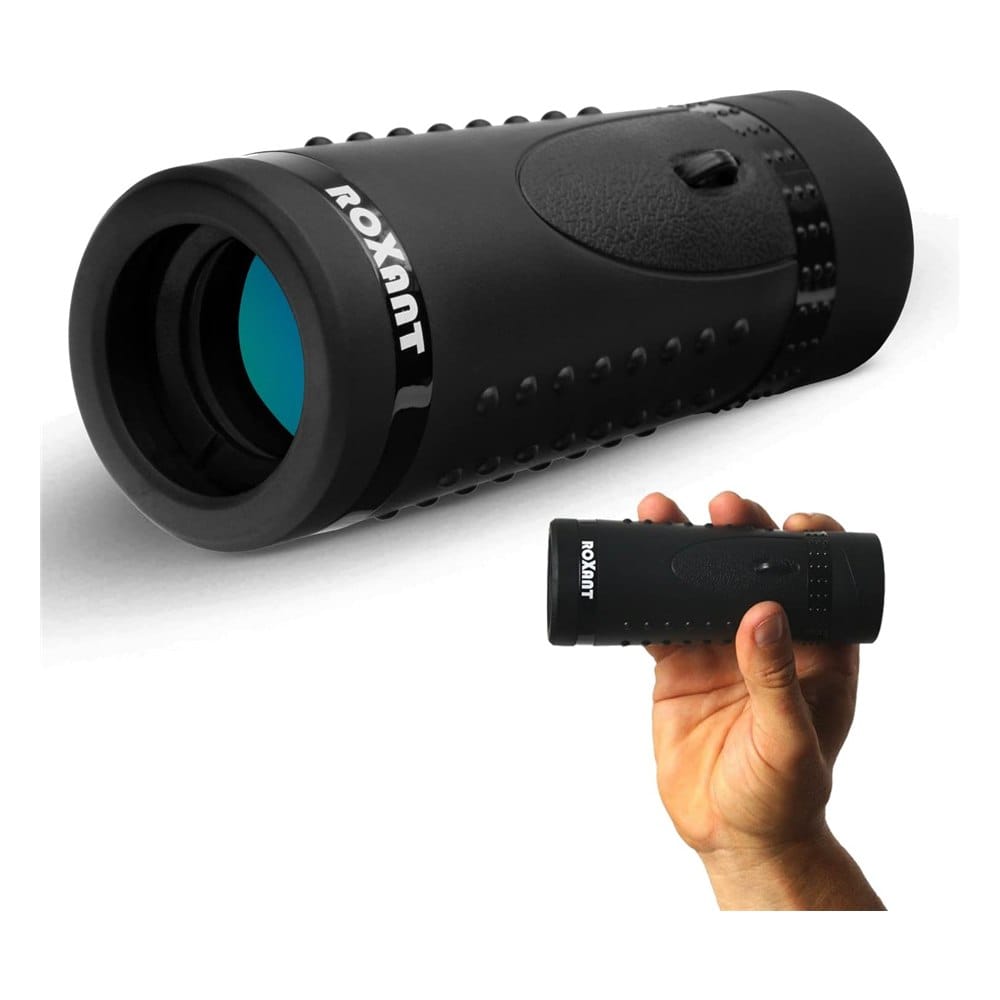
2. ROXANT Grip Scope HD Monocular
Best for: a cheap pocket scope for hikes and backyard birds.
This is the smallest one we looked at, and the textured grip makes it easy to hold with one hand. The retractable eyepiece helps protect the lens in a pocket. At about $36 it's a fair price to try a monocular for the first time.
What makes it stand out: A 4.3-star rating across about 4,300 reviews, a fully multi-coated lens with a BAK4 prism and a retractable eyepiece. It's one of the smallest ones here.
Good to know: The small lens means a dimmer image at dawn and dusk, which is when birds are most active. It's best in good daylight.
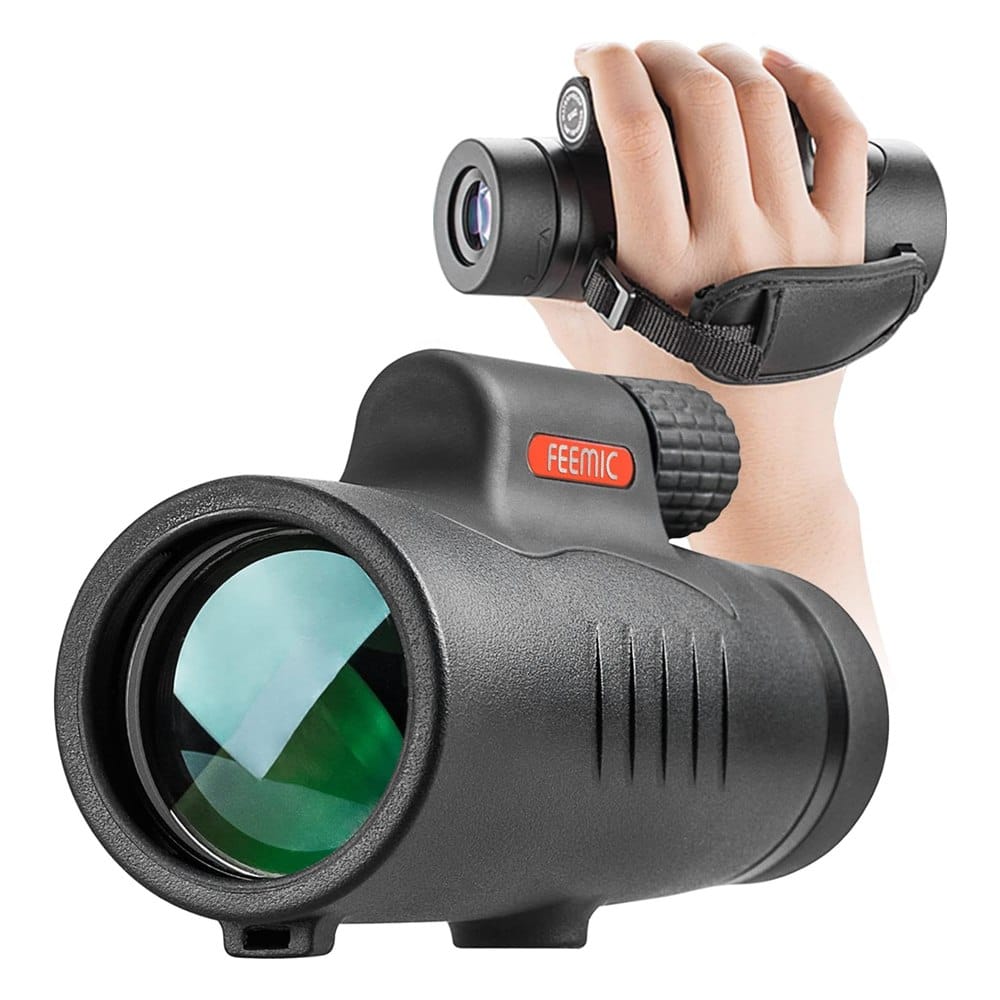
3. 8x42 HD Waterproof Monocular with Hand Strap
Best for: beginners who want a good balance of magnification and view.
The listing shows it at about 5.7 inches long and 1.9 inches wide. The 8x power makes it easy to find a bird and keep it in view without a tripod, and the 42mm lens lets in plenty of light.
What makes it stand out: At 8x42 it's the most birding-friendly spec in the group. It has a 4.4-star rating over about 3,500 reviews, plus a hand strap, a lens cap and a waterproof, fogproof, shockproof body.
Good to know: The optics are at the budget level, so don't expect the edge-to-edge sharpness of a pricey Vortex. It comes from a no-name brand, so the support is hit or miss.
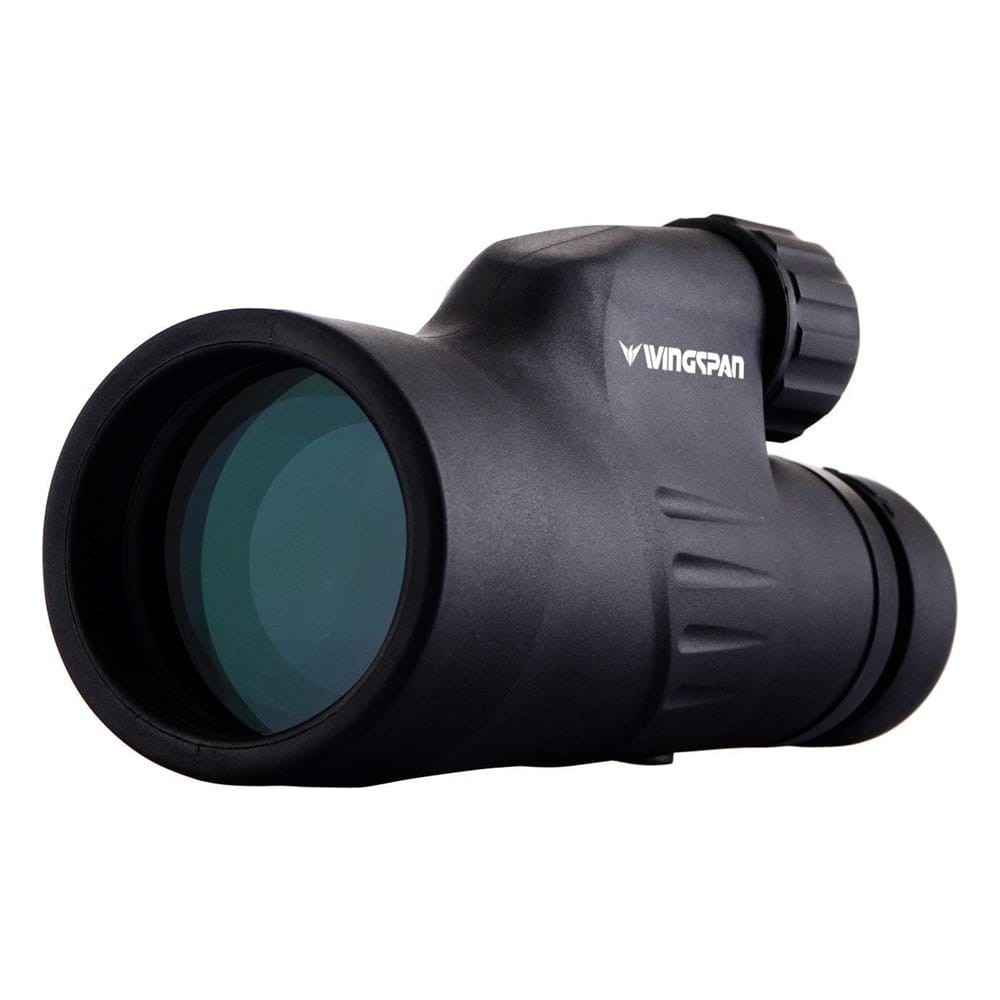
4. Wingspan Explorer 12x50 Monocular
Best for: people who want a bright, big-lens scope with single-hand focus.
This one used to be sold as Polaris Optics. It's a rubber-armored black monocular that's easy to hold in one hand and focus with a thumb. The 12x50 size means a bright image for the price.
What makes it stand out: A 4.5-star rating over 2,400 reviews, the highest of the budget picks. It's waterproof and fogproof and has a single-hand focus, and the listing says it can see detail from a long way off.
Good to know: It's the priciest of the cheaper picks at around $132, and the listing says it's meant for daytime use only. Like any 12x, it's shaky without support.
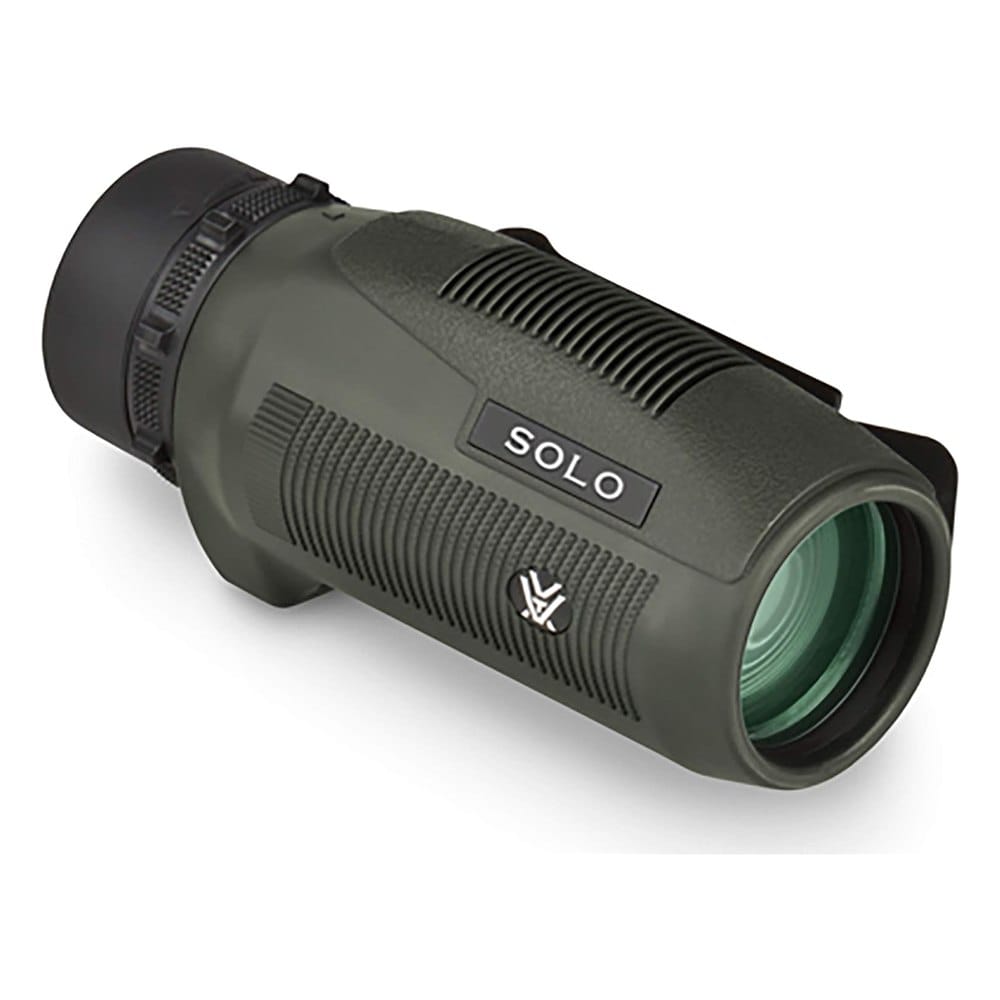
5. Vortex Solo 8x36 Monocular
Best for: serious birders who want quality optics and a lifetime warranty.
This is the one to buy if you'll use it for years. The 8x36 spec is a classic for birding, with a field of view of about 131 feet at 1,000 yards. It weighs about 10 ounces and the clip lets you attach it to a belt or pack strap.
What makes it stand out: Vortex backs it with an unconditional lifetime warranty. It has multi-coated lenses, a nitrogen-purged, waterproof, fogproof body, a twist-up eyecup and a utility clip. About 4.5 stars.
Good to know: It's around $119, which is more than three times the cost of the cheapest pick, and it has the fewest reviews here (about 700). It doesn't come with a phone adapter.
How to Use a Monocular for Bird Watching
- Find the bird with your naked eye first. Keep looking at it as you lift the monocular straight up to your eye.
- Set the eyecup for your eyes. Twist it up if you don't wear glasses and down if you do.
- Brace your elbow against your chest or lean on a tree or fence post. It makes a big difference at 10x or more.
- Use the focus wheel gently, and refocus whenever the bird moves.
- Wipe the lens with a microfiber cloth and put the cap on when you're done.
Frequently Asked Questions
What is the best monocular for bird watching?
Is a monocular or binoculars better for bird watching?
What magnification do I need for bird watching?
Can you use a monocular with a phone camera?
Keep Reading
- Best compact binoculars for hiking and birding
- Long range walkie talkies for hiking and camping
- Best bug repellent for camping
Final Thoughts
If you want the best quality and you'll keep it for years, get the Vortex Solo 8x36. If you're on a budget, the 8x42 pick gets you the right spec for birding at about $36. The Gosky 12x55 is the pick if you want a long reach and phone photos and you don't mind carrying a tripod.
We'd skip anything above 12x for birds. The extra magnification isn't worth the shaky image.
Disclosure: This post contains affiliate links. As an Amazon Associate I earn from qualifying purchases. Here's how we pick products.