
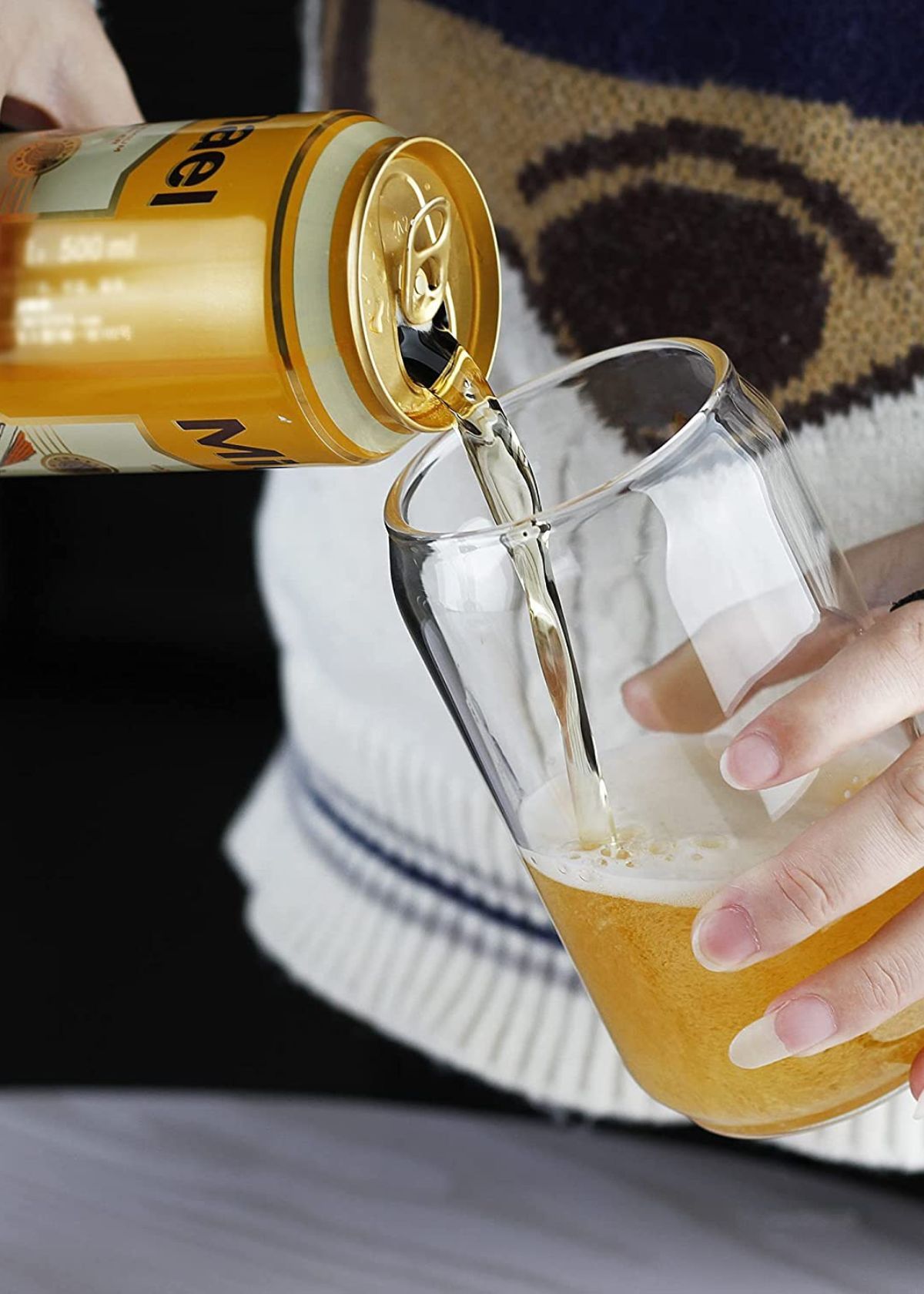
You crack open a cold beer, take a swig straight from the can, and it's fine. Then a friend pours the same beer into a glass and the whole thing smells different, looks different and tastes a little different too. That's not snobbery. Here's why you should pour beer into a glass, what actually changes, and the one time it doesn't matter much.
Why Pour Beer Into a Glass: 4 Real Reasons
You taste what you smell. A big part of flavor comes from aroma, and a can or bottle opening is tiny. Most of the hops, fruit and malt smells never reach your nose. Pour it out and those aromas can rise from the surface, so each sip tastes fuller. If you've ever had a hazy IPA that smelled like grapefruit in a glass but tasted flat from the can, that's the reason.
The foam holds the smell in. A little head on top acts like a lid. It traps the aroma compounds and releases them as you drink. Pouring also lets some of the extra carbon dioxide out, so the beer feels smoother and less sharp on your tongue.
You can see what you're drinking. Color, clarity and bubbles tell you a lot. A pale lager, an amber ale and a dark stout all look different, and a glass lets you notice a cloudy wheat beer or a beer that's gone flat. You can't do that through a can.
It can feel less bloating. Plenty of people say a poured beer feels less gassy than one swigged from the bottle. That's not a medical claim, just a common experience. Letting some carbonation out before you drink it is the likely reason. Everybody's different, so go by how you feel.
How to Pour a Beer Properly
- Start with a clean glass. Any grease or soap film kills the foam and leaves bubbles clinging to the sides. Rinse with cold water and let it drip, don't wipe it with a towel.
- Tilt the glass to about 45 degrees. Pour down the inside wall so the beer runs gently.
- Straighten the glass halfway through. That builds a head about one to two fingers thick, which is plenty.
- Leave the last sip in the bottle if it's cloudy. Bottle-conditioned beers have a little yeast sludge at the bottom. A few styles, like German wheat beers, are meant to be swirled and poured in. Check the label.
- Don't over-chill. Very cold beer hides flavor. Most lagers are happy near fridge temperature, but ales and stouts open up as they warm up a few degrees.
Does the Glass Shape Matter?
A little. A standard pint glass works for most beers and it's what most people own. A tulip glass, with a curved bowl and a flared rim, holds in the aroma for IPAs and Belgian ales. Our guide to the best tulip beer glasses covers the options. A tall, thin pilsner glass shows off clear lagers, and a tall wheat beer glass makes room for the big foam on a hefeweizen.
If you really like the look of drinking from a can, a beer can glass is a fun middle ground. It's glass, so you still get the aroma and the look, in the shape of a can. And if you drink draft beer at home, our mini kegerator picks are worth a look.
When You Can Skip the Glass
If you're at a cookout, on a boat or camping, drink it from the can. Nobody's going to judge you, and some beers, like light lagers, are made to be drunk ice cold and fast. The glass matters most when the beer has a lot going on, such as an IPA, a stout, a saison or a Belgian ale.
Frequently Asked Questions
Should you pour canned beer into a glass?
Does beer taste better in a glass?
Does pouring beer into a glass help with bloating?
Should you pour beer into a chilled or wet glass?
Keep Reading
- Best tulip beer glasses for IPAs and Belgian ales
- Best beer can glasses
- Best mini kegerators for draft beer at home
Final Thoughts
Pouring your beer into a glass is a small habit with a real payoff: more smell, more flavor, a better look and a smoother sip. You don't need to spend much. A clean pint glass and a gentle pour already beat drinking from the can.
If you drink a lot of IPAs or Belgian ales, a tulip glass is a cheap upgrade. If you just like the can shape, a beer can glass gets you the best of both.