




You're standing in the oil aisle with a jar of coconut oil in one hand and a bottle of olive oil in the other. Everyone online has a loud opinion. So here's the short version of coconut oil vs olive oil, in plain words, with what actually matters for cooking, health, hair and skin.
Quick answer: for everyday cooking and for heart health, olive oil is the safer pick. Coconut oil is fine in small amounts when you want its flavor or a solid fat for baking. We're not doctors or dietitians, so check with yours if you have a health condition.
Coconut Oil vs Olive Oil: The Basics
Coconut oil. It's solid at room temperature and melts at about 76°F. Most of its fat (around 80 to 90 percent) is saturated. It comes refined (little coconut taste) or unrefined, also called virgin (a clear coconut flavor).
Olive oil. It's liquid at room temperature and mostly monounsaturated fat. Extra virgin olive oil is pressed from olives without heat or chemicals and keeps more of the olive flavor and plant compounds. Light or refined olive oil is milder and handles more heat.
Calories. They're basically the same. A tablespoon of either has about 120 calories, so neither one is a free pass.
Which Is Healthier?
This is where the old internet advice goes wrong. Coconut oil was marketed as a health food for years, mostly because some of its fats are medium-chain. But it's still very high in saturated fat, which raises LDL ("bad") cholesterol. The American Heart Association has advised limiting coconut oil and using unsaturated oils like olive oil instead.
Olive oil has about 2 grams of saturated fat per tablespoon, compared with around 11 to 12 grams in coconut oil. Studies on Mediterranean-style eating, which uses a lot of olive oil, have linked it to better heart health. That's why most health groups lean toward olive oil for daily use.
Does that mean coconut oil is off-limits? No. A spoonful in a curry or a batch of cookies is fine for most people. It just shouldn't be your main cooking fat.
Coconut Oil vs Olive Oil for Cooking
High heat. Smoke point is the temperature where an oil starts to smoke. Refined coconut oil is around 400°F or higher. Unrefined (virgin) coconut oil is lower, around 350°F. Extra virgin olive oil is commonly listed between about 350 and 410°F, and light olive oil goes higher.
The old claim that olive oil "breaks down and becomes harmful" when you cook with it is overstated. Extra virgin olive oil is stable enough for sautéing, roasting and most home frying. For very hot searing, pick refined oil like light olive oil or avocado oil.
Baking. Coconut oil acts like butter because it's solid when cool, so it's useful in vegan baking, granola and pie crusts. Olive oil works in cakes, brownies and breads where you want a moist crumb.
Flavor. Unrefined coconut oil tastes like coconut. Extra virgin olive oil tastes peppery or grassy. Use refined coconut oil or light olive oil when you don't want either.
Coconut Oil vs Olive Oil for Hair and Skin
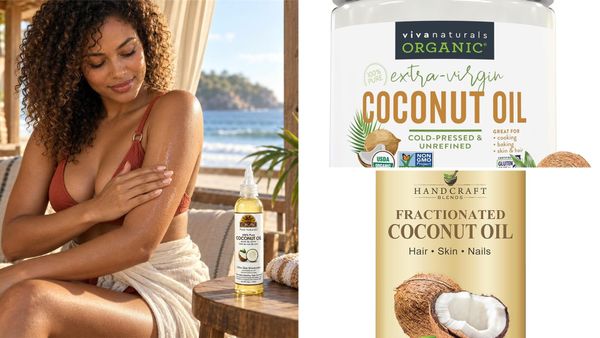
Hair. Coconut oil is popular as a pre-wash treatment because its small molecules can soak into the hair strand better than many oils, and some studies show it reduces protein loss. It can feel heavy, and on some scalps it can build up. If you want a product pick, see our best coconut oil for hair guide. We can't promise any oil will grow hair.
Skin. Coconut oil can be a rich body moisturizer, but it can clog pores for some people, so skip it on a breakout-prone face. Olive oil is heavier on the skin than most people expect, and it can irritate sensitive skin, so a plain, simple moisturizer is usually the safer bet.
Frequently Asked Questions
Which is healthier, coconut oil or olive oil?
Which has a higher smoke point, coconut oil or olive oil?
Can I swap coconut oil for olive oil in baking?
Is coconut oil or olive oil better for dogs?
Keep Reading
Final Thoughts
Use olive oil as your everyday oil. It's the one with the best track record for heart health, and it handles most home cooking just fine.
Keep a jar of coconut oil for baking, curries or hair treatments, and treat it as a small extra, not a daily health food.